1447 · Rome, Papal States
Nicholas V is elected as the new pope, succeeding Pope Eugene IV.
January 24, 1438
The Council of Basel suspended Pope Eugene IV.
Basel, Switzerland | Council of Basel
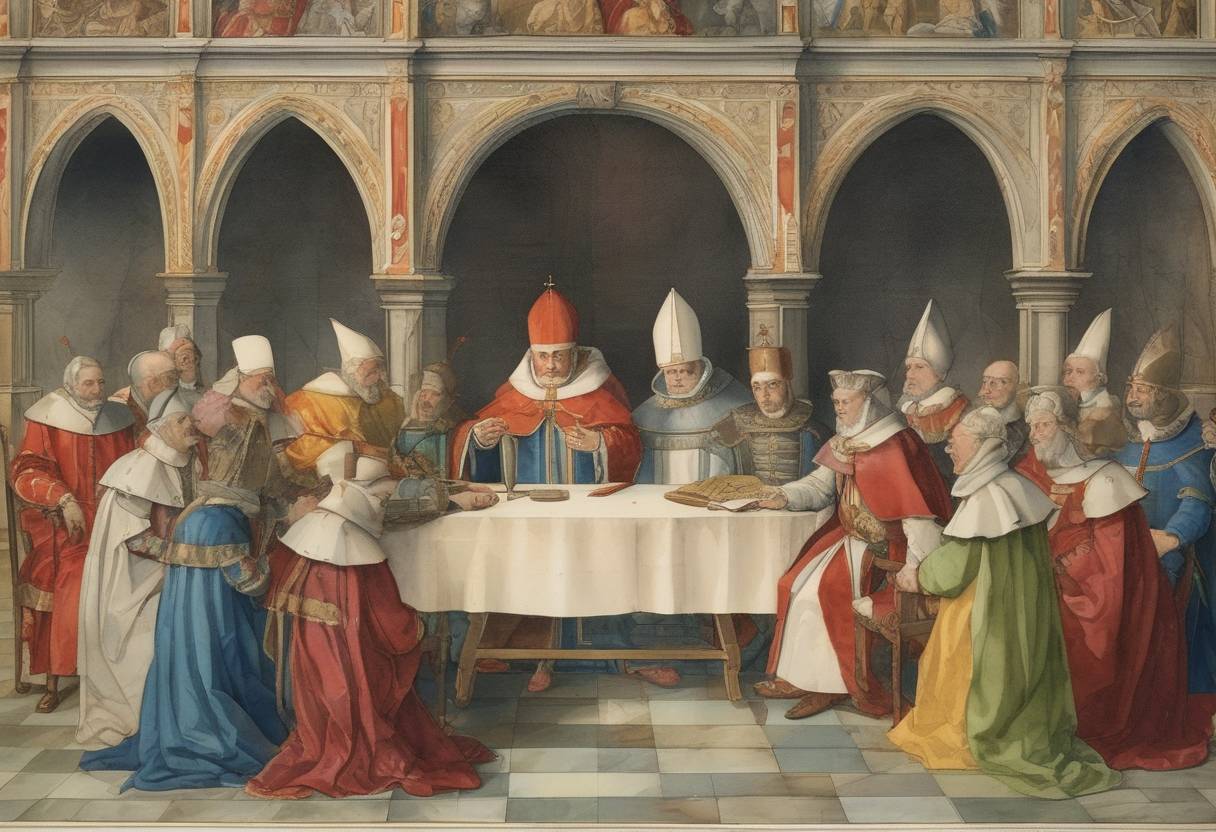
The Council of Basel was convened in 1431 by Pope Martin V, primarily to address issues of church reform and to resolve the Hussite heresy in Bohemia. However, Martin V’s death shortly after the council’s initiation led to the election of Pope Eugene IV. The council quickly became a focal point of tension between the papacy and the conciliar movement, which advocated for the authority of church councils over the pope.
Conciliar Movement: The Council of Basel was part of a broader movement within the Church that sought to limit papal authority and promote the idea that general councils held supreme authority in ecclesiastical matters. This movement gained momentum following the Western Schism, which had severely damaged the papacy’s credibility.
Papal Opposition: Pope Eugene IV was initially supportive of the council but soon became wary of its growing power and independence. In 1433, he attempted to dissolve the council, citing concerns over its legitimacy and the need to relocate it to a more neutral location.
Council’s Defiance: The council refused to disband and continued its sessions, asserting its authority by declaring that it could not be dissolved by the pope without its consent. This defiance set the stage for a direct confrontation between the council and Eugene IV.
On January 24, 1438, the Council of Basel took the unprecedented step of suspending Pope Eugene IV. This action was based on several charges:
Contempt of the Council: Eugene IV’s attempts to dissolve the council and his refusal to recognize its authority were seen as acts of contempt.
Obstruction of Reform: The council accused Eugene IV of obstructing necessary reforms within the Church, which were a primary focus of the council’s agenda.
Failure to Address Heresy: The council criticized Eugene IV for his inadequate response to the Hussite heresy, which continued to pose a significant threat to the Church’s unity.
Schism Threat: The suspension of Eugene IV heightened tensions within the Church and threatened to create a new schism. The pope, however, refused to acknowledge the council’s authority to suspend him.
Council of Florence: In response to the council’s actions, Eugene IV convened a rival council in Florence, which eventually gained greater recognition and led to the reconciliation of the Eastern and Western Churches in 1439.
Decline of Conciliarism: The events at Basel marked a turning point in the conciliar movement. Although the council continued to meet until 1449, its influence waned, and the papacy gradually reasserted its authority over the Church.
The suspension of Pope Eugene IV by the Council of Basel was a critical moment in the history of the Catholic Church. It highlighted the ongoing struggle between papal authority and the conciliar movement, a conflict that would shape the Church’s governance for decades. Ultimately, the failure of the Council of Basel to maintain its authority marked the decline of conciliarism and reinforced the centralization of power within the papacy.
Source: en.wikipedia.org