The Last United States Soldiers Leave South Vietnam
1974 · Saigon, South Vietnam
The last United States soldiers leave South Vietnam, ending direct U.S. military involvement in the Vietnam War.
March 8, 1965
The first U.S. combat troops arrived in Vietnam, marking a significant escalation in American involvement in the Vietnam War.
Da Nang, Vietnam | United States Armed Forces
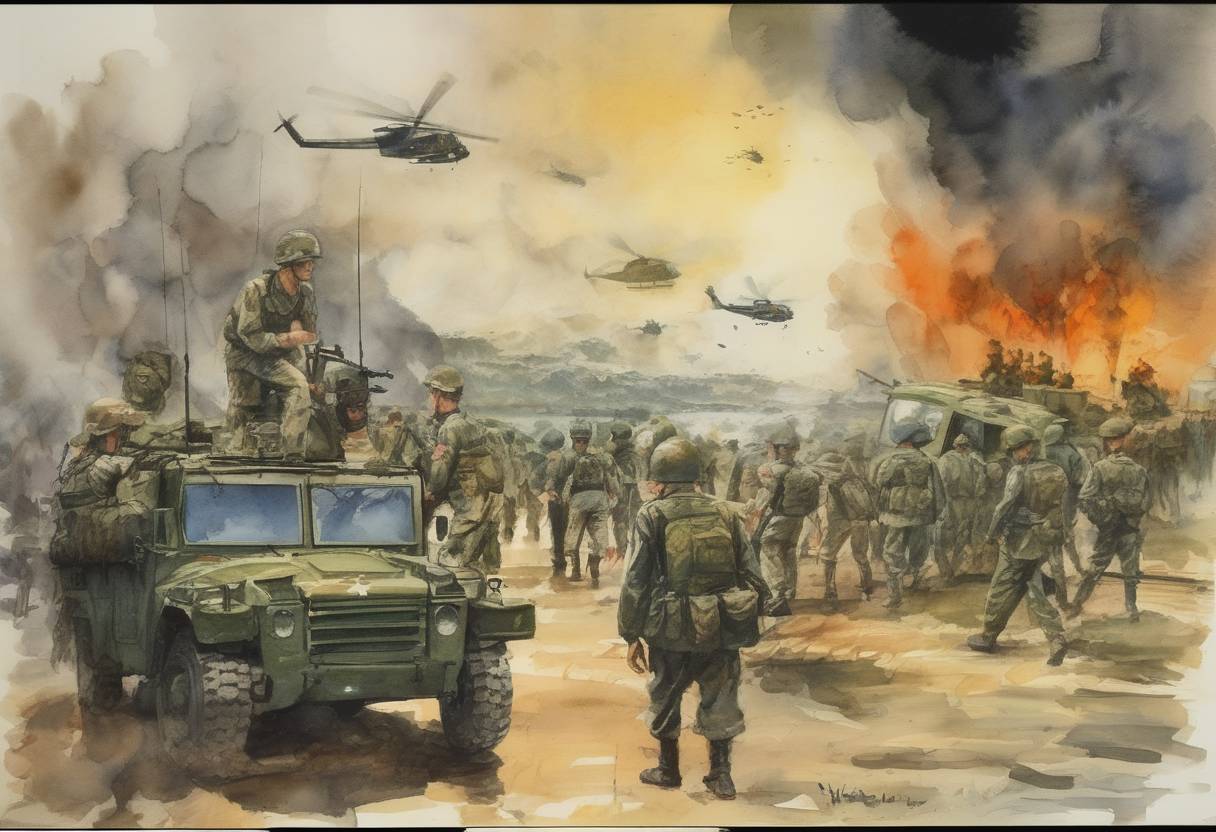
On March 8, 1965, a pivotal moment in the Vietnam War occurred when the first U.S. combat troops landed in Vietnam. This marked a significant escalation in American involvement in the conflict, transitioning from an advisory and support role to active military engagement.
The Vietnam War, rooted in the broader context of the Cold War, was a struggle between communist North Vietnam, supported by its communist allies, and the government of South Vietnam, backed by the United States and other anti-communist nations. The U.S. had been involved in Vietnam since the late 1950s, primarily in an advisory capacity, providing military aid and training to South Vietnamese forces.
The Gulf of Tonkin Incident in August 1964, where North Vietnamese forces allegedly attacked U.S. naval vessels, led to the Gulf of Tonkin Resolution. This resolution, passed by the U.S. Congress, granted President Lyndon B. Johnson the authority to increase U.S. military presence in Vietnam without a formal declaration of war.
On March 8, 1965, 3,500 U.S. Marines from the 9th Marine Expeditionary Brigade landed at Da Nang, a coastal city in South Vietnam. This deployment was the first time American combat troops were sent to Vietnam, signaling a shift from advisory roles to direct military involvement. The Marines’ initial mission was to protect the U.S. airbase at Da Nang, which was crucial for launching air operations against North Vietnamese targets.
The arrival of U.S. combat troops marked a turning point in the Vietnam War. It represented a commitment by the United States to prevent the spread of communism in Southeast Asia, aligning with the broader policy of containment. This escalation led to a significant increase in U.S. military personnel in Vietnam, peaking at over 500,000 troops by 1968.
The deployment also intensified anti-war sentiment both domestically and internationally. As the war dragged on, with increasing casualties and unclear objectives, public opinion in the United States began to shift, leading to widespread protests and calls for withdrawal.
The Vietnam War continued for another decade, with significant human, political, and social costs. The conflict ended with the fall of Saigon in April 1975, leading to the reunification of Vietnam under communist control. The war had lasting impacts on U.S. foreign policy, military strategy, and society, shaping future American military engagements and contributing to a more cautious approach to foreign interventions.
In summary, the arrival of U.S. combat troops in Vietnam on March 8, 1965, was a critical moment in the Vietnam War, marking a deeper American commitment to the conflict and setting the stage for a prolonged and contentious military engagement.
Source: en.wikipedia.org