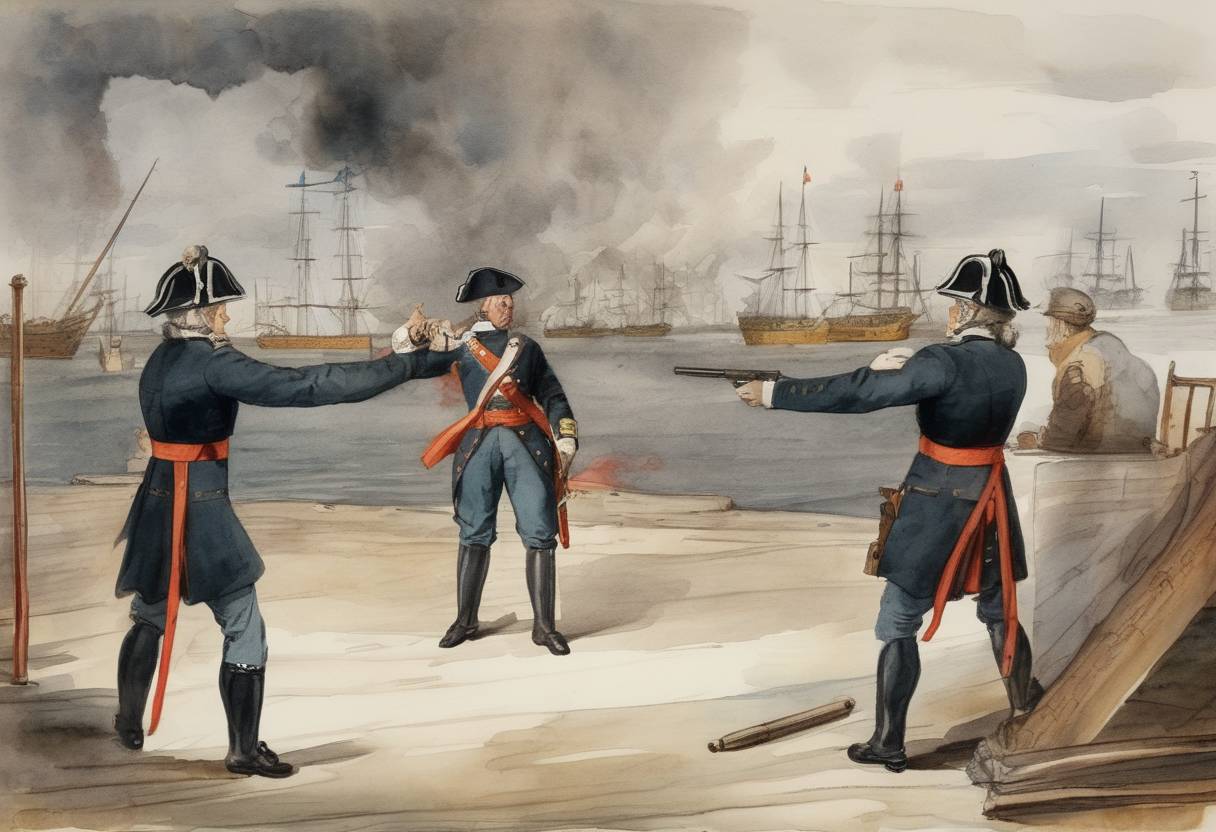
Execution of Admiral Sir John Byng
On March 14, 1757, Admiral Sir John Byng was executed by firing squad aboard HMS Monarch. This event was a significant moment in British naval history and had lasting implications for military conduct and public perception of military leadership.
Background
The Seven Years’ War: Byng’s execution took place during the early years of the Seven Years’ War (1756-1763), a global conflict that involved most of the great powers of the time. The war was marked by battles for colonial dominance, particularly between Britain and France.
The Battle of Minorca: In 1756, the British garrison at Fort St. Philip on the island of Minorca was besieged by French forces. Minorca was a strategic Mediterranean possession, and its loss would have significant implications for British naval power in the region.
Byng’s Mission
Orders and Actions: Admiral Byng was dispatched with a fleet to relieve the besieged garrison. However, upon encountering the French fleet, Byng engaged in a naval battle but ultimately decided to withdraw without achieving a decisive victory or relieving the garrison.
Failure and Controversy: Byng’s decision to retreat was met with outrage in Britain. The garrison at Minorca eventually surrendered to the French, and Byng was blamed for the failure to protect British interests.
Trial and Execution
Court Martial: Byng was court-martialed under the Articles of War, which mandated severe penalties for officers who failed to do their utmost in battle. He was charged with “failing to do his utmost” to engage the enemy and relieve the garrison.
Sentence and Execution: Despite some sympathy for his situation and arguments that he was made a scapegoat for broader strategic failures, Byng was found guilty and sentenced to death. His execution by firing squad was carried out on the quarterdeck of HMS Monarch.
Aftermath and Significance
Public Reaction: Byng’s execution was controversial and sparked debate about military justice and leadership. Voltaire famously commented on the event in his novel “Candide,” suggesting that the British executed admirals “pour encourager les autres” (to encourage the others).
Reform and Legacy: The execution highlighted the harshness of military discipline at the time and eventually led to reforms in naval command and accountability. Byng’s case remains a cautionary tale about the pressures of military command and the consequences of failure in wartime.
Byng’s execution is remembered as a pivotal moment in British naval history, illustrating the intense scrutiny and expectations placed on military leaders during times of war.