November 27, 1971

The Soviet space program's Mars 2 lander became the first human-made object to reach the surface of Mars, although it crash-landed.


Mars, Soviet Union | Soviet space program
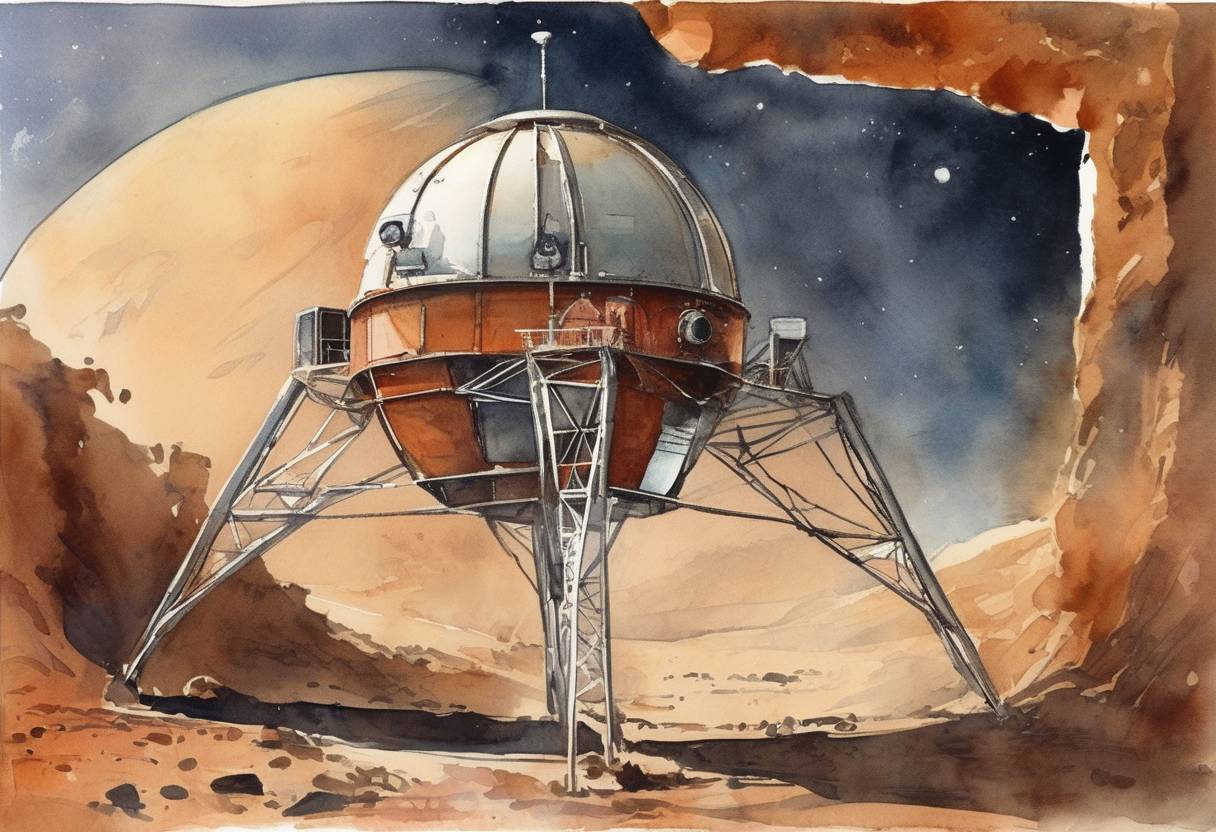
Watercolor painting based depiction of The Soviet space program's Mars 2 lander became the first human-made object to reach the surface of Mars, although it crash-landed. (1971)

Mars 2 Lander: The First Human-Made Object on Mars

On November 27, 1971, the Soviet space program achieved a significant milestone in the exploration of Mars with the Mars 2 lander. Although it crash-landed, it became the first human-made object to reach the surface of Mars, marking a pivotal moment in space exploration history.

Background

The Mars 2 mission was part of the Soviet Union’s ambitious Mars program, which aimed to explore the Red Planet using a series of robotic spacecraft. The program was initiated during the height of the Space Race, a period characterized by intense competition between the United States and the Soviet Union to achieve significant milestones in space exploration.

The Mars 2 Mission

  • Launch Date: Mars 2 was launched on May 19, 1971, aboard a Proton-K rocket from the Baikonur Cosmodrome.
  • Mission Components: The mission consisted of an orbiter and a lander. The orbiter was designed to study the Martian atmosphere and surface from orbit, while the lander was intended to deliver scientific instruments to the planet’s surface.

Key Events Leading to the Landing

  • Journey to Mars: After a successful launch, Mars 2 embarked on a six-month journey to Mars. The spacecraft traveled approximately 480 million kilometers (about 300 million miles) to reach its destination.
  • Separation and Descent: On November 27, 1971, the Mars 2 lander separated from the orbiter to begin its descent to the Martian surface. Unfortunately, during the descent, the lander’s braking rockets failed to fire correctly.

The Crash-Landing

  • Impact: Due to the malfunction of the braking system, the Mars 2 lander entered the Martian atmosphere at a steep angle and crash-landed on the surface. Despite the crash, it became the first human-made object to reach Mars, albeit not in a controlled manner.

Aftermath and Significance

  • Orbiter Success: While the lander was unsuccessful, the Mars 2 orbiter continued to function and transmitted valuable data back to Earth. It conducted scientific observations of Mars, contributing to our understanding of the planet’s atmosphere and surface conditions.
  • Legacy: The Mars 2 mission, despite the lander’s crash, demonstrated the feasibility of reaching Mars and paved the way for future missions. It highlighted the challenges of landing on another planet and provided valuable lessons for subsequent Mars exploration efforts.

Broader Historical Context

The Mars 2 mission was part of a broader effort by the Soviet Union to explore the solar system. It underscored the technological capabilities of the Soviet space program and its commitment to exploring beyond Earth’s orbit. The mission’s partial success laid the groundwork for future Mars missions by both the Soviet Union and other space-faring nations.

In conclusion, the Mars 2 lander’s crash-landing on November 27, 1971, was a landmark event in space exploration, marking the first time a human-made object reached the surface of Mars. Despite its challenges, the mission contributed significantly to our understanding of Mars and inspired continued exploration of the Red Planet.