Panama Canal Expansion Referendum (October 21, 2006)
2006 · Panama City, Panama
Panama approved the Panama Canal expansion project through a national referendum, allowing for increased shipping and larger vessels.
October 1, 1979
The United States returned sovereignty of the Panama Canal to Panama, as stipulated in the Torrijos-Carter Treaties.
Panama City, Panama | United States government
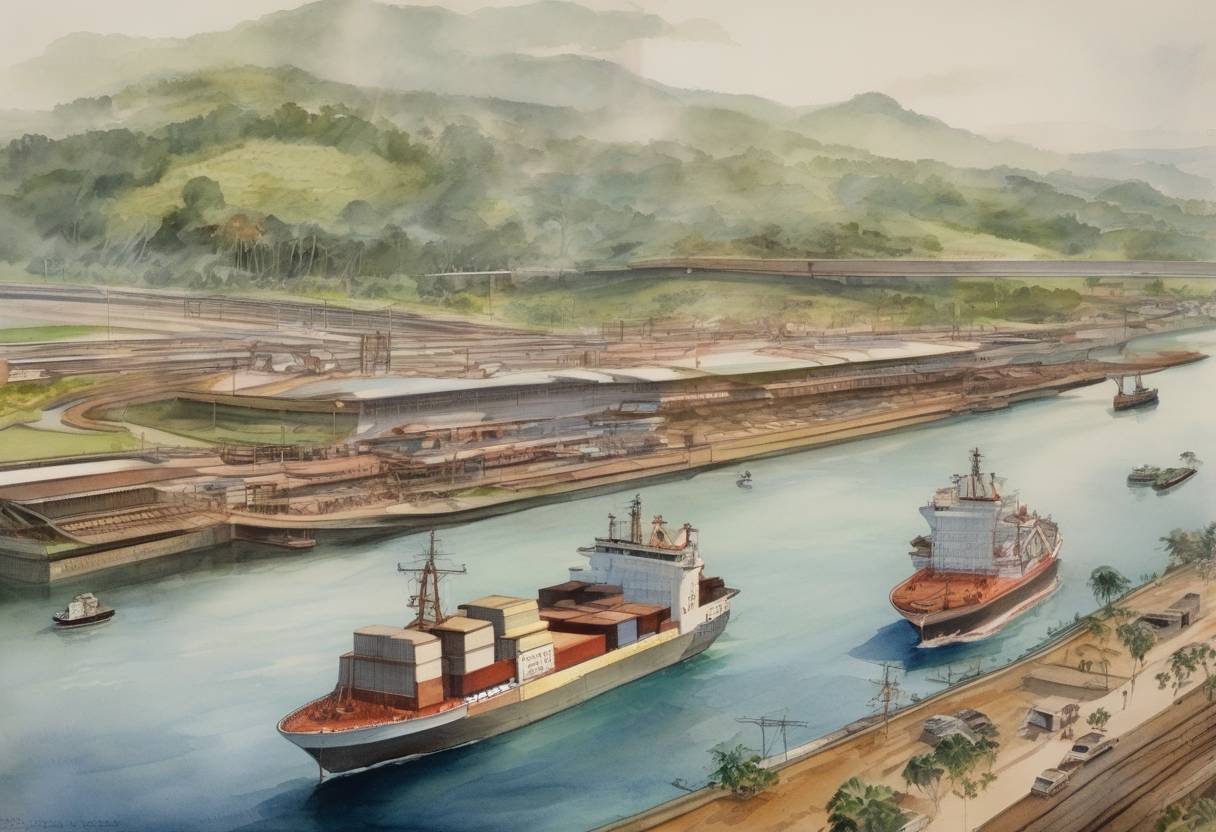
On October 1, 1979, a significant shift in international relations and sovereignty occurred when the United States officially transferred control of the Panama Canal to Panama. This event was the result of the Torrijos-Carter Treaties, a landmark agreement that reshaped the geopolitical landscape of the Americas.
The Panama Canal, a crucial maritime passage connecting the Atlantic and Pacific Oceans, was completed by the United States in 1914. For decades, it remained under U.S. control, a situation that was a source of tension and resentment in Panama. The canal was not only a vital strategic and economic asset but also a symbol of U.S. influence in the region.
The transfer of the canal was formalized through two treaties signed on September 7, 1977, by U.S. President Jimmy Carter and Panamanian leader General Omar Torrijos:
The Panama Canal Treaty: This treaty stipulated the gradual transfer of canal operations from the United States to Panama, culminating in full Panamanian control by December 31, 1999.
The Neutrality Treaty: This agreement guaranteed the canal’s neutrality, ensuring that it would remain open to ships of all nations, both in times of peace and war.
Negotiations: The treaties were the result of lengthy negotiations aimed at addressing Panamanian demands for sovereignty and control over the canal. These discussions were part of a broader U.S. policy shift towards improving relations with Latin America.
Ratification: The U.S. Senate ratified the treaties in 1978, despite significant opposition from some political factions within the United States who feared the loss of strategic control.
On this date, the first phase of the transfer began, marking the start of a 20-year process during which Panama gradually assumed control over the canal’s operations. The event was celebrated in Panama as a triumph of national sovereignty and was seen as a step towards rectifying historical grievances.
Full Control: Panama gained complete control of the canal on December 31, 1999, as per the treaty’s terms. This transition was smooth and marked by a successful handover of operations.
Economic Impact: The canal has since become a significant source of revenue for Panama, contributing to its economic development.
Geopolitical Relations: The transfer improved U.S.-Panama relations and set a precedent for resolving international disputes through diplomacy and negotiation.
The return of the Panama Canal to Panama is a pivotal moment in history, illustrating the power of diplomatic negotiation and the importance of respecting national sovereignty. It remains a testament to the enduring impact of the Torrijos-Carter Treaties on international relations.
Source: en.wikipedia.org