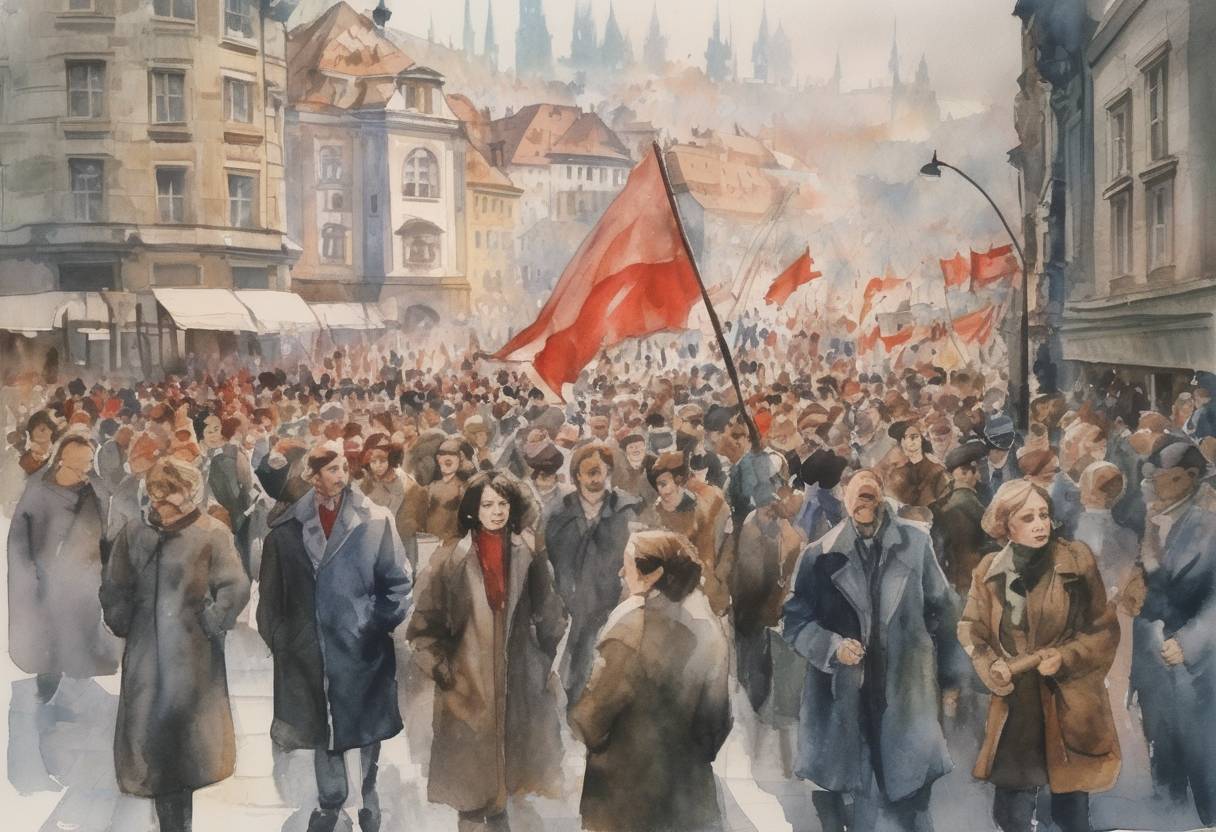
The Velvet Revolution: Beginning of the End for Communist Rule in Czechoslovakia
Overview
On November 17, 1989, a pivotal event in the history of Czechoslovakia marked the beginning of the Velvet Revolution, a peaceful movement that led to the end of 41 years of communist rule in the country. This revolution is renowned for its non-violent nature and its significant role in the broader wave of anti-communist uprisings across Eastern Europe during the late 1980s.
Context Leading Up to the Event
- Post-World War II Era: After World War II, Czechoslovakia fell under Soviet influence, and by 1948, a communist government was firmly established.
- Prague Spring of 1968: An earlier attempt at reform, the Prague Spring, was crushed by a Soviet-led invasion, reinforcing the communist regime’s grip on power.
- Gorbachev’s Reforms: By the late 1980s, Soviet leader Mikhail Gorbachev’s policies of glasnost (openness) and perestroika (restructuring) inspired reformist movements across Eastern Europe.
- Growing Discontent: Economic stagnation, political repression, and a desire for greater freedoms fueled public dissatisfaction with the communist regime in Czechoslovakia.
The Student Demonstration
- November 17, 1989: The date marked the 50th anniversary of the Nazi suppression of a student demonstration in 1939. Students in Prague organized a peaceful march to commemorate this event and express their desire for political reform.
- Brutal Response: The demonstration, which began at the Vyšehrad cemetery and moved towards the city center, was met with a heavy-handed response from riot police. The crackdown resulted in numerous injuries and arrests, sparking widespread outrage.
The Revolution Unfolds
- Public Outcry: The police brutality galvanized public opinion, leading to mass protests and strikes across the country. The Civic Forum, a coalition of opposition groups, emerged as a leading voice for change.
- Key Figures: Václav Havel, a prominent dissident and playwright, became a central figure in the movement, advocating for non-violent resistance and democratic reforms.
- Momentum Builds: Over the following weeks, the protests grew in size and intensity, with hundreds of thousands of citizens participating in demonstrations demanding political change.
Consequences and Aftermath
- Government Concessions: Faced with mounting pressure, the communist government began negotiations with the Civic Forum. By the end of December 1989, the Communist Party agreed to relinquish its monopoly on power.
- Transition to Democracy: On December 29, 1989, Václav Havel was elected President of Czechoslovakia, symbolizing the country’s transition to a democratic system.
- Legacy: The Velvet Revolution is celebrated as a successful example of peaceful resistance leading to political change. It paved the way for the eventual dissolution of Czechoslovakia into the Czech Republic and Slovakia in 1993.
Broader Historical Significance
The Velvet Revolution was part of a larger wave of anti-communist movements that swept across Eastern Europe in 1989, leading to the fall of the Berlin Wall and the eventual collapse of the Soviet Union. It demonstrated the power of non-violent protest and the possibility of achieving democratic reforms without bloodshed.