Christopher Columbus' Fourth and Final Voyage
1502 · Cadiz, Spain
Christopher Columbus embarked on his fourth and final voyage to the New World, aiming to find a passage to Asia.
September 9, 1493
Christopher Columbus set sail on his second voyage to the New World, with a fleet of 17 ships carrying supplies and settlers.
Cadiz, Spain | Spanish Crown
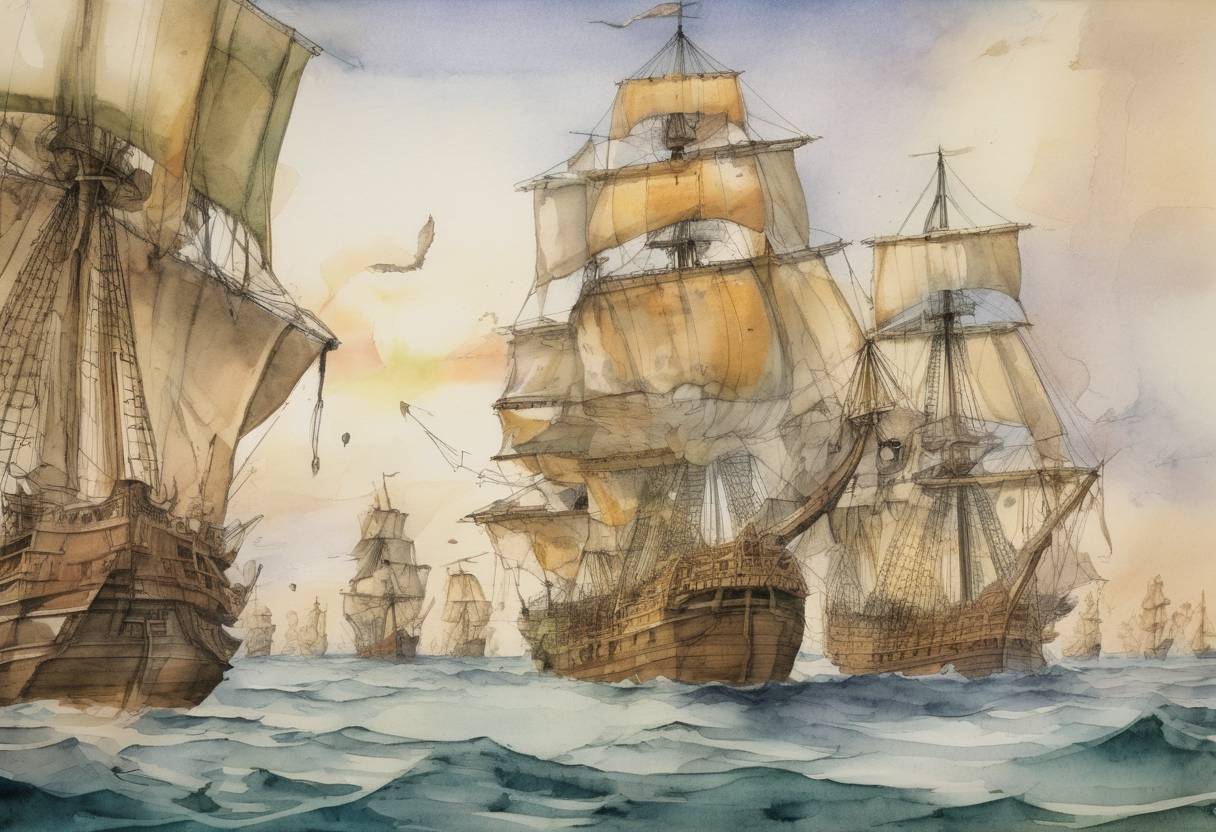
On September 9, 1493, Christopher Columbus embarked on his second voyage to the New World, a significant expedition that marked the beginning of sustained European colonization in the Americas. This voyage was far more extensive than his first, reflecting the growing interest and investment of the Spanish Crown in the potential riches of the newly discovered lands.
Following the success of his first voyage in 1492, where Columbus reached the islands of the Caribbean, he returned to Spain with news of his discoveries. The Spanish monarchs, King Ferdinand II of Aragon and Queen Isabella I of Castile, were eager to capitalize on these new territories. They granted Columbus the authority to organize a second expedition, this time with the explicit goal of establishing a permanent Spanish presence in the New World.
Columbus’ second voyage was significantly larger in scale compared to his initial journey. He set sail from Cádiz, Spain, with a fleet of 17 ships. This armada was equipped not only for exploration but also for colonization. The fleet carried approximately 1,200 to 1,500 people, including soldiers, settlers, priests, and officials, as well as livestock, seeds, and other supplies necessary for establishing colonies.
The primary objectives of the second voyage were:
Columbus’ second voyage was a pivotal moment in history, marking the transition from exploration to colonization and setting the stage for the extensive European involvement in the Americas that followed.
Source: www.britannica.com