February 6, 2016: Southern Taiwan Earthquake
2016 · Tainan, Taiwan
A magnitude 6.4 earthquake struck southern Taiwan, causing widespread damage and resulting in the collapse of a residential building in Tainan, leading to 117 deaths.
October 18, 1356
The Basel earthquake, one of the most significant seismic events in Central Europe, struck the region, causing widespread destruction in Basel and surrounding areas.
Basel, Holy Roman Empire (modern-day Switzerland) | N/A
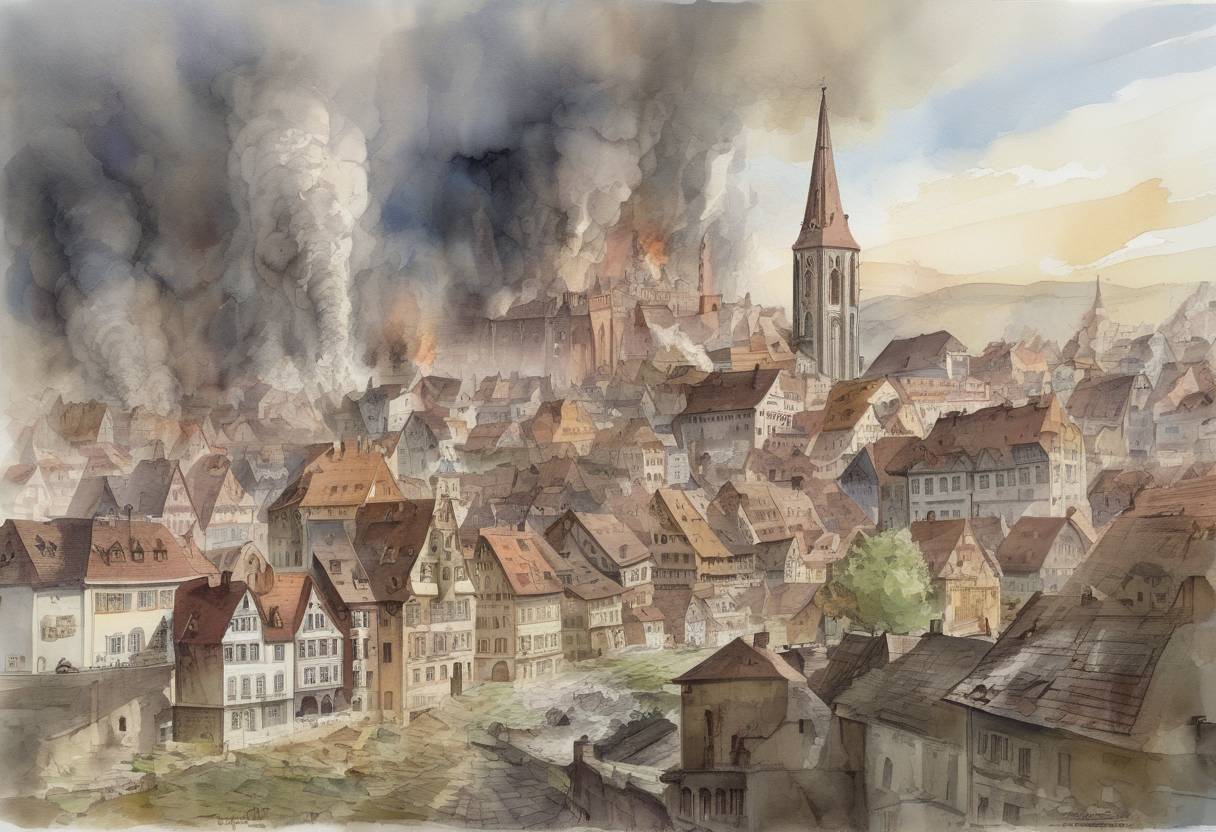
On October 18, 1356, one of the most significant seismic events in Central Europe struck the region, causing widespread destruction in Basel and its surrounding areas. This earthquake, often referred to as the Basel Earthquake or the Earthquake of 1356, is notable not only for its intensity but also for its impact on the medieval city and its long-term implications for seismic awareness in the region.
During the 14th century, Basel was a thriving city located along the Rhine River, serving as a crucial hub for trade and commerce in the Holy Roman Empire. The city was characterized by its medieval architecture, including numerous churches, bridges, and fortifications.
The Basel Earthquake of 1356 is a significant event in the history of Central Europe, illustrating the challenges faced by medieval societies in coping with natural disasters. It underscores the importance of preparedness and resilience in urban planning, lessons that continue to resonate in modern times.
In summary, the Basel Earthquake of 1356 was a pivotal moment in the history of the region, leaving a lasting legacy on the city of Basel and contributing to the broader understanding of seismic activity in Europe.
Source: en.wikipedia.org