The Liberation of Raqqa: A Turning Point in the Fight Against ISIS
2017 · Raqqa, Syria
The United Nations announced that the Islamic State had been driven out of Raqqa, Syria, marking a significant defeat for the militant group.
November 22, 2013
The United Nations declared the end of the 2013 Central African Republic conflict, although violence continued in the region.
Bangui, Central African Republic | United Nations
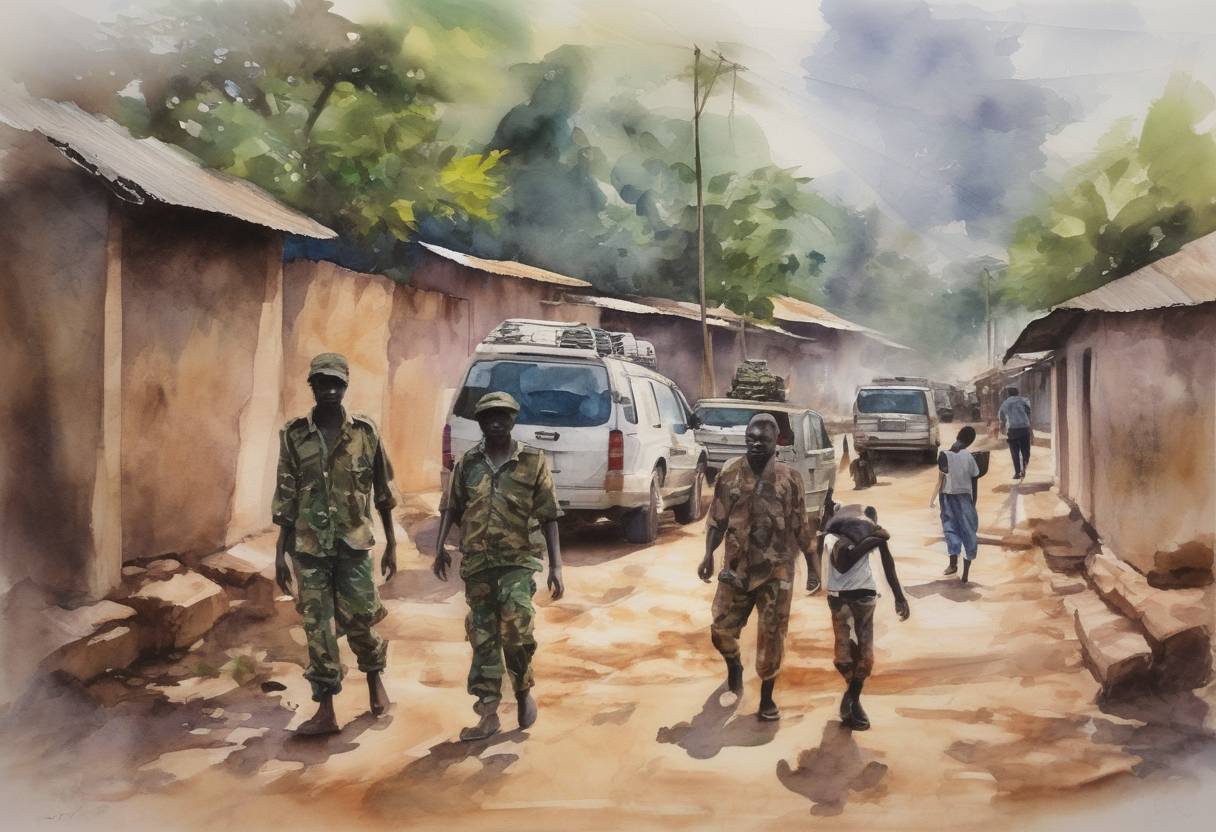
On November 22, 2013, the United Nations made a significant announcement regarding the conflict in the Central African Republic (CAR), declaring an end to the hostilities that had erupted earlier that year. However, despite this declaration, violence and instability continued to plague the region, highlighting the complexities of the situation on the ground.
The conflict in the Central African Republic began in late 2012 when a coalition of rebel groups known as Séléka, predominantly composed of Muslim fighters, launched an offensive against the government of President François Bozizé. By March 2013, Séléka had successfully overthrown Bozizé, and their leader, Michel Djotodia, declared himself president.
The coup led to widespread chaos and violence, as the predominantly Christian anti-Balaka militias formed in response to Séléka’s actions, resulting in a cycle of retaliatory attacks. The conflict quickly took on a sectarian nature, with both sides committing atrocities against civilians.
In response to the escalating violence and humanitarian crisis, the United Nations and other international bodies became increasingly involved. The UN Security Council authorized the deployment of an African-led International Support Mission to the Central African Republic (MISCA) to help stabilize the situation.
On November 22, 2013, the UN declared an end to the conflict, a move aimed at encouraging peace and reconciliation efforts. This declaration was part of a broader international effort to restore order and support the transitional government led by Djotodia.
Despite the UN’s declaration, violence persisted in the Central African Republic. The sectarian nature of the conflict made it difficult to achieve lasting peace. The transitional government struggled to exert control over the entire country, and both Séléka and anti-Balaka groups continued to engage in violent clashes.
The humanitarian situation remained dire, with thousands of people displaced and in need of urgent assistance. The international community, including the UN, continued to call for dialogue and reconciliation among the warring factions.
The conflict in the Central African Republic underscored the challenges of post-colonial state-building in Africa, where ethnic and religious divisions can be exacerbated by political instability. The international response highlighted the role of global organizations in conflict resolution, though it also demonstrated the limitations of such interventions in achieving immediate peace.
The situation in CAR remained a focal point for international humanitarian efforts and peacekeeping missions in the years that followed, as the country worked towards rebuilding and reconciliation.
In summary, the UN’s declaration on November 22, 2013, marked a pivotal moment in the international response to the Central African Republic conflict, though it did not immediately resolve the deep-rooted issues that continued to fuel violence in the region.
Source: www.un.org