Excommunication of Martin Luther by Pope Leo X
1521 · Rome, Papal States
Pope Leo X excommunicated Martin Luther with the papal bull Decet Romanum Pontificem.
December 17, 1538
Pope Paul III excommunicated King Henry VIII of England.
Rome, Papal States | Catholic Church
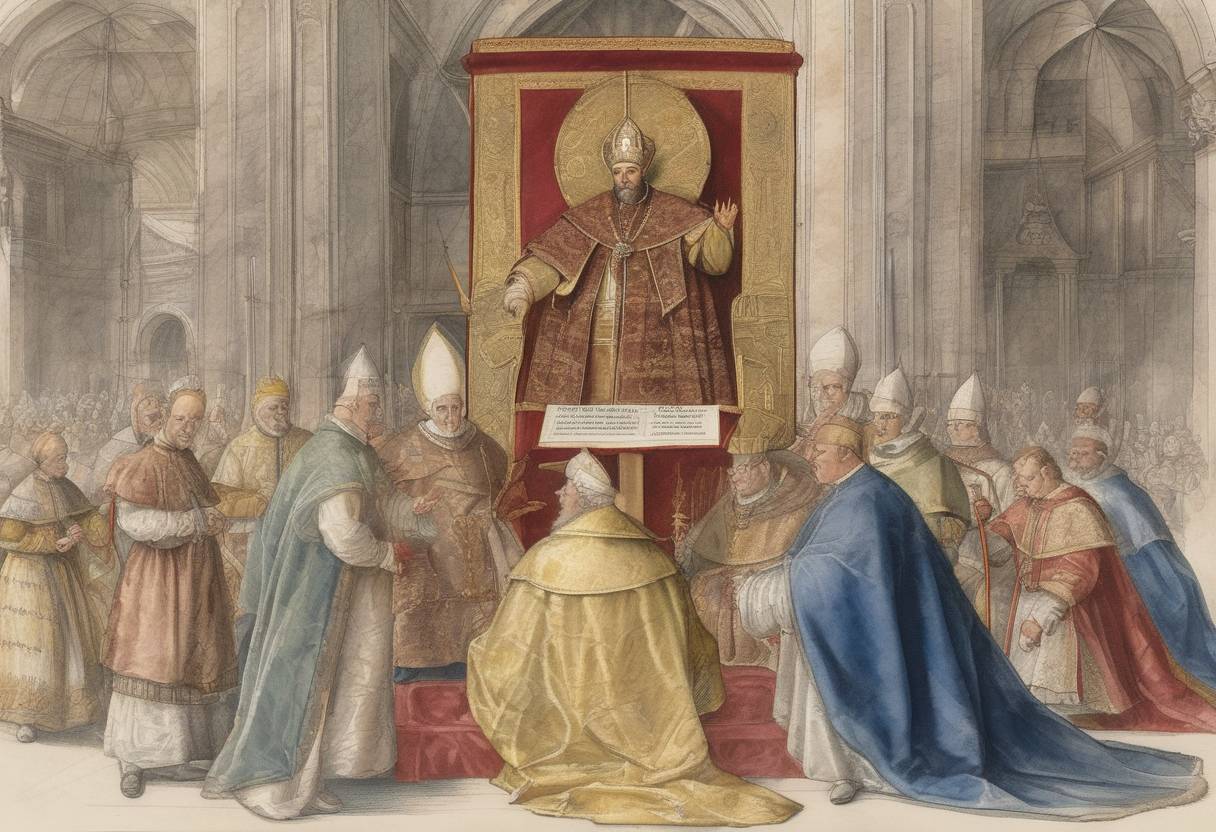
On December 17, 1538, Pope Paul III formally excommunicated King Henry VIII of England, marking a significant moment in the history of the English Reformation. This event was the culmination of a series of religious and political conflicts between the English monarchy and the Papacy, which had profound implications for the religious landscape of England and Europe.
The roots of the conflict lay in King Henry VIII’s desire to annul his marriage to Catherine of Aragon. Catherine had failed to produce a male heir, and Henry sought to marry Anne Boleyn in hopes of securing the Tudor dynasty. However, Pope Clement VII, under pressure from Catherine’s nephew, Emperor Charles V, refused to grant the annulment.
In response, Henry VIII initiated a series of actions that led to the English Reformation:
Pope Paul III, who became pope in 1534, inherited the ongoing conflict with Henry VIII. Despite attempts at reconciliation, Henry’s continued defiance and the execution of prominent Catholic figures like Sir Thomas More and Bishop John Fisher exacerbated tensions.
On December 17, 1538, Pope Paul III issued a papal bull of excommunication against Henry VIII. This decree formally expelled Henry from the Catholic Church, condemning his actions and declaring him a heretic. The excommunication was a symbolic gesture, as Henry had already established the Church of England and was no longer under papal authority.
The excommunication of Henry VIII had several significant consequences:
In summary, the excommunication of King Henry VIII by Pope Paul III was a pivotal event in the English Reformation, underscoring the deep religious and political rifts of the period. It marked a definitive break from the Catholic Church, shaping the religious and political trajectory of England for generations.
Source: en.wikipedia.org