891 · Rome, Papal States
Formosus is elected Pope, succeeding Stephen V. His papacy would later become infamous for the Cadaver Synod, where his corpse was put on trial.
December 15, 0687
Pope Sergius I was consecrated as the 84th pope of the Catholic Church, following a disputed papal election.
Rome, Papal States | Catholic Church
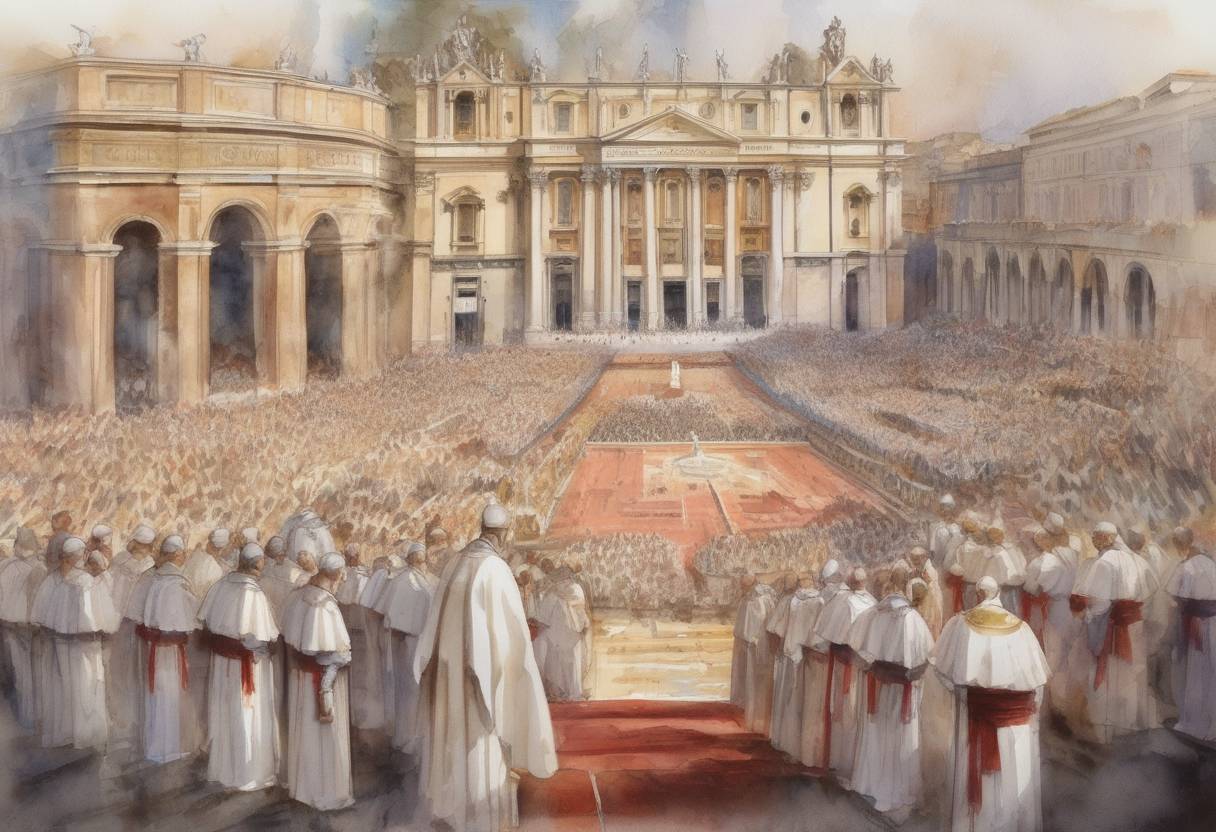
On December 15, 687, Sergius I was consecrated as the 84th pope of the Catholic Church, following a notably contentious papal election. His ascension to the papacy marked the resolution of a significant dispute within the Church, reflecting the complex political and religious dynamics of the time.
The papal election of 687 was fraught with conflict, as it occurred during a period of considerable instability within the Church. The death of Pope Conon in September 687 led to a power struggle among various factions vying for control of the papacy. This struggle was emblematic of the broader tensions between the Roman clergy, the Byzantine Empire, and the influential Roman nobility.
Initially, two candidates emerged as rivals for the papacy: Paschal, an archdeacon, and Theodore, an archpriest. Both were supported by different factions within the Church and the Roman community. The election was marred by chaos, with both candidates being simultaneously elected by their respective supporters, leading to a deadlock.
The deadlock was eventually broken with the intervention of the higher clergy and the Roman military. Sergius, a priest of the Church of Santa Susanna, was proposed as a compromise candidate. His reputation for piety and his ability to navigate the complex political landscape made him an acceptable choice for both factions.
Sergius was elected and consecrated on December 15, 687, effectively ending the dispute. His election was recognized by the Byzantine Emperor, which helped solidify his position and restore some degree of stability to the papacy.
During his papacy, Sergius I focused on strengthening the Church’s spiritual authority and addressing theological disputes. He is noted for his opposition to the Quinisext Council’s canons, which he refused to endorse, as they were seen as infringing upon the autonomy of the Roman Church.
Sergius I also contributed to the liturgical life of the Church, introducing the Agnus Dei chant into the Mass. His papacy was marked by efforts to maintain the independence of the Roman Church from external political influences, particularly those of the Byzantine Empire.
The election of Sergius I and his subsequent papacy played a crucial role in stabilizing the Church during a turbulent period. His ability to navigate the complex political landscape set a precedent for future popes, highlighting the importance of diplomatic skill in ecclesiastical leadership.
Sergius I’s papacy also underscored the ongoing tensions between the Eastern and Western branches of Christianity, which would continue to shape the Church’s history in the centuries to come. His resistance to external pressures helped to assert the independence of the Roman papacy, a theme that would resonate throughout the medieval period.
In summary, the consecration of Pope Sergius I on December 15, 687, was a pivotal moment in the history of the Catholic Church, resolving a disputed election and setting the stage for future developments in the papacy’s role and influence.
Source: en.wikipedia.org