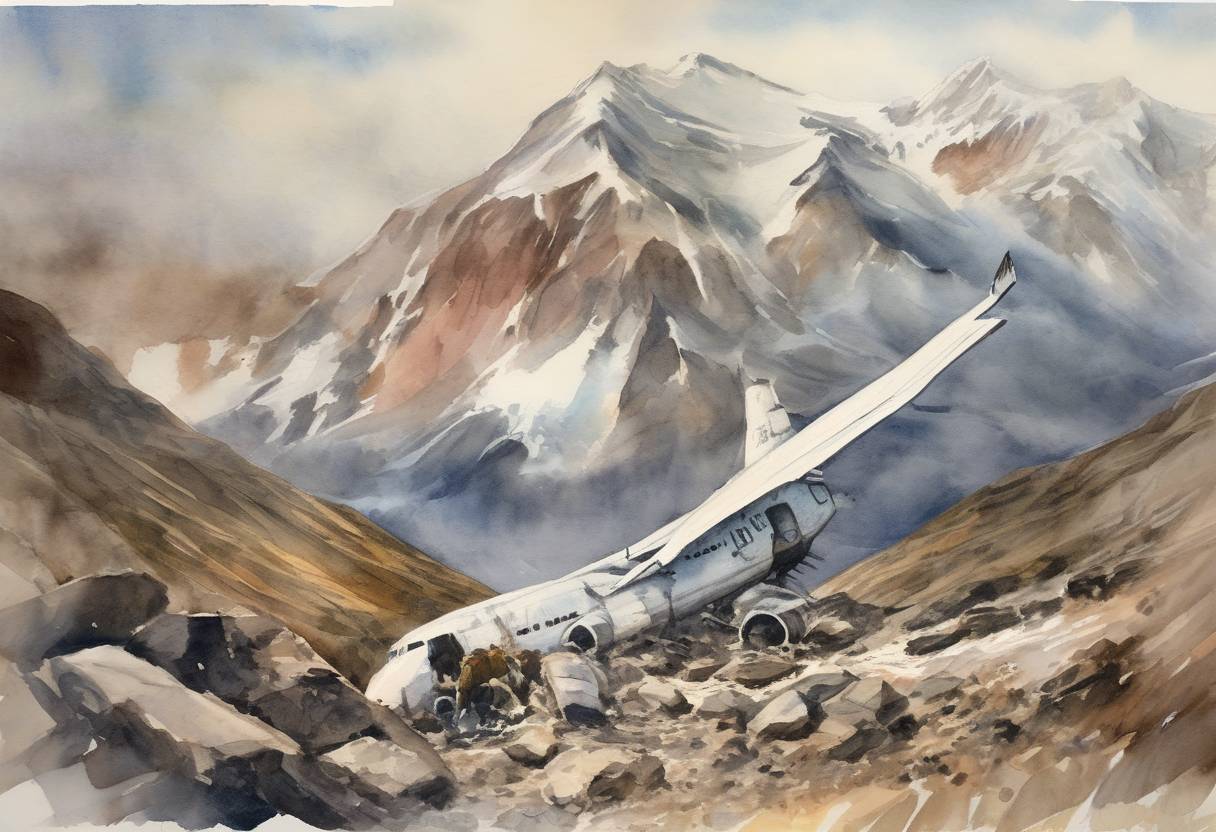
Uruguayan Air Force Flight 571 Crash - October 13, 1972
On October 13, 1972, Uruguayan Air Force Flight 571, a Fairchild FH-227D, crashed in the remote Andes Mountains. This tragic event led to one of the most remarkable survival stories in modern history, involving extreme measures taken by the survivors to stay alive.
Background
The flight was chartered by a Uruguayan rugby team, the Old Christians Club, along with their friends and family, to travel from Montevideo, Uruguay, to Santiago, Chile. The aircraft carried 45 passengers and crew members.
The Crash
- Date: October 13, 1972
- Location: Andes Mountains, near the border between Chile and Argentina
- Cause: The crash was attributed to poor weather conditions and navigational errors. The pilots misjudged their location due to cloud cover and began descending prematurely, believing they had cleared the mountains.
- Survivors: Of the 45 people on board, 12 died in the crash or shortly thereafter. Several others succumbed to injuries and harsh conditions in the following days.
- Rescue Efforts: Initial search efforts were hampered by the remote location and adverse weather. After eight days, the search was called off, and the passengers were presumed dead.
Survival and Cannibalism
Faced with starvation and extreme cold, the survivors made the harrowing decision to resort to cannibalism, consuming the bodies of the deceased passengers. This decision was made collectively and was seen as a last resort to sustain life.
Rescue
- Expedition for Help: On December 12, 1972, two survivors, Nando Parrado and Roberto Canessa, embarked on a ten-day trek across the mountains to find help.
- Rescue: On December 20, 1972, they encountered a Chilean shepherd, who alerted authorities. The remaining 14 survivors were rescued on December 23, 1972, after enduring 72 days in the mountains.
Aftermath and Legacy
- Public Reaction: The survivors’ story captured global attention, sparking discussions on human endurance and ethics.
- Cultural Impact: The ordeal was later recounted in books and films, most notably in the 1993 movie “Alive,” based on Piers Paul Read’s book of the same name.
- Survivors’ Perspective: Many survivors have spoken about the experience, emphasizing their unity and the difficult choices they faced.
The crash of Uruguayan Air Force Flight 571 remains a poignant example of human survival against overwhelming odds, illustrating both the fragility and resilience of life.