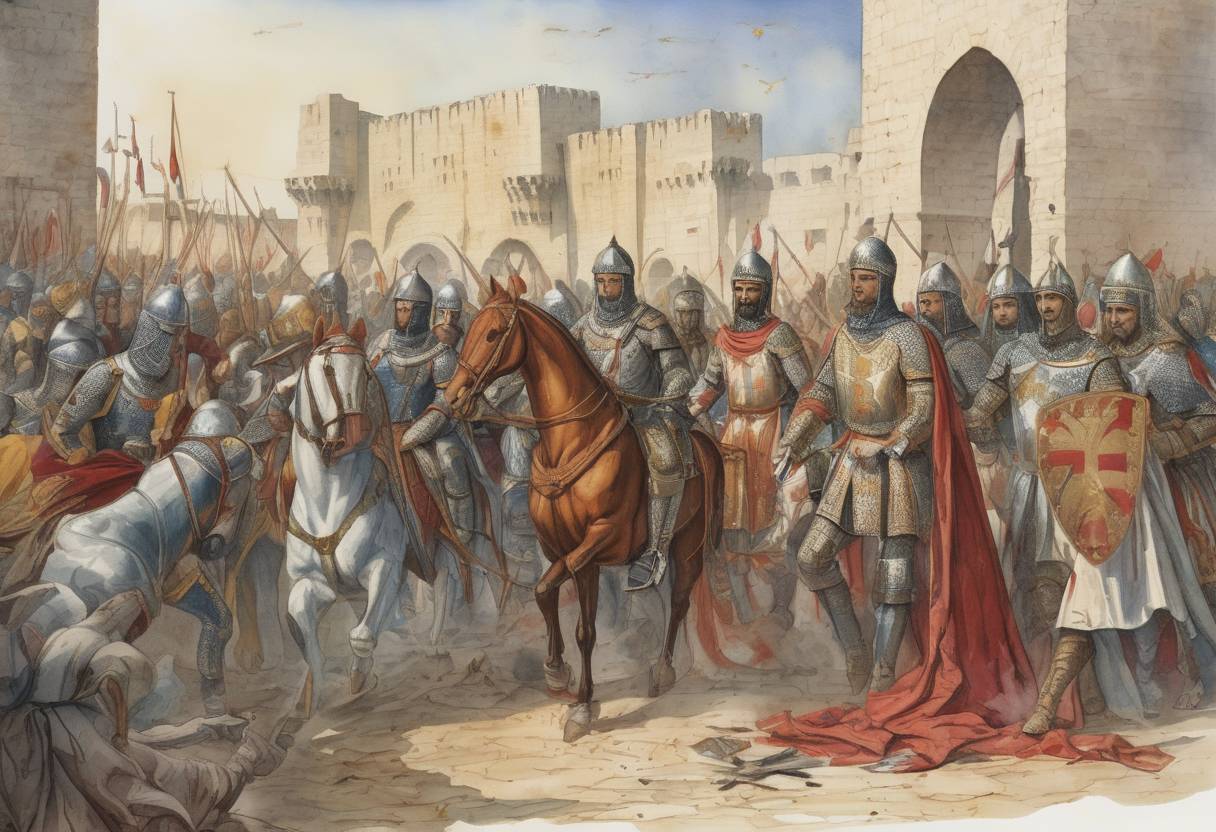
The Eighth Crusade and the Death of King Louis IX
Background
The Eighth Crusade, launched in 1270, was part of a series of religious wars initiated by European Christians to reclaim the Holy Land from Muslim control. King Louis IX of France, who had previously led the Seventh Crusade, spearheaded this expedition. His motivations were both religious and political, driven by a desire to strengthen Christian influence in the Mediterranean and support the beleaguered Crusader states in the Levant.
Key Events Leading to the Crusade
- Previous Crusades: The earlier Crusades had seen varying degrees of success and failure, with the Seventh Crusade ending in Louis IX’s capture and ransom in Egypt. Despite this setback, Louis remained committed to the Crusading cause.
- Political Context: By the mid-13th century, the Crusader states were under significant pressure from Muslim forces. The fall of Jerusalem in 1244 and the subsequent loss of other territories heightened the urgency for another Crusade.
- Strategic Decision: Instead of heading directly to the Holy Land, Louis IX decided to target Tunis, believing that converting the Muslim ruler there could provide a strategic base for future operations in the region.
The Eighth Crusade
- Departure and Arrival: Louis IX and his forces departed from France in July 1270, arriving in Tunis in August. The choice of Tunis was partly influenced by reports that the local ruler might be open to conversion to Christianity.
- Challenges: Upon arrival, the Crusaders faced immediate difficulties. The expected support from local rulers did not materialize, and the harsh summer climate took a toll on the troops.
The Death of King Louis IX
- Dysentery Outbreak: A dysentery outbreak swept through the Crusader camp, exacerbated by the lack of fresh water and the intense heat.
- Louis IX’s Demise: On August 25, 1270, King Louis IX succumbed to the illness. His death marked the effective end of the Eighth Crusade, as the campaign lost its primary leader and driving force.
Aftermath and Historical Significance
- Immediate Consequences: Following Louis’s death, his brother Charles of Anjou negotiated a treaty with the ruler of Tunis, securing safe passage for the Crusaders to return to Europe.
- Legacy: Louis IX was canonized as a saint in 1297, and his commitment to the Crusading cause was celebrated in France. However, the Eighth Crusade failed to achieve its objectives, highlighting the diminishing effectiveness of such campaigns.
- Broader Impact: The Crusades continued to influence Christian-Muslim relations and European politics, but the failure of the Eighth Crusade underscored the waning enthusiasm and resources available for these endeavors.
The Eighth Crusade is a poignant example of the complex interplay of faith, politics, and military ambition that characterized the medieval Crusades.