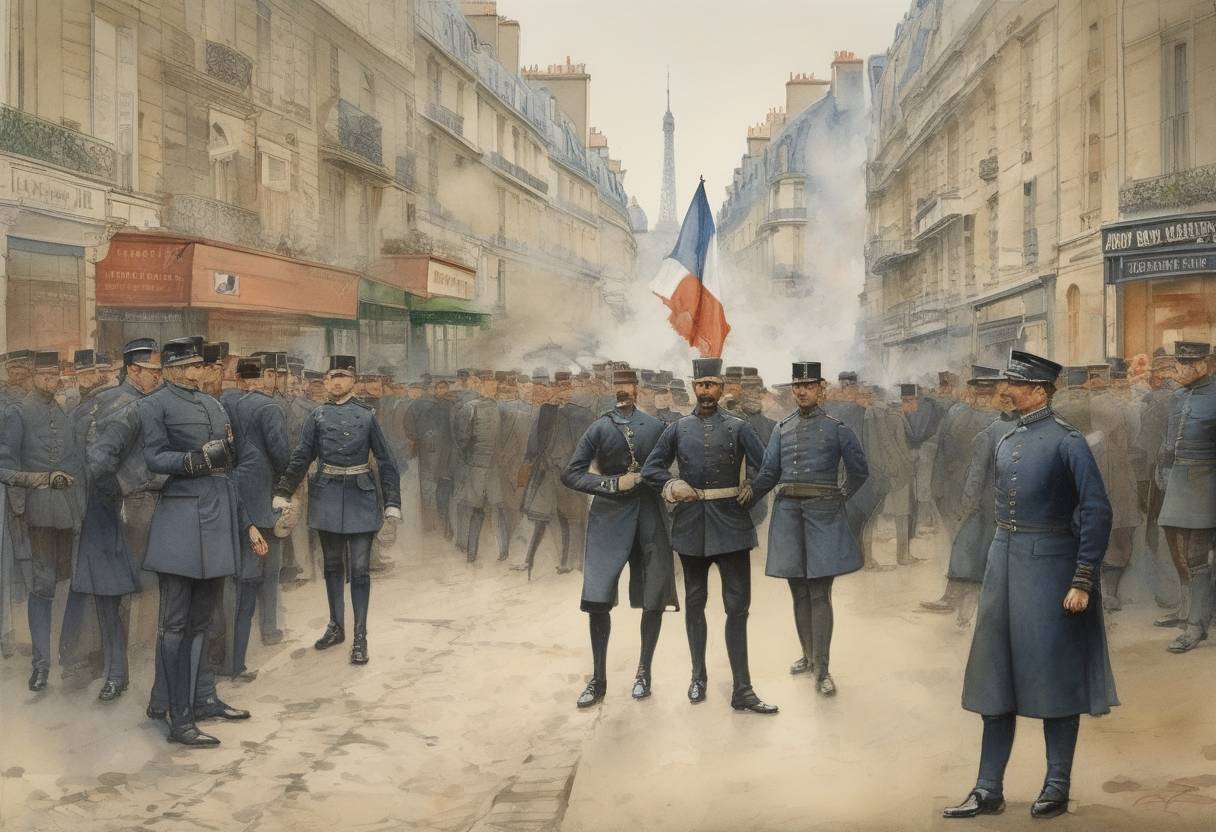
The Dreyfus Affair: December 22, 1894
The Dreyfus Affair was a significant political scandal that divided France in the late 19th and early 20th centuries. It began on December 22, 1894, when Alfred Dreyfus, a Jewish French army officer, was convicted of treason. This event marked the beginning of a long and contentious episode in French history, highlighting issues of anti-Semitism, military justice, and political division.
Background
- Alfred Dreyfus: Born in 1859 in Alsace, Dreyfus was a promising officer in the French Army. His Jewish heritage made him a target in an era where anti-Semitic sentiments were prevalent in France.
- Political Climate: The Third French Republic was a period of political instability, with deep divisions between monarchists, republicans, and other factions. Anti-Semitism was widespread, exacerbated by economic and social tensions.
The Trial
- Accusation: Dreyfus was accused of passing military secrets to the German Embassy in Paris. The evidence against him was largely circumstantial, based on a handwritten memorandum (the “bordereau”) found in a wastebasket at the German Embassy.
- Conviction: Despite the lack of concrete evidence, Dreyfus was convicted of treason by a military court on December 22, 1894. He was sentenced to life imprisonment and deported to Devil’s Island, a penal colony in French Guiana.
Controversy and Division
- Anti-Semitism: The trial and conviction were heavily influenced by anti-Semitic attitudes, with Dreyfus’s Jewish identity playing a significant role in public perception and the judicial process.
- Public Reaction: The case polarized French society. Many saw Dreyfus as a scapegoat, while others believed in his guilt. The affair became a symbol of the broader struggle between justice and prejudice.
Key Developments
- Émile Zola’s “J’Accuse…!”: In 1898, the famous writer Émile Zola published an open letter titled “J’Accuse…!” in the newspaper L’Aurore, accusing the French government and military of a miscarriage of justice. This publication brought international attention to the case.
- Revisions and Exoneration: Over time, evidence emerged suggesting that another officer, Ferdinand Walsin Esterhazy, was the true culprit. In 1899, Dreyfus was brought back to France for a retrial, which again resulted in a conviction, though he was pardoned shortly thereafter. It wasn’t until 1906 that Dreyfus was fully exonerated and reinstated into the army.
Aftermath and Significance
- Impact on France: The Dreyfus Affair had a lasting impact on French politics and society, contributing to the rise of the secular, republican movement and the strengthening of civil rights.
- Legacy: The affair highlighted the dangers of prejudice and the importance of a fair judicial process. It remains a powerful example of the struggle for justice in the face of institutional bias.
The Dreyfus Affair is remembered as a pivotal moment in French history, illustrating the complexities of justice, nationalism, and human rights.