The Signing of the Civil Rights Act of 1964
1964 · Washington, D.C., United States
U.S. President Lyndon B. Johnson signs the Civil Rights Act of 1964 into law, prohibiting discrimination based on race, color, religion, sex, or national origin.
October 12, 1871
President Ulysses S. Grant condemns the activities of the Ku Klux Klan and deploys the U.S. military to suppress its activities in South Carolina, marking a significant step in the enforcement of civil rights during Reconstruction.
Various, United States | U.S. Government
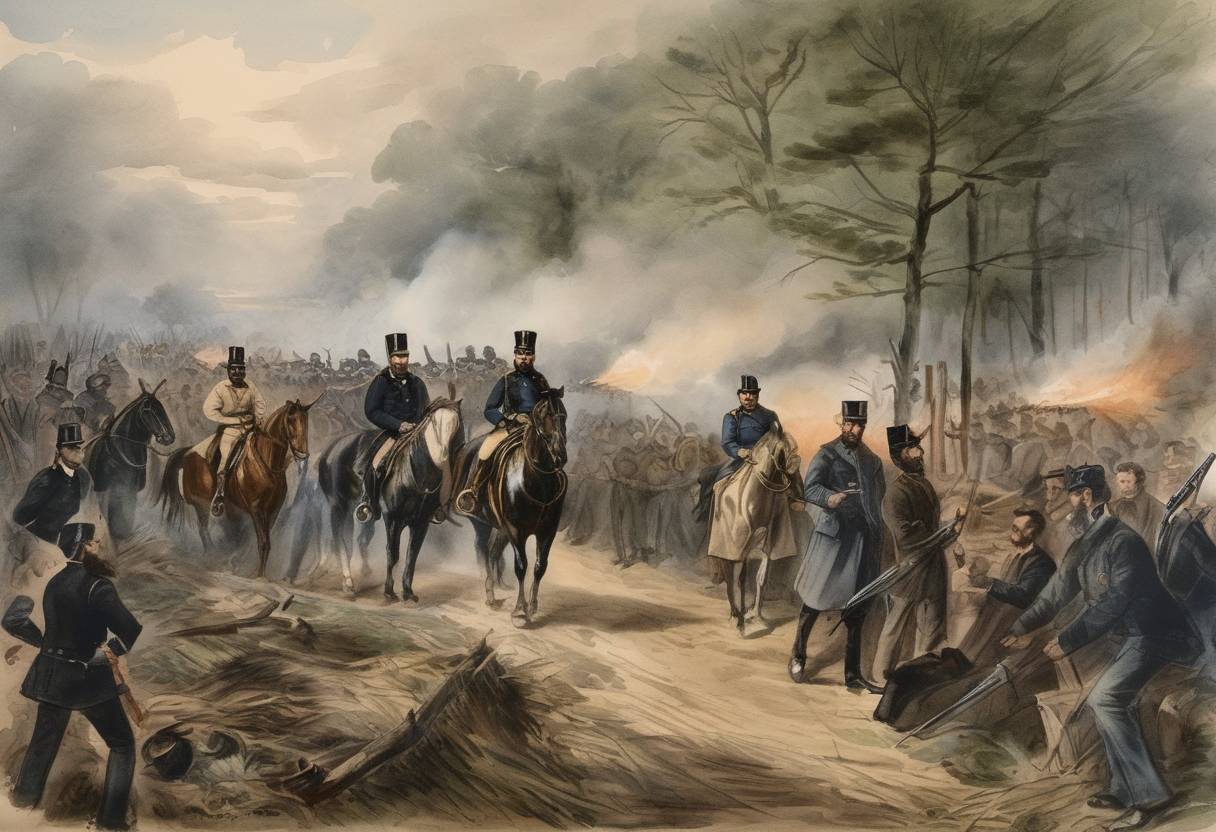
On October 12, 1871, President Ulysses S. Grant took a decisive step in the fight to secure civil rights during the Reconstruction era by issuing a proclamation that targeted the violent activities of the Ku Klux Klan (KKK) in South Carolina. This action was part of a broader federal effort to enforce civil rights laws and combat racial terrorism in the post-Civil War South.
Following the Civil War, the Reconstruction era aimed to reintegrate Southern states into the Union and to extend civil rights, particularly to newly emancipated African Americans. Despite these efforts, groups like the Ku Klux Klan emerged, using terror and violence to oppose these changes and maintain white dominance. The Klan targeted freedmen and their allies, engaging in acts of intimidation, lynching, and destruction.
In response to the increasing violence, the U.S. Congress enacted several Enforcement Acts between 1870 and 1871 to protect African Americans’ rights and curb the Klan’s influence. These laws were designed to enforce the 14th and 15th Amendments, which granted citizenship and voting rights to African Americans.
President Grant’s October 12 proclamation was a direct application of the Enforcement Acts. He invoked the Insurrection Act of 1807, allowing the President to deploy military forces to suppress domestic violence and protect civilians. Grant focused his efforts on South Carolina, where Klan activities were particularly aggressive and widespread.
The proclamation declared that civil authorities in several South Carolina counties were unable to maintain law and order, and it warned individuals engaged in KKK activities to cease their actions or face military intervention. When Klan members defied this warning, Grant promptly authorized U.S. troops to enter the state. This military presence aimed to restore peace, enforce federal laws, and protect African American communities from racial violence.
Grant’s actions in 1871 were a rare assertion of federal power to protect civil rights in the Reconstruction South. His use of military force against the KKK underscored the federal government’s commitment to enforcing Reconstruction policies and defending African Americans’ newly attained rights.
Although these measures temporarily weakened the Klan’s influence, they also highlighted the challenges of sustaining long-term social and political change in the face of deep-seated racial hostility. The federal government’s commitment began to wane in the mid-1870s, partly due to political fatigue and economic concerns, leading to the eventual end of Reconstruction in 1877.
Grant’s deployment of troops in South Carolina on October 12, 1871, remains a pivotal moment in the history of civil rights, representing a significant yet ultimately limited effort to combat racial violence and injustice during the Reconstruction era.
Source: en.wikipedia.org