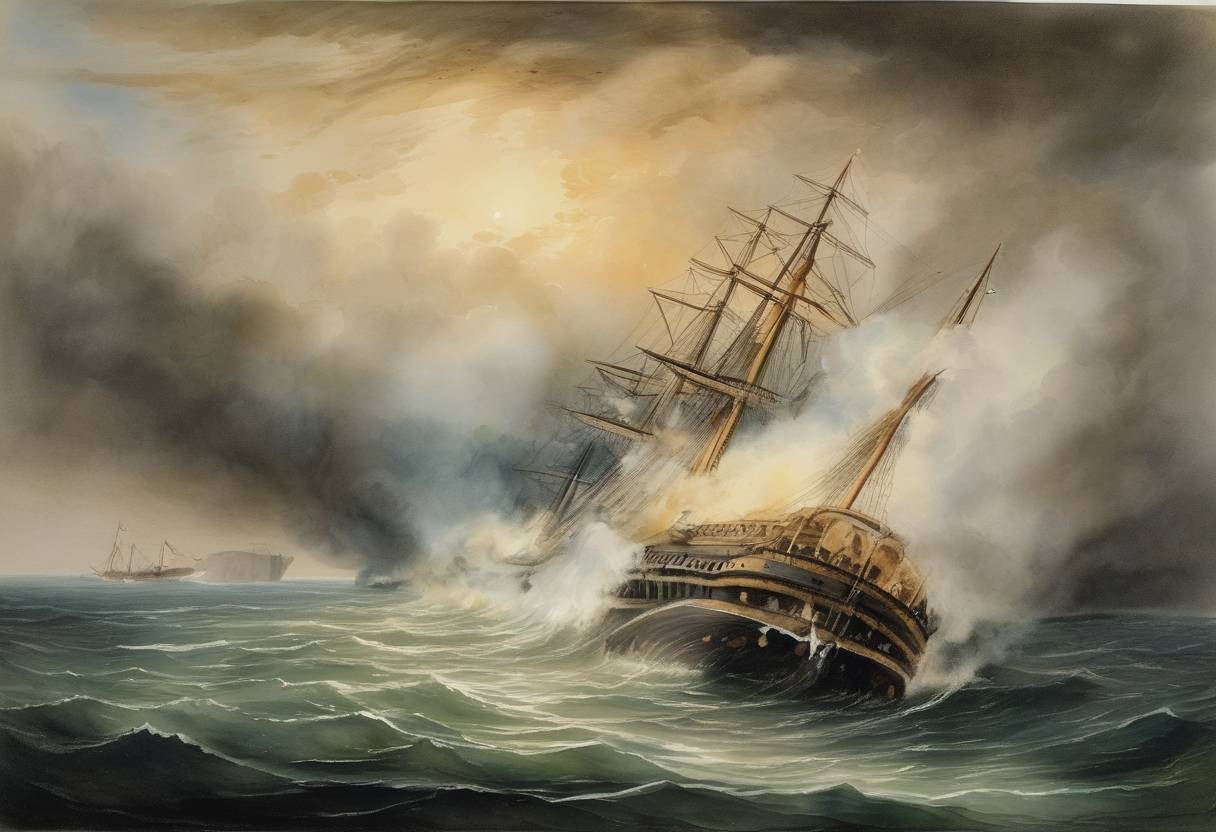
SS Central America Sinking - September 13, 1857
The sinking of the steamship SS Central America stands as one of the most tragic maritime disasters of the 19th century. On September 13, 1857, the ship went down off the coast of the Carolinas, overwhelmed by a powerful hurricane. This calamity led to a tragic loss of approximately 425 lives and an immense economic impact due to the loss of valuable cargo.
Background
SS Central America was a sidewheel steamer that played a crucial role in transporting passengers and precious cargo between Central America and the Eastern United States during the California Gold Rush. It was part of the wave of technological and economic changes of the mid-19th century, linking San Francisco to Panama, after which passengers and cargo would travel overland across the Isthmus to the Atlantic side, where steamships like the SS Central America would continue the journey to New York.
The Voyage and Disaster
The ill-fated journey began when SS Central America departed from the Panamanian port of Colón on September 3, 1857, bound for New York City. Aboard were over 550 passengers and crew, as well as approximately three tons of gold from the California Gold Rush, intended to boost the struggling economy of the United States amid the Panic of 1857.
As the ship entered the Atlantic, it encountered a severe hurricane. By September 9, fierce winds and towering waves lashed the steamer, compromising its ability to navigate effectively. On September 12, the situation worsened as the ship’s bilge pumps failed, leading to catastrophic flooding. Despite the crew’s desperate efforts to bail water, the relentless storm ultimately overpowered the vessel.
By the afternoon of September 12, with the steam engines disabled and the ship listing severely, Captain William Lewis Herndon made the heart-wrenching decision to signal for help. The steamship encountered the three-masted bark Marine, which managed to rescue approximately 153 passengers, primarily women and children, before SS Central America sank the following day.
Aftermath
The sinking of SS Central America had widespread repercussions. The immense loss of gold, valued at approximately $2 million at the time, contributed to the financial instability caused by the Panic of 1857, exacerbating economic tensions in the United States. The loss profoundly impacted families and communities, a somber chapter in the era of rapid expansion and opportunity.
Additionally, Captain Herndon became a hero for his efforts to save as many lives as possible, with numerous newspaper articles and personal accounts praising his bravery and leadership. He remained aboard until the ship went down, an act of courage that was widely commemorated.
Historical Significance
The wreck of SS Central America was discovered in 1988, sparking interest due to the recovery of a significant amount of gold and personal artifacts. This discovery highlighted the ship’s role in American economic history and maritime lore, providing insights into the lives of those aboard during a pivotal time in U.S. history. The disaster remains a poignant reminder of the perils faced during an era of enormous change and ambition.