The November Uprising Begins: November 29, 1830
1830 · Warsaw, Poland
The November Uprising against Russian rule begins in Warsaw with an attack on the Belweder Palace, starting an armed rebellion that lasts almost a year.
December 28, 1795
The Russian Empire and Austria partitioned the lands of the Polish-Lithuanian Commonwealth in the Third Partition of Poland, effectively dissolving the state and sovereign status of Poland.
Grodno, Poland | Russian Empire, Habsburg Monarchy
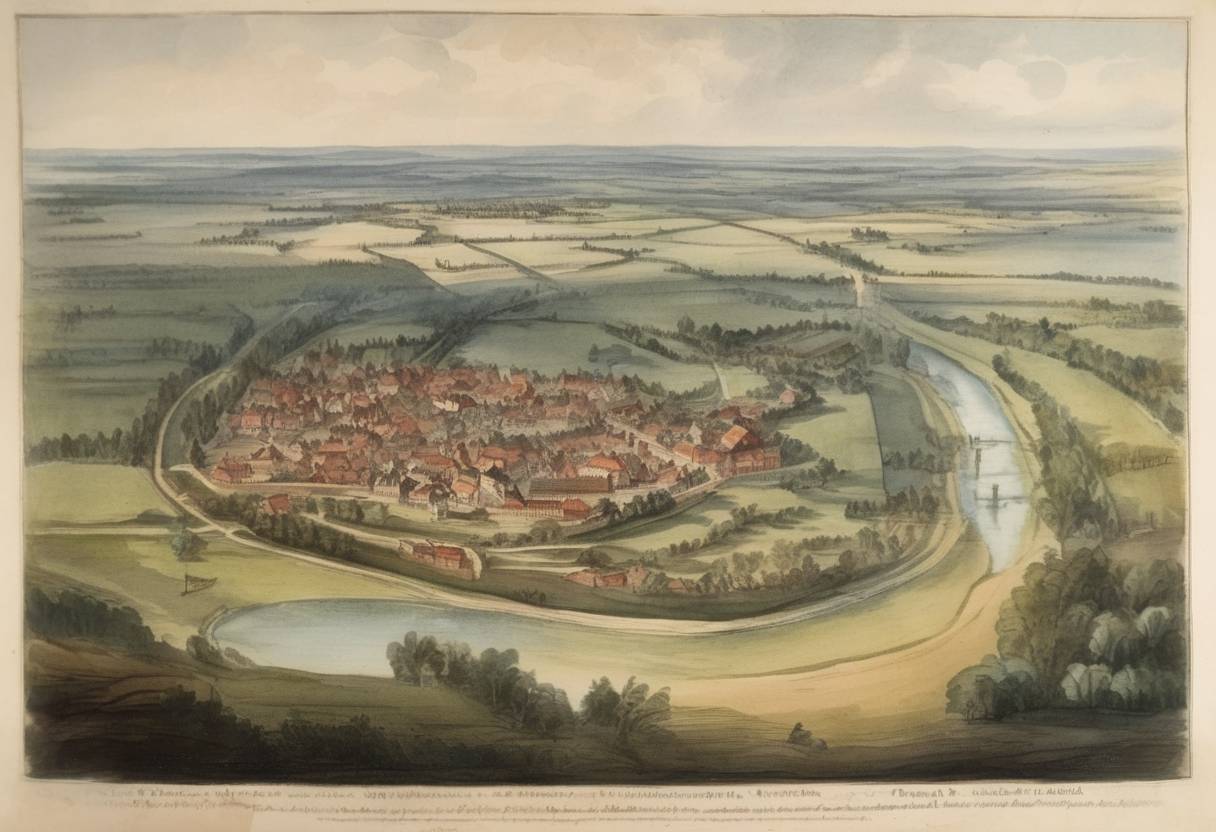
On December 28, 1795, the Third Partition of Poland culminated, resulting in the complete dissolution of the Polish-Lithuanian Commonwealth. This pivotal event effectively erased Poland as a sovereign state from the map of Europe for over a century. The Third Partition was the final act in a series of three partitions carried out by the neighboring powers of Russia, Prussia, and Austria.
The Polish-Lithuanian Commonwealth, established in 1569, was once a major political and military power in Europe. However, by the 18th century, internal strife, economic challenges, and a lack of political cohesion left it vulnerable to external pressures. The Commonwealth’s political system, known as the “Noble Democracy,” allowed any member of the nobility to veto legislation, which left the state politically fragmented and ineffective in governance.
The First Partition of Poland occurred in 1772, driven by the ambitions of neighboring states eager to capitalize on Poland’s weakened state. This was followed by the Second Partition in 1793. The internal reform attempts, such as the Constitution of May 3, 1791, which sought to strengthen the Polish government, were met with resistance and intervention by the Commonwealth’s powerful neighbors.
Opposition to these partitions and attempts at revival, such as the Kościuszko Uprising led by Tadeusz Kościuszko in 1794, were forcefully suppressed by Russian and Prussian forces. The failure of such uprisings further destabilized the region and set the stage for total dismemberment.
In the Third Partition of 1795, the remaining territories of the Polish-Lithuanian Commonwealth were divided among Russia, Prussia, and Austria:
These territorial acquisitions were formalized through agreements among the partitioning powers, effectively removing Poland’s sovereign status.
The Third Partition resulted in the complete dissolution of the Polish state, and Poland ceased to exist as an independent entity. The consequences were far-reaching:
The Third Partition of Poland remains a stark reminder of the vulnerabilities of fragmented states and the potential consequences of great power politics.
Source: www.britannica.com