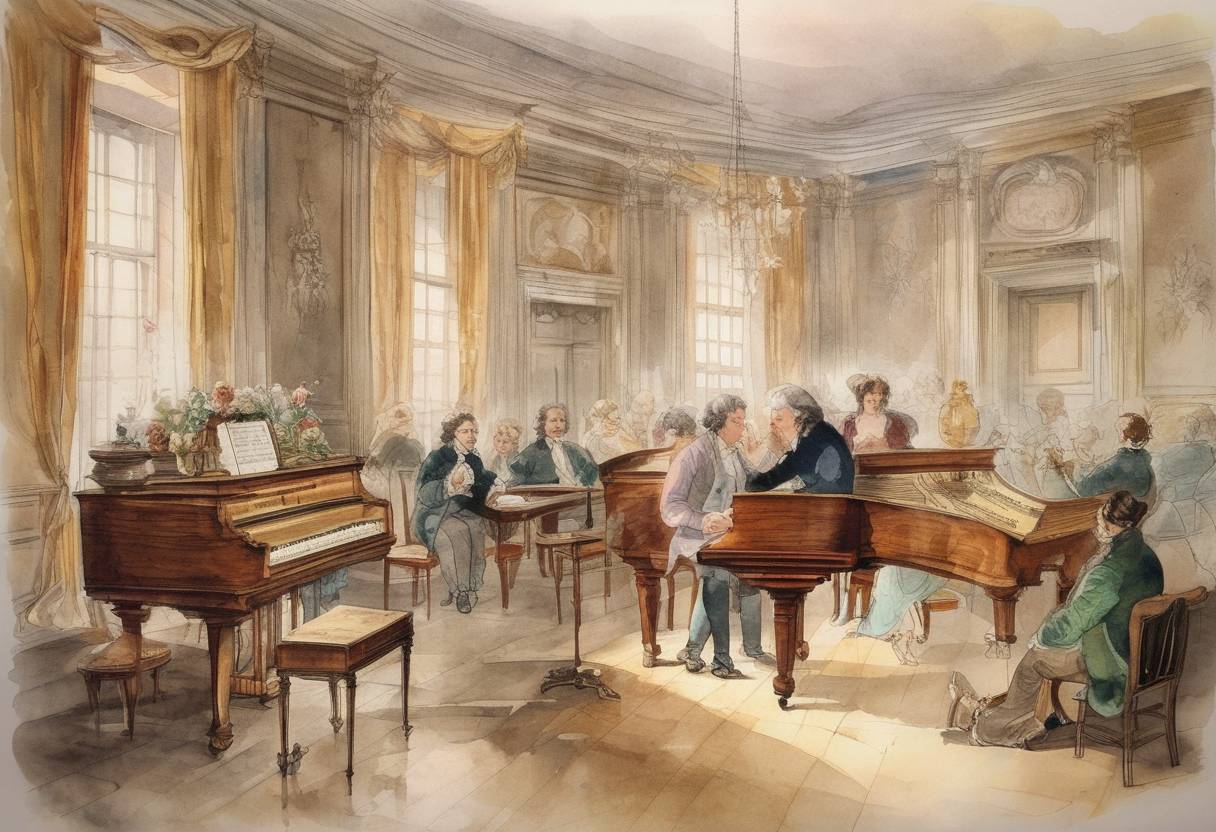
Beethoven Composes “Für Elise” on April 27, 1810
On April 27, 1810, Ludwig van Beethoven, one of the most influential composers in Western music history, composed the piano piece known as “Für Elise.” This work, officially titled “Bagatelle No. 25 in A minor,” has become one of Beethoven’s most popular and recognizable compositions, despite its relatively simple structure compared to his larger symphonic works.
Context and Composition
Ludwig van Beethoven: By 1810, Beethoven was already an established composer, known for his symphonies, sonatas, and chamber music. He was living in Vienna, a hub of musical innovation during the Classical and early Romantic periods.
The Title “Für Elise”: The piece’s title, “Für Elise,” translates to “For Elise” in English. The identity of “Elise” remains a subject of debate among historians. Some speculate that it might have been Therese Malfatti, a woman Beethoven reportedly proposed to around that time. A theory suggests that a transcription error might have led to the name “Elise” instead of “Therese.”
Musical Characteristics: “Für Elise” is a bagatelle, a short, light piece of music. It is written in A minor and is characterized by its lyrical melody and simple, yet expressive, structure. The piece is often used as an introductory work for piano students due to its accessibility.
Historical Significance
Popularity: Despite its modest beginnings, “Für Elise” has become one of the most performed and recorded pieces in the piano repertoire. Its enduring popularity is a testament to Beethoven’s ability to craft memorable melodies that resonate with audiences across generations.
Publication: Interestingly, “Für Elise” was not published during Beethoven’s lifetime. It was discovered and published posthumously in 1867 by Ludwig Nohl, a German music scholar, nearly 40 years after Beethoven’s death.
Cultural Impact: The piece has permeated popular culture, appearing in films, commercials, and even as a ringtone. Its simple yet haunting melody has made it a staple in both classical music education and popular media.
Aftermath and Legacy
Beethoven’s Later Years: Following the composition of “Für Elise,” Beethoven continued to compose prolifically, despite his increasing deafness. His later works, including the Ninth Symphony and the late string quartets, are considered some of his greatest achievements.
Influence on Music: Beethoven’s work, including pieces like “Für Elise,” has had a profound influence on the development of Western music. His ability to convey deep emotion and complexity within his compositions paved the way for the Romantic era and beyond.
In summary, “Für Elise” stands as a testament to Beethoven’s genius, capturing the hearts of listeners with its simplicity and elegance. Its creation on April 27, 1810, marks a significant moment in the rich tapestry of Beethoven’s musical legacy.