Discovery of Saturn's Moon Enceladus by William Herschel
1789 · Bath, England
William Herschel discovered Saturn's moon Enceladus.
March 13, 1781
William Herschel discovered the planet Uranus, expanding the known boundaries of the solar system for the first time in modern history.
Bath, United Kingdom | Royal Society
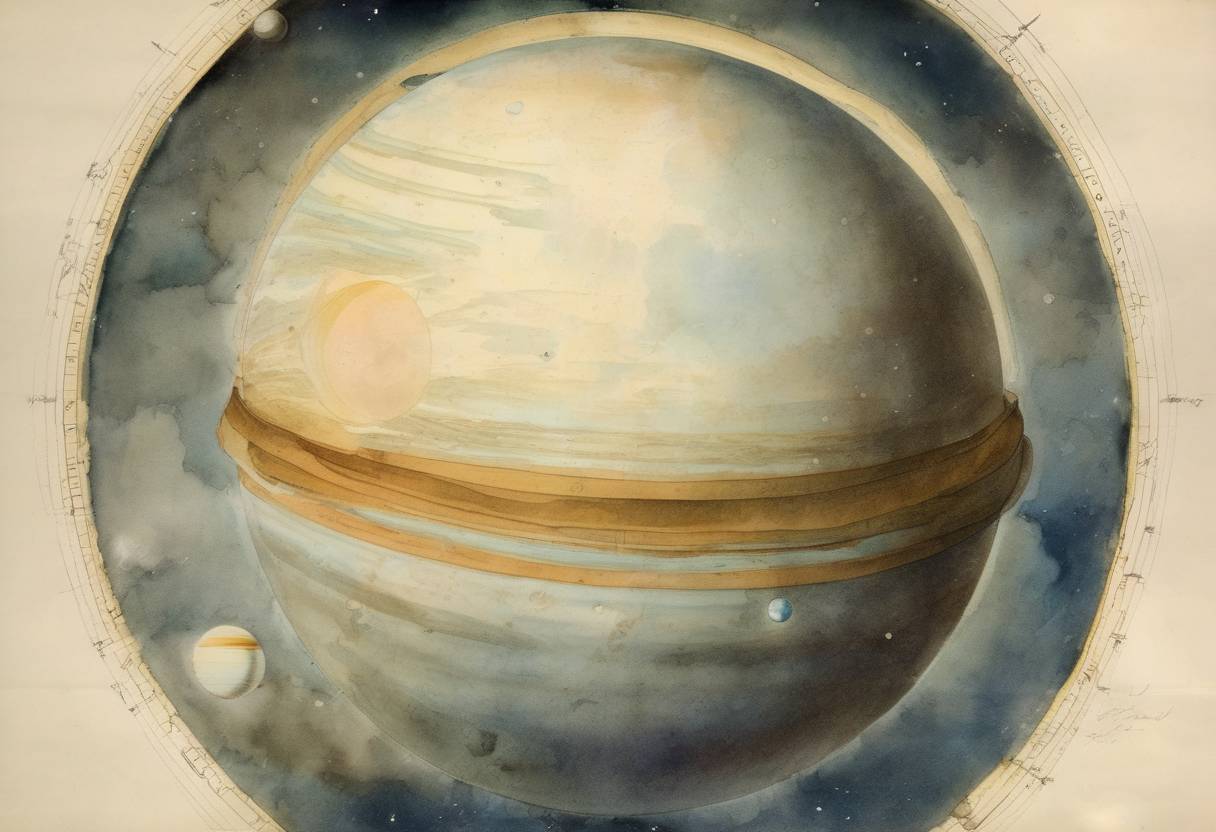
On March 13, 1781, the German-born British astronomer William Herschel made a groundbreaking discovery that would expand the known boundaries of the solar system: the planet Uranus. This marked the first time in modern history that a new planet had been identified, altering the understanding of the cosmos and paving the way for future astronomical discoveries.
Before Herschel’s discovery, the solar system was thought to consist of only six planets: Mercury, Venus, Earth, Mars, Jupiter, and Saturn. The outermost planet known at the time, Saturn, had been observed since ancient times. The discovery of Uranus was significant because it was the first planet to be identified with the aid of a telescope, highlighting the importance of technological advancements in astronomy.
William Herschel was an accomplished musician and composer who developed a passion for astronomy. He constructed his own telescopes, which were among the most powerful of his time. On the night of March 13, 1781, while conducting a systematic survey of the night sky from his garden in Bath, England, Herschel observed an object that appeared to be a comet or a nebulous star.
Upon further observation, Herschel noted that the object moved relative to the fixed stars, suggesting it was not a star but rather a celestial body within the solar system. Initially, Herschel believed he had discovered a comet. However, subsequent observations by other astronomers, including Anders Johan Lexell and Johann Elert Bode, confirmed that the object had a nearly circular orbit, characteristic of a planet rather than a comet.
The discovery was initially met with skepticism, but as more astronomers confirmed the findings, the celestial body was recognized as a new planet. Herschel initially proposed the name “Georgium Sidus” (George’s Star) in honor of King George III of England. However, the name Uranus, after the Greek god of the sky, was eventually adopted, following the convention of naming planets after Roman and Greek deities.
The discovery of Uranus had profound implications for astronomy and the understanding of the solar system:
William Herschel’s discovery of Uranus remains a landmark event in the history of astronomy, showcasing the power of observation and innovation in expanding human knowledge of the universe.
Source: en.wikipedia.org