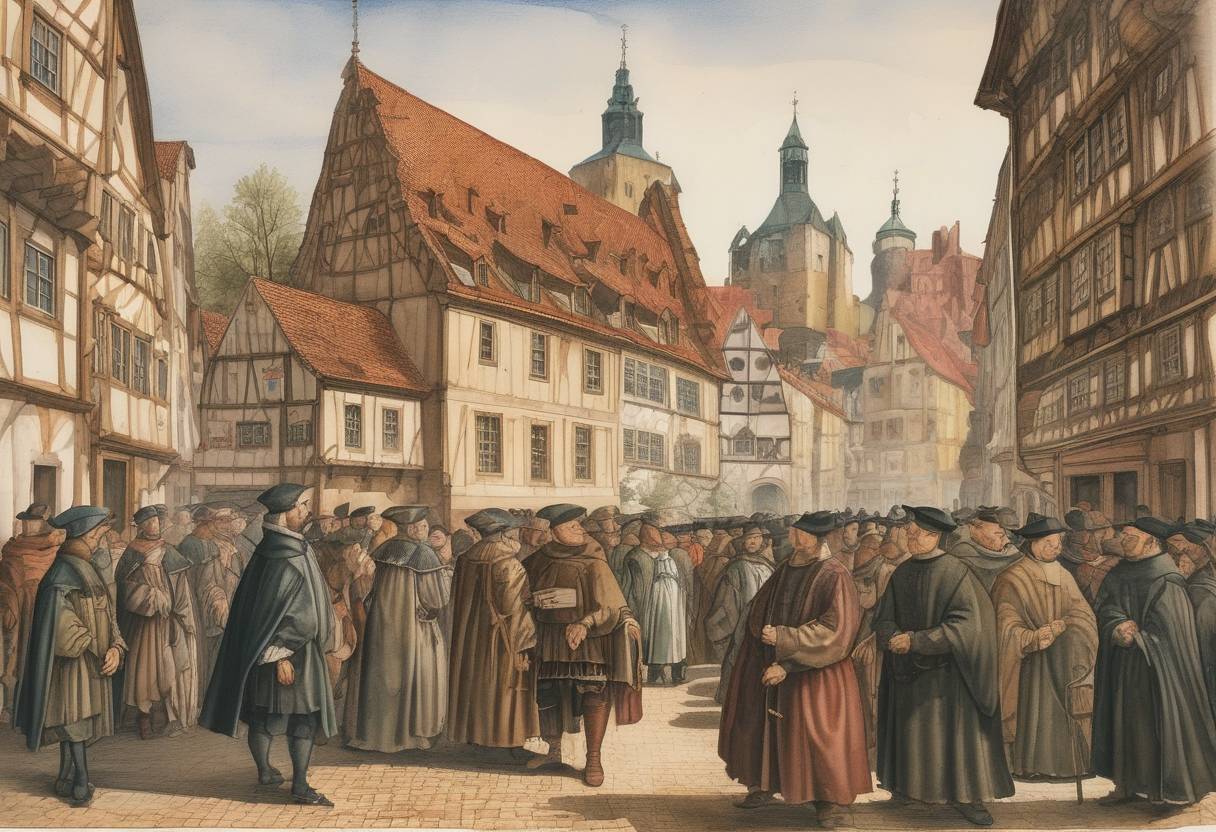
Johannes Bugenhagen’s Arrival in Wittenberg - July 1, 1523
On July 1, 1523, Johannes Bugenhagen, a pivotal figure in the Protestant Reformation, arrived in Wittenberg. His arrival marked the beginning of a significant chapter in the Reformation, as he became one of Martin Luther’s closest collaborators and a key architect of the Lutheran Church’s structure and governance.
Background
Johannes Bugenhagen, born on June 24, 1485, in Wollin, Pomerania (now part of modern-day Poland), was initially a Catholic priest and scholar. He was deeply influenced by humanist ideas and became acquainted with Martin Luther’s writings around 1520. Bugenhagen’s interest in Luther’s reformist ideas led him to Wittenberg, the epicenter of the burgeoning Protestant Reformation.
Key Contributions
Upon his arrival in Wittenberg, Bugenhagen quickly became an integral part of the Reformation movement. His contributions were multifaceted:
Pastoral Leadership: Bugenhagen was appointed as the pastor of the Wittenberg town church, where he played a crucial role in implementing Lutheran reforms in church services and administration.
Church Organization: Known as “Doctor Pomeranus,” Bugenhagen was instrumental in organizing the Lutheran Church’s structure. He developed church orders for various regions, including Denmark, Norway, and several German principalities, which laid the foundation for the Lutheran ecclesiastical framework.
Education and Social Reform: Bugenhagen advocated for educational reforms and the establishment of schools, emphasizing the importance of education in the new Protestant society. He also worked on social welfare projects, including the care for the poor and sick.
Translation Work: He assisted Martin Luther in translating the Bible into German, ensuring that the scriptures were accessible to the common people, which was a cornerstone of the Reformation’s emphasis on personal faith and understanding.
Broader Historical Significance
Bugenhagen’s work had a lasting impact on the spread and establishment of Lutheranism across Europe. His church orders not only provided a model for Protestant church governance but also influenced the development of Protestant communities in Scandinavia and Northern Germany. His efforts in education and social reform reflected the broader Reformation ideals of personal faith, community responsibility, and the democratization of religious knowledge.
Conclusion
Johannes Bugenhagen’s arrival in Wittenberg on July 1, 1523, was a significant milestone in the Protestant Reformation. His close collaboration with Martin Luther and his substantial contributions to church organization, education, and social reform helped shape the future of Protestantism and left a lasting legacy on European religious and cultural landscapes.