The Battle of Arsuf: September 7, 1191
1191 · Arsuf, Israel
The Battle of Arsuf took place during the Third Crusade, where Richard I of England defeated Saladin's forces.
May 12, 1191
Richard I of England, also known as Richard the Lionheart, arrived in the city of Acre during the Third Crusade. His arrival marked a significant moment in the Crusades as he was one of the leading figures in the Christian efforts to reclaim the Holy Land from Muslim control.
Acre, Israel | Third Crusade
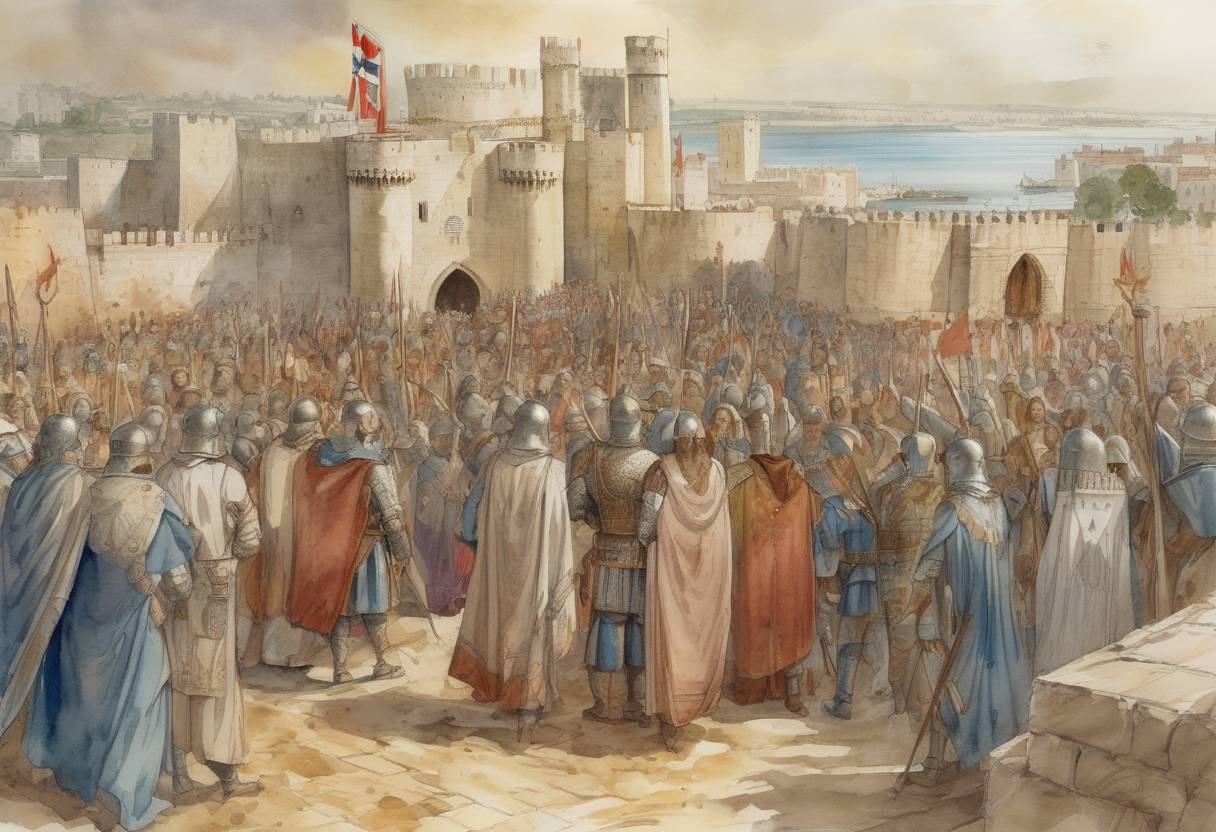
On May 12, 1191, Richard I of England, famously known as Richard the Lionheart, arrived in the city of Acre during the Third Crusade. This event marked a pivotal moment in the Crusades, as Richard was one of the most prominent leaders in the Christian campaign to reclaim the Holy Land from Muslim control.
The Third Crusade (1189–1192) was launched in response to the capture of Jerusalem by the Muslim leader Saladin in 1187. The loss of Jerusalem was a significant blow to Christendom, prompting European monarchs to organize a military expedition to the Holy Land. Richard the Lionheart, alongside other European leaders such as Philip II of France and Frederick I Barbarossa of the Holy Roman Empire, took up the cross to lead this endeavor.
Richard’s arrival in Acre on May 12, 1191, was a significant morale booster for the besieging Crusader forces. His reputation as a formidable military leader and his commitment to the Crusade were instrumental in galvanizing the Christian troops.
Richard the Lionheart’s involvement in the Third Crusade solidified his legacy as a legendary warrior king. His actions during the Crusade had lasting impacts on Christian-Muslim relations and the geopolitical landscape of the medieval Near East. Despite the ultimate failure to reclaim Jerusalem, the Third Crusade demonstrated the enduring commitment of European powers to the Crusader cause and set the stage for future crusading efforts.
Richard’s leadership and military prowess during the Crusade have been celebrated in history and legend, contributing to his enduring reputation as one of the most iconic figures of the medieval period.
Source: en.wikipedia.org