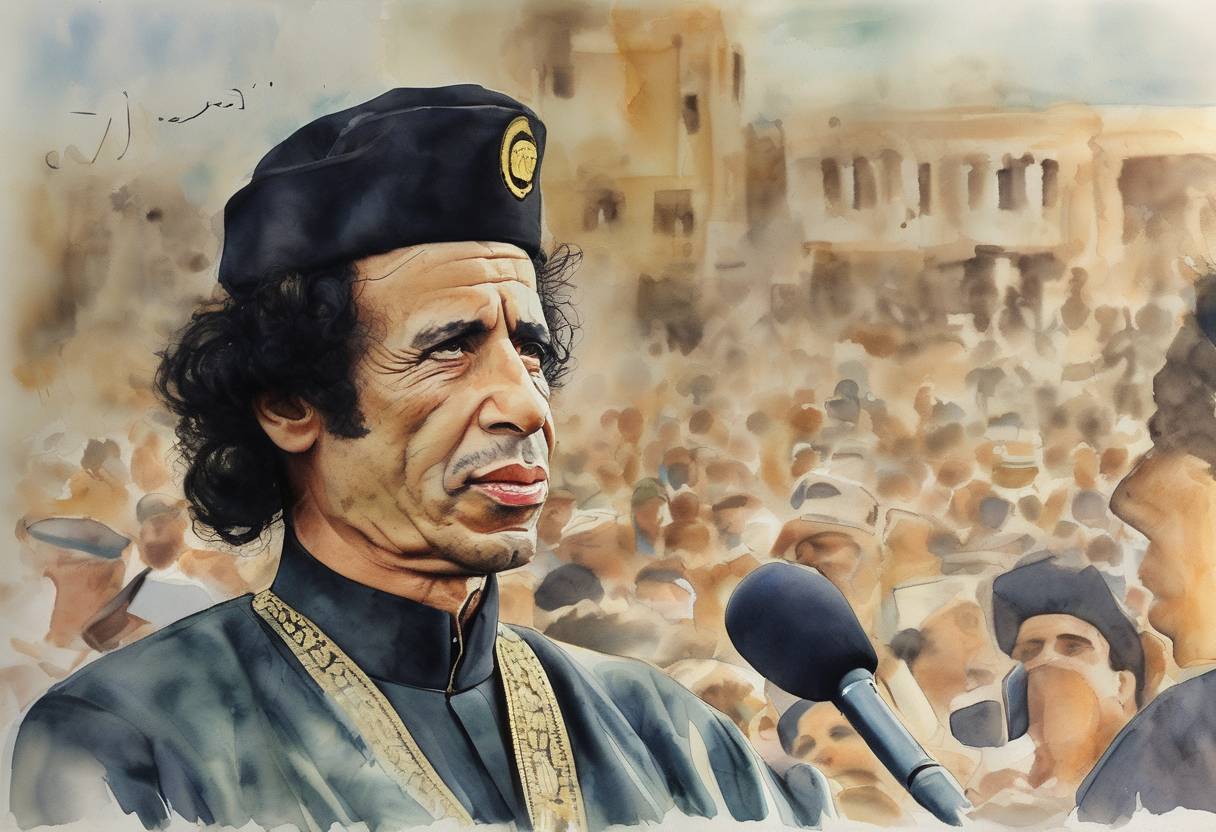
Muammar Gaddafi Proclaimed Premier of Libya on January 15, 1970
On January 15, 1970, Muammar Gaddafi was proclaimed the Premier of Libya, marking a significant moment in the nation’s history. This event followed the successful coup d’état on September 1, 1969, which saw the overthrow of King Idris I by a group of young military officers led by Gaddafi. This group, known as the Free Officers Movement, was inspired by the Egyptian Revolution of 1952 and sought to establish a republic in Libya.
Context Leading to Gaddafi’s Rise
Monarchical Rule: Prior to the coup, Libya was a kingdom under King Idris I, who had ruled since the country’s independence from Italy in 1951. His reign was marked by economic challenges and perceived corruption, leading to dissatisfaction among various segments of the population, including the military.
Regional Influence: The 1960s were a period of significant political change in the Arab world, with many countries experiencing shifts towards republicanism and socialism. The influence of Egyptian President Gamal Abdel Nasser and his pan-Arabist ideology played a crucial role in shaping the political aspirations of the Libyan officers.
The Coup and Gaddafi’s Ascendancy
September 1, 1969 Coup: The coup was executed swiftly and with minimal resistance. Gaddafi and his fellow officers took control of key military and communication installations, effectively ending the monarchy and establishing the Libyan Arab Republic.
Formation of the RCC: Following the coup, the Revolutionary Command Council (RCC) was established as the governing body, with Gaddafi as its de facto leader. The RCC aimed to implement reforms and steer Libya towards a new political and economic direction.
Gaddafi as Premier
Proclamation as Premier: On January 15, 1970, Gaddafi was officially proclaimed Premier, solidifying his leadership role. This position allowed him to further consolidate power and implement his vision for Libya.
Political and Economic Reforms: Gaddafi’s tenure as Premier was characterized by sweeping changes. He nationalized the oil industry, which significantly increased state revenues, and initiated social programs aimed at improving education, healthcare, and infrastructure.
Ideological Influence: Gaddafi introduced his political philosophy, outlined in the “Green Book,” which combined elements of socialism, Islam, and Arab nationalism. His policies emphasized direct democracy and sought to eliminate traditional political structures.
Aftermath and Historical Significance
Long-term Rule: Gaddafi’s leadership extended for over four decades, during which he maintained a firm grip on power through a combination of populist policies and authoritarian control.
Regional and Global Impact: Gaddafi’s rule had significant implications for Libya’s role in regional politics and its relations with Western countries. His support for various revolutionary movements and controversial foreign policies often placed Libya at odds with other nations.
Legacy: Gaddafi’s leadership remains a contentious topic, with opinions divided over his contributions to Libya’s development and the oppressive nature of his regime. His eventual downfall in 2011 during the Libyan Civil War marked the end of an era and left a complex legacy.
In summary, Gaddafi’s proclamation as Premier on January 15, 1970, was a pivotal moment that set the stage for his long and controversial rule over Libya, shaping the nation’s trajectory for decades to come.