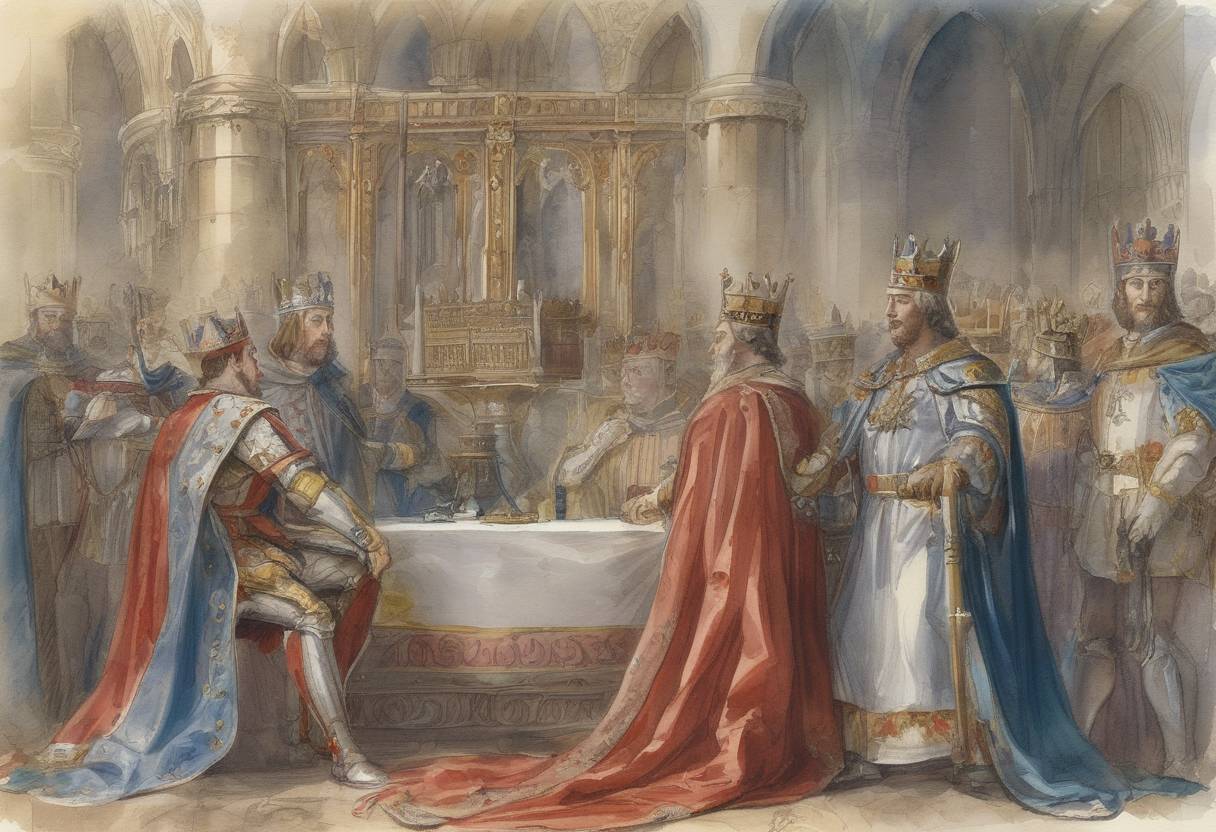
Louis III and Carloman II Become Joint Kings of the Western Franks
On April 11, 879, Louis III and Carloman II were proclaimed joint kings of the Western Franks, marking a significant moment in the Carolingian dynasty’s history. This event followed the death of their father, King Louis II, known as Louis the Stammerer, who had ruled for a brief period from 877 to 879.
Context Leading Up to Their Reign
Carolingian Dynasty: The Carolingian dynasty, founded by Charlemagne, was a dominant force in Western Europe during the early Middle Ages. By the late 9th century, the dynasty was experiencing fragmentation and internal strife.
Louis the Stammerer’s Reign: Louis II’s reign was short and marked by challenges, including maintaining control over a fragmented realm and dealing with Viking incursions. His sudden death in 879 left a power vacuum that needed to be addressed quickly.
The Joint Kingship
Division of Power: Upon their father’s death, Louis III and Carloman II were crowned as co-rulers. This joint kingship was a common practice in the Carolingian dynasty to prevent disputes over succession and to manage the vast territories more effectively.
Territorial Division: The kingdom was divided between the two brothers, with Louis III taking control of the northern parts, including Neustria, while Carloman II governed the southern regions, including Aquitaine and Burgundy.
Challenges and Governance
Viking Threats: One of the significant challenges during their reign was the continued threat from Viking raids. The brothers had to defend their territories against these incursions, which were a persistent issue for the Carolingian rulers.
Internal Strife: The division of the kingdom did not eliminate internal conflicts. The brothers had to navigate the complex web of loyalties among the Frankish nobility, who often had their own interests and power bases.
Aftermath and Historical Significance
Short Reigns: Louis III’s reign was short-lived; he died in 882 after a fall from his horse. Carloman II continued to rule alone until his death in 884, also under mysterious circumstances.
End of Joint Rule: After Carloman II’s death, the kingdom faced further fragmentation. Charles the Fat, a relative, briefly reunited the Carolingian Empire, but his ineffective rule led to its eventual collapse.
Legacy: The joint kingship of Louis III and Carloman II is a reflection of the Carolingian dynasty’s attempts to maintain control over a vast and diverse territory. Their reigns highlight the challenges of medieval kingship, including succession disputes, external threats, and internal power struggles.
In summary, the joint kingship of Louis III and Carloman II was a pivotal moment in the history of the Western Franks, illustrating the complexities of medieval governance and the eventual decline of Carolingian power in Western Europe.