Alan Shepard Hits a Golf Ball on the Moon: Apollo 14 Mission
1971 · Moon, N/A
Alan Shepard became the first American to hit a golf ball on the Moon during the Apollo 14 mission.
January 3, 2019
China's Chang'e 4 becomes the first spacecraft to successfully land on the far side of the Moon, marking a significant achievement in lunar exploration.
Moon, N/A | China National Space Administration
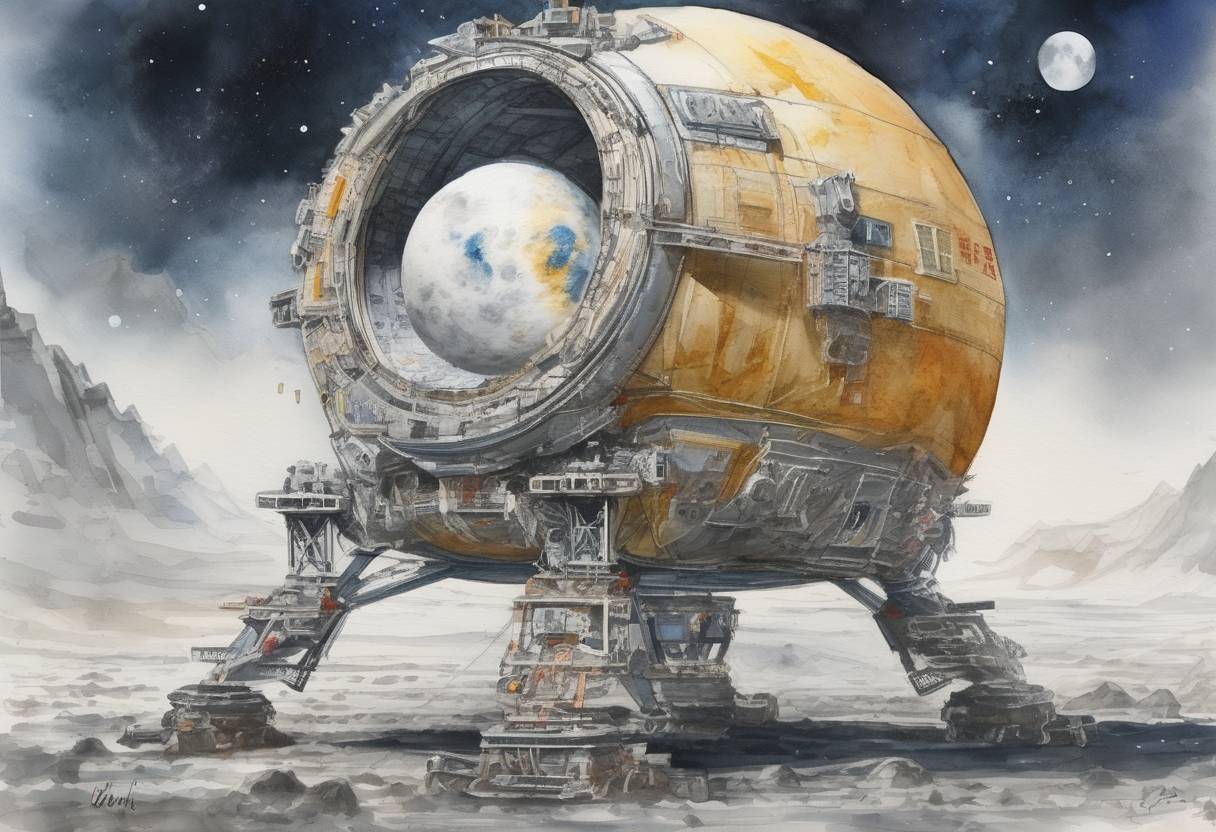
On January 3, 2019, China’s Chang’e 4 mission achieved a historic milestone in space exploration by becoming the first spacecraft to successfully land on the far side of the Moon. This significant achievement marked a new chapter in lunar exploration and underscored China’s growing capabilities in space technology.
The Chang’e program, named after the Chinese moon goddess, is China’s ambitious lunar exploration initiative. It began with the launch of Chang’e 1 in 2007, followed by subsequent missions that progressively advanced China’s lunar exploration capabilities. The Chang’e 4 mission was initially designed as a backup for Chang’e 3, which successfully landed on the Moon’s near side in 2013.
The primary objectives of the Chang’e 4 mission included:
Launch: Chang’e 4 was launched on December 7, 2018, aboard a Long March 3B rocket from the Xichang Satellite Launch Center in Sichuan Province, China.
Relay Satellite: Prior to the landing, China launched the Queqiao relay satellite in May 2018. Positioned at the Earth-Moon L2 Lagrange point, Queqiao facilitated communication between the Chang’e 4 lander and Earth, overcoming the challenge of direct communication with the far side of the Moon.
Landing: On January 3, 2019, Chang’e 4 successfully touched down in the Von Kármán crater within the South Pole-Aitken Basin. This marked the first time a spacecraft had landed on the Moon’s far side, a region that had remained unexplored due to its communication challenges.
Scientific Discoveries: Chang’e 4’s instruments, including a panoramic camera, a lunar penetrating radar, and a spectrometer, have provided valuable data on the Moon’s composition and surface characteristics. The mission’s rover, Yutu-2, continues to explore the lunar surface, contributing to our understanding of the Moon’s geology.
Technological Advancements: The success of Chang’e 4 demonstrated China’s growing prowess in space exploration and its ability to execute complex missions. It also paved the way for future lunar missions, including plans for a lunar sample return mission and potential crewed missions.
International Collaboration: The mission included international cooperation, with scientific instruments from Germany, Sweden, and the Netherlands, highlighting the collaborative nature of modern space exploration.
Chang’e 4’s successful landing on the far side of the Moon represents a landmark achievement in space exploration, expanding our knowledge of the lunar environment and showcasing the potential for future exploration endeavors.
Source: www.cnsa.gov.cn