The Battle of Dettingen: June 27, 1743
1743 · Dettingen, Germany
The Battle of Dettingen took place during the War of the Austrian Succession, where British forces, led by King George II, defeated the French.
April 16, 1746
The Battle of Culloden took place, marking the final confrontation of the Jacobite Rising of 1745. The British government forces, led by the Duke of Cumberland, defeated the Jacobite forces of Charles Edward Stuart, effectively ending the Jacobite cause.
Culloden, Scotland | British Army
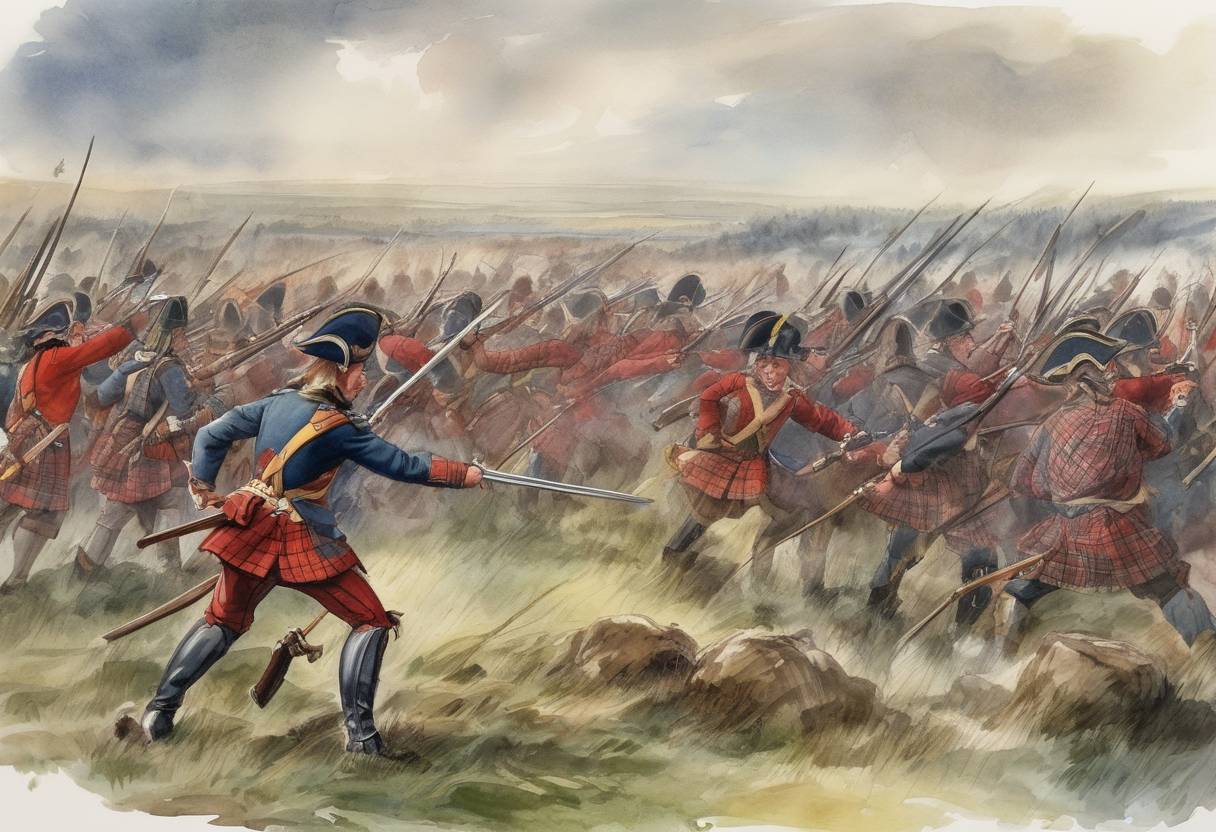
The Battle of Culloden, fought on April 16, 1746, was the final and decisive confrontation of the Jacobite Rising of 1745. This battle marked a significant turning point in British history, effectively ending the Jacobite cause, which sought to restore the Stuart monarchy to the British throne.
The Jacobite Rising of 1745 was led by Charles Edward Stuart, known as “Bonnie Prince Charlie,” the grandson of the deposed King James II of England and VII of Scotland. The Jacobites aimed to overthrow the Hanoverian King George II and restore the Stuart line. The uprising gained initial success, with Jacobite forces advancing as far south as Derby in England. However, logistical challenges, lack of support, and strategic missteps forced them to retreat back to Scotland.
The battle was brief, lasting less than an hour. The British forces, with superior numbers and artillery, decimated the Jacobite ranks. The Highland charge, hindered by the terrain and effective British musket and cannon fire, failed to break the government lines.
The Battle of Culloden had profound implications:
The Battle of Culloden remains a significant event in Scottish history, symbolizing the end of the Jacobite hopes and the beginning of a new era in British governance and cultural integration.
Source: en.wikipedia.org