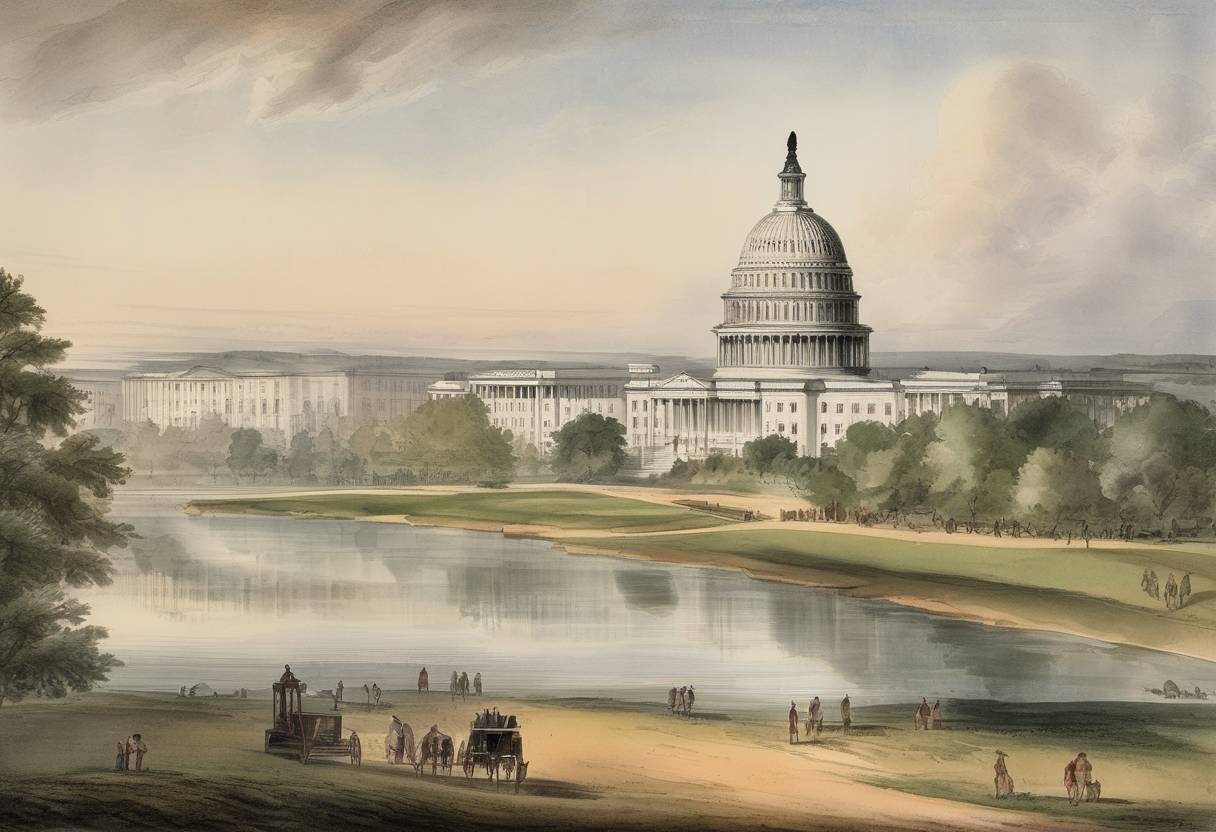
Incorporation of Washington, D.C. as a City on May 3, 1802
On May 3, 1802, Washington, D.C., the capital of the United States, was officially incorporated as a city. This event marked a significant step in the development of the nation’s capital, laying the groundwork for its governance and administration.
Context and Background
Establishment of the Capital: The Residence Act of 1790 authorized the creation of a national capital along the Potomac River. President George Washington selected the site, which included land from the states of Maryland and Virginia.
Design and Planning: The city was designed by Pierre Charles L’Enfant, a French engineer and architect, who envisioned a grand and organized city layout. His plan included wide avenues, open spaces, and significant buildings, reflecting the aspirations of the new nation.
Early Development: Initially, the area was largely undeveloped, and the federal government began moving to the city in 1800. However, the lack of infrastructure and governance posed challenges to its growth.
Incorporation Details
Legislative Action: The incorporation of Washington, D.C., was enacted by Congress through the Organic Act of 1801, which placed the city under the direct control of the federal government. The subsequent incorporation in 1802 provided a more structured municipal government.
City Governance: The incorporation established a mayor-council form of government. The mayor was appointed by the President of the United States, while the council was elected by the city’s residents. This structure aimed to provide local governance while maintaining federal oversight.
Significance and Impact
Urban Development: The incorporation facilitated the development of infrastructure and public services, which were essential for the city’s growth and functionality as the nation’s capital.
Political Implications: The governance structure highlighted the unique status of Washington, D.C., as a federal district, distinct from other U.S. cities and states. This arrangement has continued to influence debates over the city’s autonomy and representation.
Legacy: The incorporation of Washington, D.C., set the stage for its evolution into a vibrant and significant urban center, hosting the federal government’s institutions and serving as a symbol of American democracy.
Conclusion
The incorporation of Washington, D.C., on May 3, 1802, was a pivotal moment in the city’s history, establishing a framework for its governance and development. As the capital of the United States, Washington, D.C., has grown to become a central hub for political, cultural, and historical activities, reflecting its foundational role in the nation’s history.