The Clock Tower at the Houses of Parliament: Big Ben Begins Keeping Time
1859 · London, England
The clock tower at the Houses of Parliament, which houses Big Ben, began keeping time for the first time.
May 31, 2000
The Millennium Bridge in London was officially opened to the public, but was closed two days later due to unexpected swaying, leading to its nickname, the 'Wobbly Bridge.'
London, England | City of London
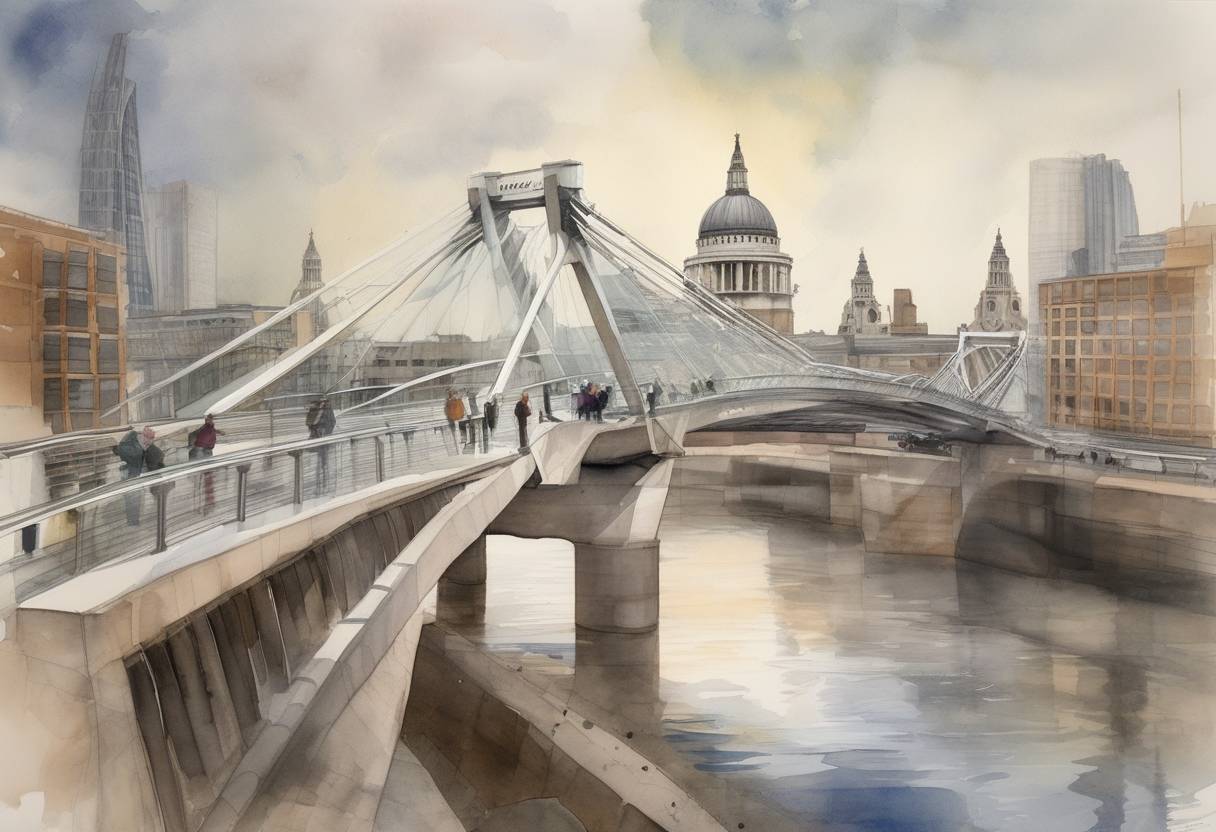
The Millennium Bridge, a pedestrian suspension bridge in London, was officially opened to the public on May 31, 2000. Spanning the River Thames, it connects St. Paul’s Cathedral on the north bank to Tate Modern and Shakespeare’s Globe on the south bank. Designed by the architectural firm Foster and Partners, the engineering company Arup, and the sculptor Sir Anthony Caro, the bridge was part of London’s millennium celebrations.
Upon its opening, the Millennium Bridge attracted significant public interest, with thousands of pedestrians eager to experience the new crossing. However, the bridge was closed just two days later, on June 2, 2000, due to unexpected lateral swaying. This phenomenon, which led to its nickname, the “Wobbly Bridge,” was caused by a phenomenon known as synchronous lateral excitation.
The swaying was a result of the natural frequency of the bridge aligning with the rhythm of pedestrians walking. As people walked, their footsteps inadvertently synchronized, amplifying the bridge’s movements. This unexpected oscillation made the bridge uncomfortable and potentially unsafe for use.
Following the closure, engineers from Arup conducted extensive studies to understand the cause of the swaying and to devise a solution. The bridge remained closed for nearly two years while modifications were made. The solution involved the installation of 37 fluid-viscous dampers and 52 tuned mass dampers to absorb the energy and reduce the lateral movements.
The Millennium Bridge was successfully reopened to the public on February 22, 2002, after the completion of these modifications. Since then, it has remained a popular and stable pedestrian route across the Thames.
The incident highlighted the complexities of modern engineering and the importance of considering dynamic human interactions in structural design. It also underscored the necessity for rigorous testing and adaptability in engineering projects.
The Millennium Bridge today stands not only as a functional piece of infrastructure but also as a testament to the resilience and ingenuity of engineering solutions. Its story serves as a reminder of the challenges and triumphs in the pursuit of architectural innovation.
Source: en.wikipedia.org