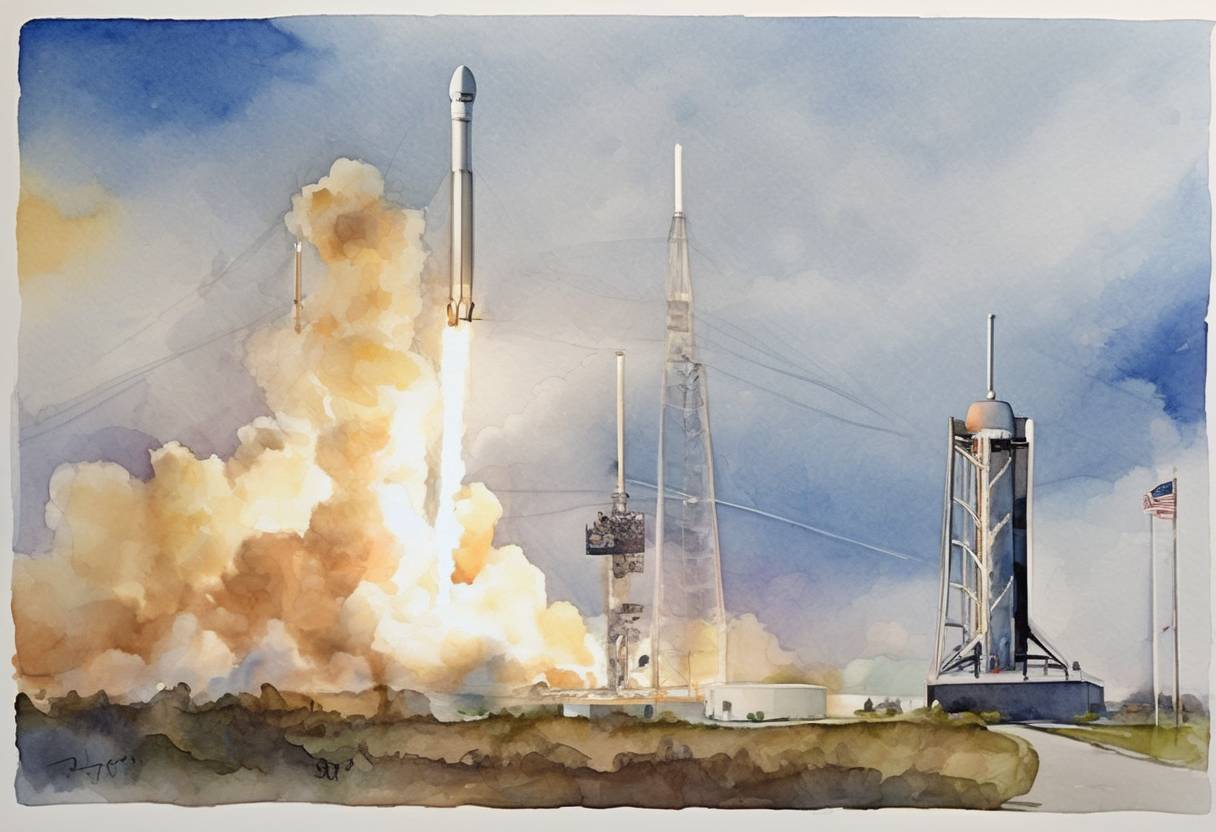
The First Successful Flight of the SpaceX Falcon 9 Rocket
Date: June 4, 2010
Overview
On June 4, 2010, SpaceX achieved a significant milestone in the history of private space exploration with the first successful flight of its Falcon 9 rocket. This event marked a pivotal moment in the commercial space industry, showcasing the potential for private companies to develop and operate space launch vehicles.
Background
Space Exploration Technologies Corp., known as SpaceX, was founded in 2002 by Elon Musk with the goal of reducing space transportation costs and enabling the colonization of Mars. Prior to the Falcon 9, SpaceX had developed the smaller Falcon 1 rocket, which achieved its first successful flight in 2008 after several failed attempts.
The Falcon 9 Rocket
- Design: The Falcon 9 is a two-stage rocket designed to transport payloads into orbit. It is named for its nine Merlin engines in the first stage.
- Purpose: The rocket was developed to carry both cargo and crew to the International Space Station (ISS) and beyond, as part of NASA’s Commercial Orbital Transportation Services (COTS) program.
- Significance: The Falcon 9 was designed to be reusable, a key factor in reducing the cost of space travel.
The Launch
- Location: The launch took place at Cape Canaveral Air Force Station in Florida.
- Mission: The primary objective was to test the rocket’s performance and gather data for future missions.
- Outcome: The Falcon 9 successfully reached orbit, demonstrating the viability of SpaceX’s design and engineering.
Impact and Aftermath
- Commercial Spaceflight: The success of the Falcon 9 flight was a major step forward for commercial spaceflight, proving that private companies could develop reliable space launch systems.
- NASA Partnership: Following this success, SpaceX continued to work closely with NASA, eventually becoming a key partner in transporting supplies and crew to the ISS.
- Reusability: The Falcon 9’s design laid the groundwork for future advancements in rocket reusability, which SpaceX would later achieve with subsequent versions of the rocket.
Broader Historical Significance
The successful launch of the Falcon 9 on June 4, 2010, represented a shift in the space industry, highlighting the growing role of private companies in space exploration. It paved the way for further innovations and collaborations between governmental space agencies and private enterprises, ultimately contributing to the democratization of space access.
This event underscored the potential for private sector innovation to complement and enhance traditional governmental space exploration efforts, setting the stage for a new era in space exploration.