Anne of Brittany's Announcement to Marry Charles VIII of France
1490 · Rennes, France
Anne of Brittany announced that she would marry Charles VIII of France, which eventually led to the unification of Brittany and France.
December 19, 1490
Anna of Brittany is married to Maximilian I of Austria by proxy, for the second time, at Rennes, Brittany. This strategic alliance aimed to strengthen the position of Brittany against French encroachment.
Rennes, France
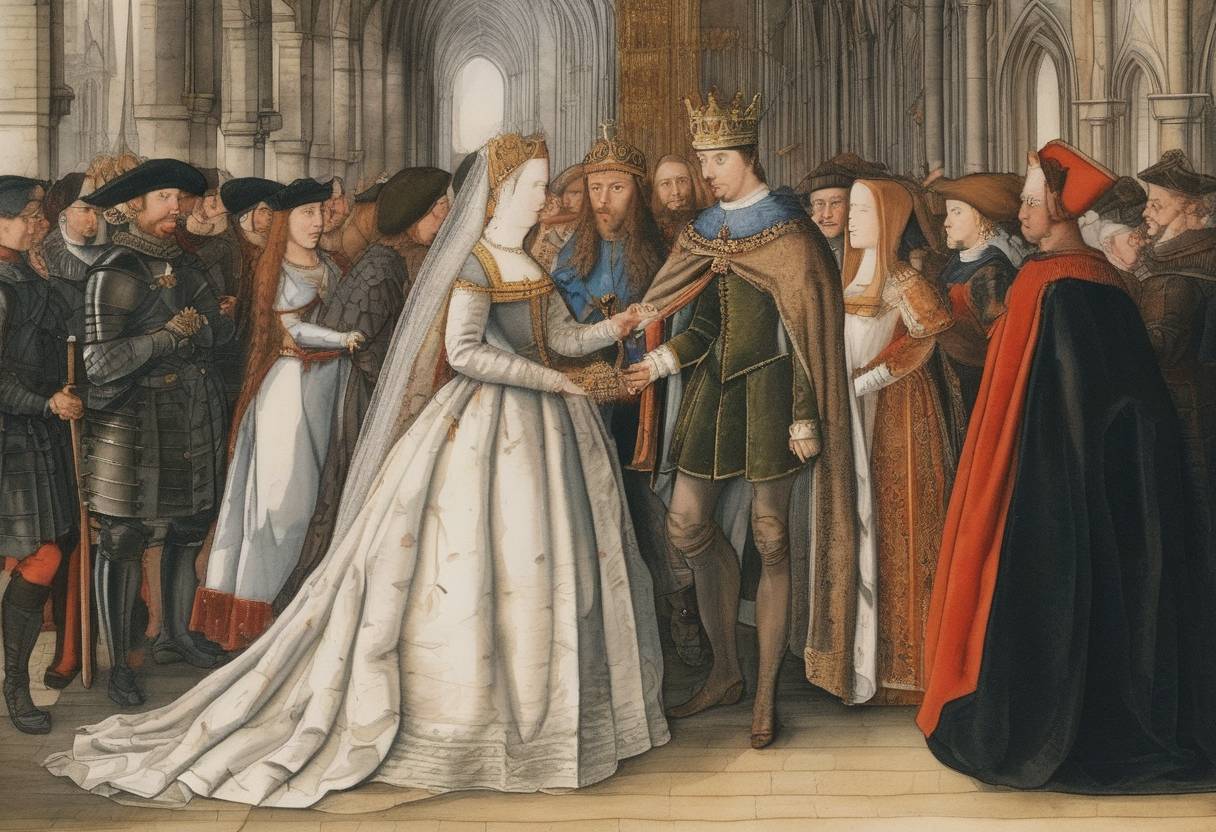
On December 19, 1490, a significant matrimonial alliance was cemented in Rennes, Brittany, marked by the proxy marriage of Anna of Brittany to Maximilian I of Austria. This gathering symbolized a strategic geopolitical move in European politics at the close of the 15th century.
Anna of Brittany, born in 1477, was the sole heir to the Duchy of Brittany following her father’s death, which occurred amidst rising French ambitions to absorb Brittany into its domain. As one of the most sought-after heiresses in Europe, her marriage was crucial to maintaining her duchy’s sovereignty. Brittany, at the time, was an autonomous duchy strategically positioned between the powerful kingdoms of France and England, making it a key political player in European affairs.
Maximilian I of Austria, himself King of the Romans and later Holy Roman Emperor, was engaged in efforts to expand Habsburg influence across Europe. This proposed union was therefore mutually beneficial: it offered Maximilian a strategic foothold in Western Europe while providing Brittany with a powerful ally against the encroaching ambitions of France.
The proxy marriage took place in Rennes with the Burgundian nobles, representing Maximilian, conducting the ceremony. Anna, being 13 years old at the time, was represented in this marriage by her chosen proxy. In this period, proxy marriages were not uncommon among European nobility, allowing for strategic alliances without the immediate physical presence of both parties.
Despite the proxy marriage, the geopolitical gambit was shortly upended. Charles VIII of France, keen on consolidating French territorial claims, acted swiftly. By 1491, Charles had invaded Brittany and pressured Anna into annulling her marriage with Maximilian. Subsequently, Anna was compelled to marry Charles VIII, an act which tied Brittany more closely to France and effectively curtailed its independence.
This marriage and its subsequent annulment underscore the tumultuous and dynamic nature of late medieval European politics. They highlight the significance of marital alliances in determining political boundaries and influence. Anna of Brittany’s marriages were pivotal in determining the future of her duchy, shaping not only the fate of Brittany but also impacting broader European power structures.
Source: en.wikipedia.org