Assassination Attempt on Napoleon III by Felice Orsini - January 14, 1858
1858 · Paris, France
Napoleon III of France escapes an assassination attempt by Felice Orsini, an Italian nationalist.
October 14, 1854
The Emperor of the French, Napoleon III visits the United Kingdom, marking a significant diplomatic event between the two nations. This visit represents the strengthening of Franco-British relations during the 19th century, particularly their collaboration in the Crimean War.
London, United Kingdom | French Empire
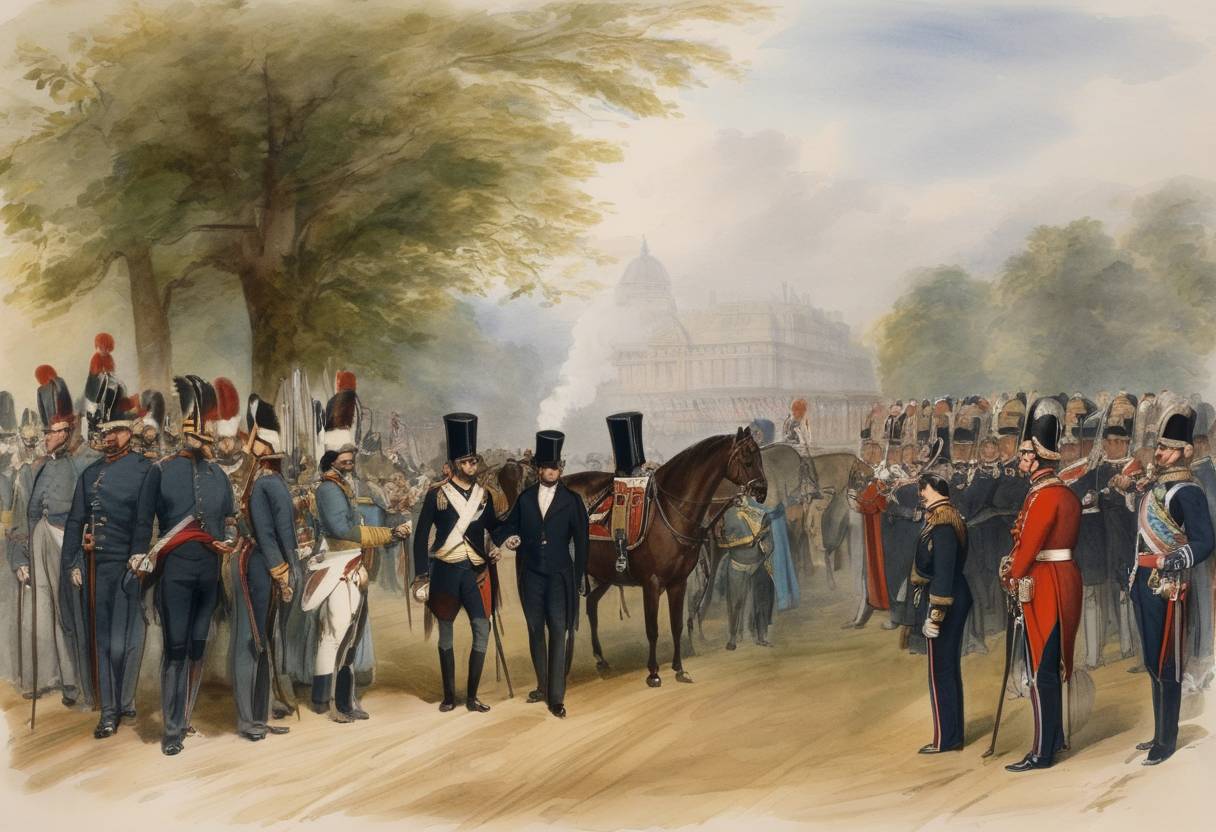
On October 14, 1854, Napoleon III, Emperor of the French, made a historic visit to the United Kingdom. This visit marked a pivotal moment in 19th-century European diplomacy, emphasizing the strengthening relations between France and Britain. The collaboration was particularly significant against the backdrop of their joint involvement in the Crimean War.
The mid-19th century was a period of fluctuating alliances and power struggles. France and Britain, historically rivals, found common ground with the advent of the Crimean War. This conflict was primarily a response to the Russian expansion and the attempt to control Ottoman Empire territories, which both France and Britain opposed to safeguard their strategic and political interests in the region.
Napoleon III, whose empire commenced in 1852 after a coup, sought to re-establish France as a dominant force in European politics following the decline after his uncle Napoleon Bonaparte’s reign. Cultivating strong ties with Britain, an established maritime and colonial power, was crucial for his foreign policy agenda.
Napoleon III’s visit in October 1854 was not merely ceremonial; it underscored the mutual interests of both nations. The visit was crucial for several reasons:
Alliance in the Crimean War: The visit reinforced the Franco-British alliance in prosecuting the war against Russia, showcasing a unified front.
Diplomatic Relations: It represented a significant thaw in the historically cold relations between the two nations, paving the way for further cooperation.
Military and Economic Collaboration: Beyond military collaboration, the visit hinted at future economic cooperation, which would be beneficial to both economies amidst the expensive military campaign.
The visit contributed to a strengthened Franco-British alliance that held through the remainder of the Crimean War. The eventual victory over Russia in 1856 further cemented this partnership. Additionally, the improved diplomatic relations helped maintain the balance of power in Europe, discouraging unilateral actions that could lead to larger conflicts.
Napoleon III’s engagement with Britain during this period laid a foundation for continued cooperation, despite the disparities in political systems and national interests, illustrating an era where diplomacy could bridge long-standing rivalries for a common cause.
Source: www.napoleon.org