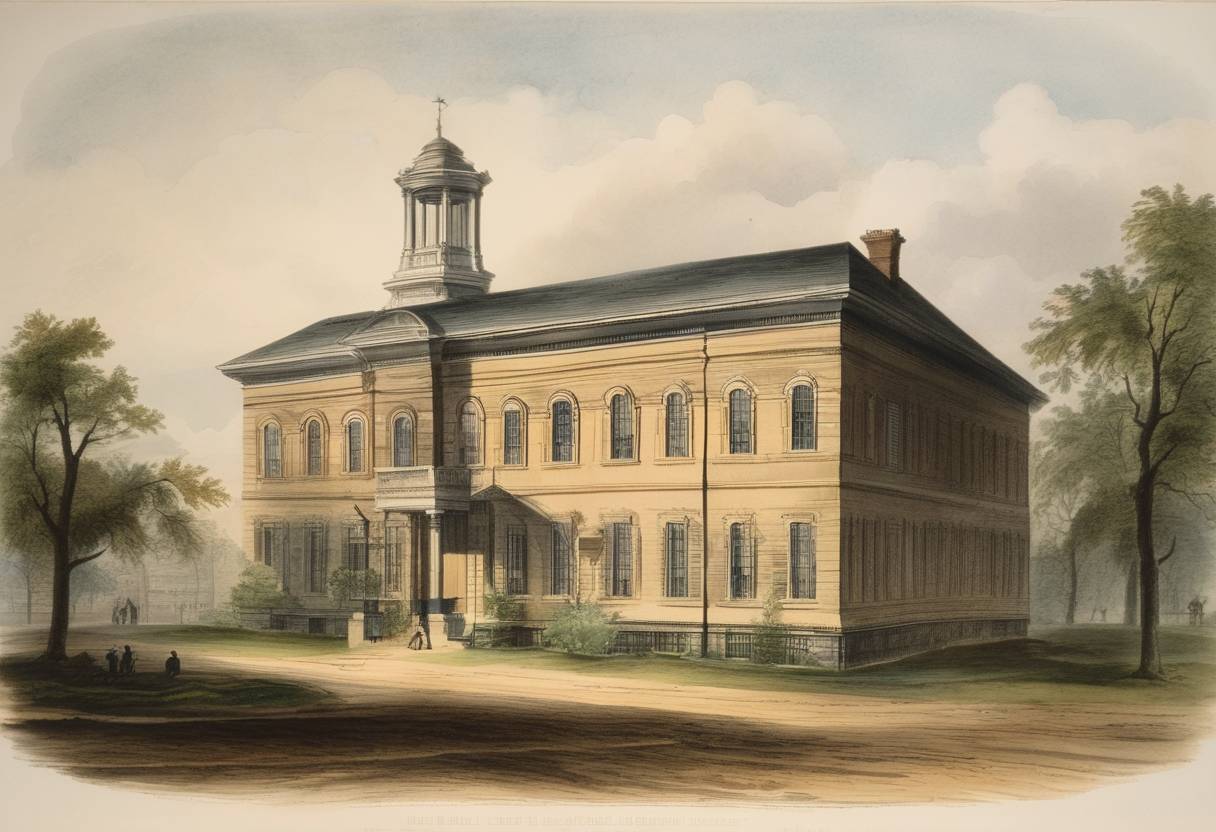
Creation of the American Association for the Advancement of Science - September 16, 1848
The American Association for the Advancement of Science (AAAS) was established on September 16, 1848, during a meeting held in the City Hall of the Academy of Natural Sciences in Philadelphia, Pennsylvania. The creation of the AAAS marked a significant moment in the history of American science, as it aimed to promote scientific dialogue and facilitate the sharing of research across various scientific disciplines.
Background and Context
Mid-19th-century America was a period of scientific growth and innovation. Despite this, scientists in the United States often worked in relative isolation, with limited access to shared resources and collaboration opportunities. The AAAS was conceived to bridge these gaps by providing a platform to foster cooperation and communication among scientists nationwide.
The AAAS was founded by a group of 87 scientists including prominent naturalists, engineers, mathematicians, and physicists. Notable figures involved in the establishment of the organization included William Charles Redfield, who became the first president of the AAAS. Redfield was a self-taught meteorologist known for his studies of storm systems. Other founding members were Joseph Henry, then Secretary of the Smithsonian Institution, and Alexander Dallas Bache, Superintendent of the United States Coast Survey.
Core Objectives
The founding vision of the AAAS was to advance science by:
- Promoting scientific research and education.
- Encouraging the dissemination of scientific knowledge.
- Supporting the application of science to societal issues.
Upon its inception, the AAAS immediately played a pivotal role in unifying American scientists. The organization held annual meetings and published research findings, significantly contributing to the diffusion of scientific ideas. The establishment of the AAAS also inspired the formation of additional scientific societies within specific disciplines.
Broader Historical Significance
The AAAS has grown to become one of the world’s largest general scientific societies, with its mission expanding to include international engagement, public policy advocacy, and science communication. Through its flagship publication, Science, founded in 1880, the AAAS has had a longstanding influence on the global scientific community.
The establishment of the AAAS in 1848 laid the groundwork for a more interconnected and cooperative approach to scientific inquiry and education, reflecting the broader 19th-century trend toward professionalization and specialization in the sciences.