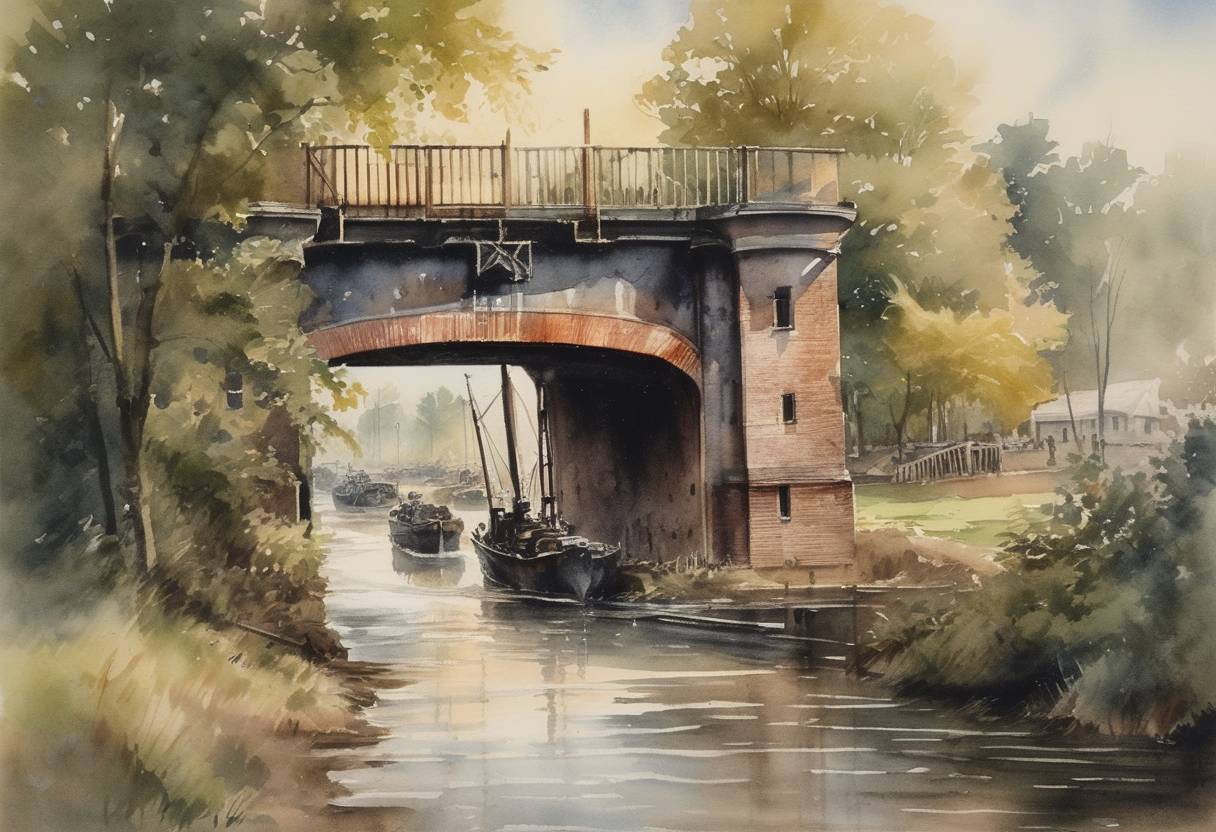
Operation Market Garden: Conclusion on September 25, 1944
Operation Market Garden, an ambitious Allied military operation during World War II, concluded unsuccessfully on September 25, 1944. This operation was designed to secure key bridges in the Netherlands to enable a rapid advance into Northern Germany and potentially bring an early end to the war. It combined airborne and ground forces in a dual-stage strategy: “Market,” the airborne assault, and “Garden,” the land push.
Background and Strategy
- Objective: The primary aim was to seize a series of bridges over the Maas, Waal, and Lower Rhine rivers. This would enable the British 2nd Army to bypass the heavily fortified Siegfried Line and advance into the German industrial heartland, the Ruhr Valley.
- Command: The operation was devised by British Field Marshal Bernard Montgomery and orchestrated by Supreme Commander of the Allied Expeditionary Force, General Dwight D. Eisenhower.
- Execution: Initiated on September 17, 1944, the plan involved three airborne divisions (the U.S. 101st and 82nd Airborne Divisions, and the British 1st Airborne Division) capturing key bridges, with the British XXX Corps advancing along the road to relieve them.
Key Events and Challenges
- Initial Success: The operation began with initial successes as the 101st Airborne secured the bridge at Eindhoven and the 82nd Airborne took the Nijmegen bridge.
- Stiff Resistance: The British 1st Airborne Division faced unexpectedly strong German resistance in Arnhem, where they were tasked with capturing the bridge over the Rhine.
- Logistical Issues: The advancing XXX Corps encountered logistical difficulties, including narrow roads and delays caused by German counterattacks.
Conclusion and Aftermath
- Withdrawal: By September 25, after nine days of intense fighting and heavy casualties, the Allies were forced to withdraw from their positions at Arnhem. The 1st Airborne Division had sustained severe losses and was unable to hold the Arnhem bridge, which remained under German control.
- Failure to Achieve Objectives: The operation failed to achieve its strategic goal of establishing a bridgehead across the Rhine. It highlighted the difficulties of coordinating airborne and ground assaults over extended supply lines and exposed critical weaknesses in planning and intelligence.
- Impact on the War: Although Operation Market Garden did not succeed in its primary objectives, it did underline the persistent threat posed to Germany’s western front and helped divert German resources. However, it delayed the Allies’ advance into Germany by months, pushing expected liberation efforts into the winter of 1944-1945.
The conclusion of Operation Market Garden marked a significant setback for the Allies, showcasing the complexities and unpredictable nature of warfare during World War II. Despite its failure, lessons learned from this operation informed future strategies as the Allied forces continued their push into Europe.