The Failed Coup and Subsequent Anti-Communist Purge in Indonesia (1965)
1965 · Jakarta, Indonesia
A failed coup in Indonesia led to a violent anti-communist purge, resulting in the deaths of an estimated 500,000 people.
December 9, 1958
The John Birch Society, an American right-wing political advocacy group, is established by Robert W. Welch Jr. in Indianapolis, Indiana.
Indianapolis, United States | John Birch Society
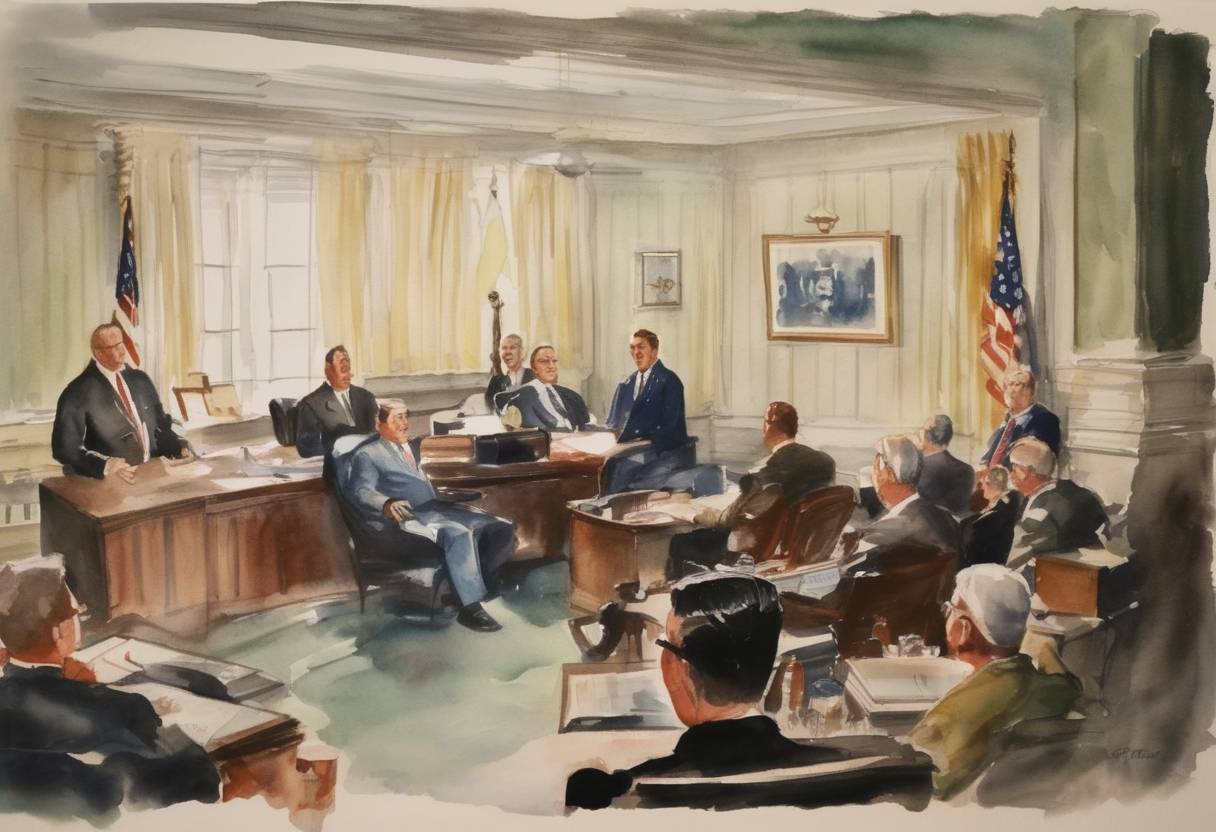
On December 9, 1958, The John Birch Society (JBS) was founded in Indianapolis, Indiana, by Robert W. Welch Jr., a retired candy manufacturer and conservative activist. This organization was named after John Birch, an American Baptist missionary and an intelligence officer in China who was killed by communist forces in 1945, an event Welch considered the first casualty of the Cold War.
The society was established amidst the height of the Cold War, guided by an anti-communist ideology that viewed the spread of communism as a direct threat to American values and global stability. The JBS’s goals included promoting personal freedom and opposing any perceived encroachment on national sovereignty by international bodies, which they viewed as fostering communist agendas. The organization’s motto, “Less government, more responsibility, and — with God’s help — a better world,” encapsulated its central philosophy.
Throughout the late 1950s and into the 1960s, the JBS engaged in activities aimed at educating the American public and advocating for conservative policies. The organization produced numerous publications that outlined their views against collectivism and detailed conspiracies about communist infiltration in various aspects of American society, including government, universities, and media. At its peak, the JBS claimed to have tens of thousands of members nationwide, with influence reaching into politics and society.
The JBS quickly became controversial due to its strong anti-communist stance and its propagation of conspiracy theories. Critics, including both liberals and conservatives, accused the society of promoting paranoia and undermining established institutions through their unfounded claims. Notably, in the early 1960s, prominent figures such as William F. Buckley Jr. worked to distance the mainstream conservative movement from the society, arguing that its extreme views did more harm than good to conservative causes.
Despite the controversies, The John Birch Society left a lasting impact on American conservative thought and activism, contributing to the discourse on liberty, limited government, and sovereignty. It also influenced the rise of the modern conservative movement, though often from the fringes due to its polarizing positions. Today, the JBS continues to operate, albeit with reduced prominence compared to its mid-20th-century heyday. Its legacy is evident in the continued debate over the role of government and the vigilance against perceived external threats to American ideals.
Source: en.wikipedia.org