The Storming of the Bastille: July 14, 1789
1789 · Paris, France
The Storming of the Bastille occurred in Paris, marking a pivotal event in the French Revolution.
October 5, 1789
The Women's March on Versailles took place as hundreds of women from Paris marched to the Palace of Versailles to demand bread and political reforms from King Louis XVI.
Versailles, France | French Revolutionaries
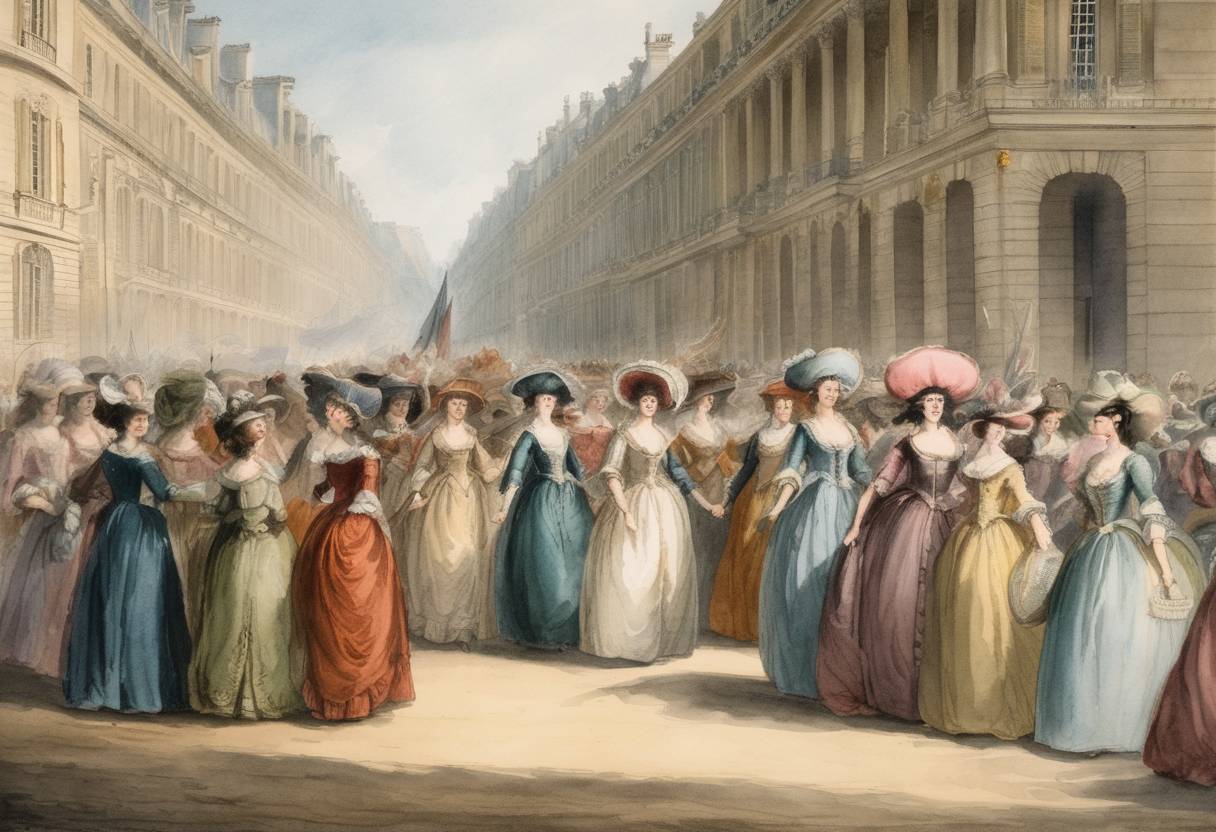
The Women’s March on Versailles stands as a pivotal moment in the early stages of the French Revolution, occurring on October 5, 1789. This significant event involved the mobilization of thousands of women and some men who marched from Paris to the Palace of Versailles. Their primary grievances were the severe food shortages and exorbitant bread prices, alongside a demand for political reforms.
The march was fueled by several underlying factors:
Economic Hardship: France was facing a severe economic crisis, characterized by food shortages and skyrocketing bread prices, which were staples of the common people’s diet.
Political Unrest: The ongoing political upheaval following the convening of the Estates-General in May 1789 and the subsequent establishment of the National Assembly had engendered a climate ripe for unrest.
Role of Women: Women, being the primary caretakers and responsible for procuring food, were directly affected by shortages. This imbued them with determination to seek change.
The march began in the marketplaces of Paris, particularly in the eastern district of Saint-Antoine. What started as a small group quickly swelled to thousands as they navigated the challenging 12-mile journey to Versailles, driven by desperation and anger.
The Initiation: On the morning of October 5, 1789, women gathered in marketplaces demanding bread. An influential orator may have sparked the march to Versailles.
The Gathering: As the women marched, they were accompanied by National Guardsmen, under the pressure to avoid violent confrontations and ensure an orderly demonstration.
Arrival at Versailles: Upon arrival, the crowd demanded to meet King Louis XVI. They sought assurances for more accessible food supplies and political concessions.
The march led to significant developments in the revolution:
Royal Response: Confronted by the determined crowd, King Louis XVI agreed to address the food shortage by ordering that flour be distributed in Paris and acknowledged the Declaration of the Rights of Man and of the Citizen.
Return to Paris: The next day, under pressure from the demonstrating crowd, the royal family was effectively compelled to move to Paris, symbolically aligning the monarchy closer to revolutionary activity and making the king more susceptible to public scrutiny and influence.
Political Shift: This march is noted for ushering in a shift in revolutionary activity from the symbolic to the tangible, marking an assertion of people’s power directly influencing political decisions.
The Women’s March on Versailles highlighted the critical role of common citizens, particularly women, in shaping the trajectory of the French Revolution. It underscored the intersection of economic despair with emerging demands for political representation, setting a precedent for future civic actions during the revolutionary period.
Source: www.britannica.com