The First Solo Flight Around the World
1928 · Berlin, Germany
The first solo flight around the world is completed by German pilot Gunther von Hünefeld.
September 28, 1924
The first aerial circumnavigation of the world is completed by a team of pilots from the United States Army Air Service.
Seattle, United States | United States Army Air Service
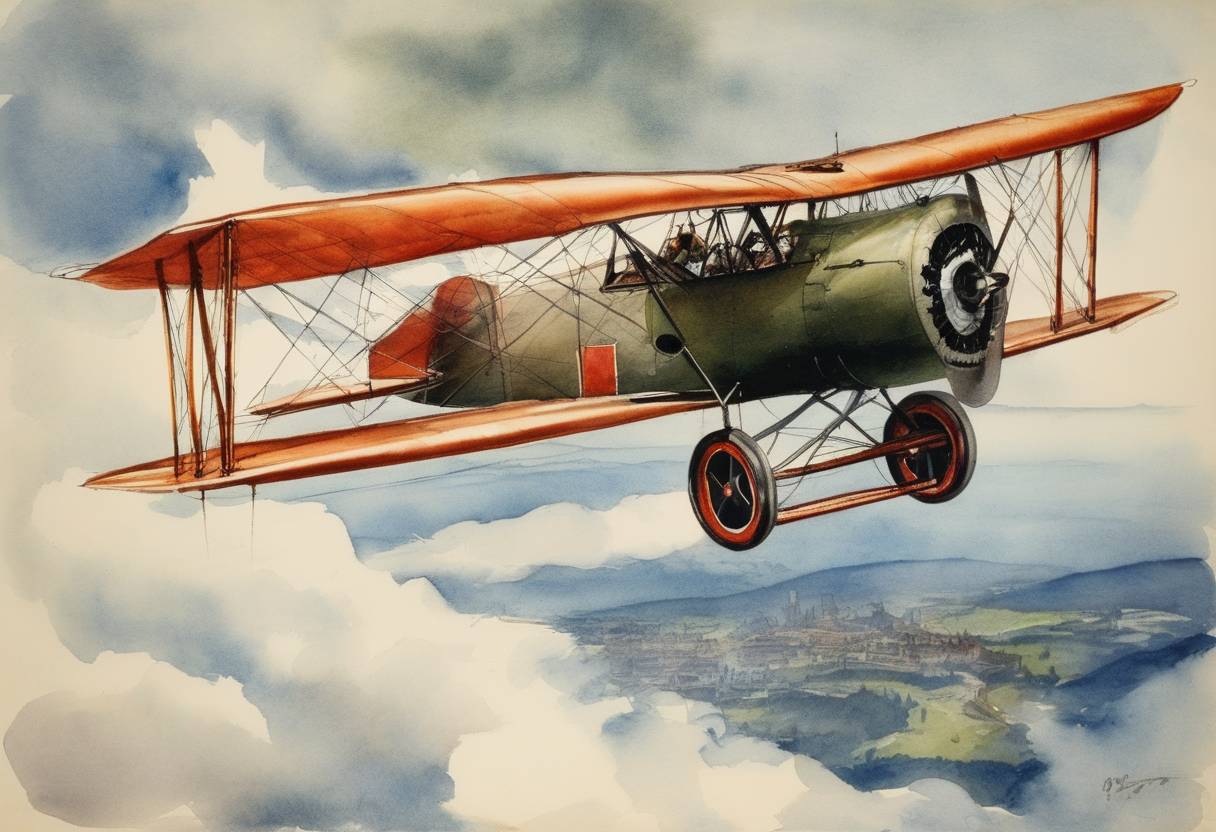
On September 28, 1924, the inaugural aerial circumnavigation of the globe was completed by a team of pilots from the United States Army Air Service. This historic achievement marked a significant milestone in the development of aviation and showcased the potential for global air travel.
The endeavor began on April 6, 1924, under the leadership of Major Frederick L. Martin, with four Douglas DT-2 biplanes nicknamed the Seattle, Chicago, Boston, and New Orleans. The mission was an initiative by the U.S. Army Air Service to demonstrate the capabilities of American aviation technology and to foster international goodwill.
The journey spanned approximately 175 days, covering over 26,345 miles. The route encompassed multiple stops across continents, including North America, Europe, Asia, and back over the Pacific Ocean.
The mission faced numerous challenges, including adverse weather conditions, mechanical failures, and navigational difficulties. Notably, Major Martin’s aircraft, the Seattle, crashed in Alaska early in the journey, but he survived. The Boston was forced to land in the North Sea near the Faroe Islands and was unable to continue, though its crew was rescued.
Ultimately, only two aircraft, the Chicago, piloted by Lt. Lowell H. Smith and Lt. Erik H. Nelson, and the New Orleans, piloted by Lt. Leigh Wade and Lt. Henry H. Ogden, completed the full circumnavigation. They returned to Seattle on September 28, 1924, to a hero’s welcome.
The successful completion of this first aerial circumnavigation was a testament to the growing sophistication and reliability of aircraft technology in the early 20th century. It provided valuable lessons on international flight logistics, aircraft endurance, and navigation. This feat paved the way for further advancements in global aviation and inspired subsequent aerial explorers and aviators.
The achievement underscored the possibilities of linking distant parts of the world through air travel and highlighted the cooperative spirit and resilience of the participating airmen and their supporting crews.
Source: www.historylink.org