The Battle of Nieuwpoort: Prelude, May 31, 1600
1600 · Nieuwpoort, Spanish Netherlands
The Battle of Nieuwpoort was in preparation with Maurice of Nassau's Dutch-English army assembling for engagement, significant in the Eighty Years' War.
August 30, 1590
On August 30, 1590, during the Eighty Years' War, Spanish forces led by Alexander Farnese, Duke of Parma, captured the city of Huy in modern-day Belgium, which was then part of the Spanish Netherlands. This victory was part of Spain's efforts to maintain control over the rebellious provinces.
Huy, Spain (modern-day Belgium) | Spanish forces
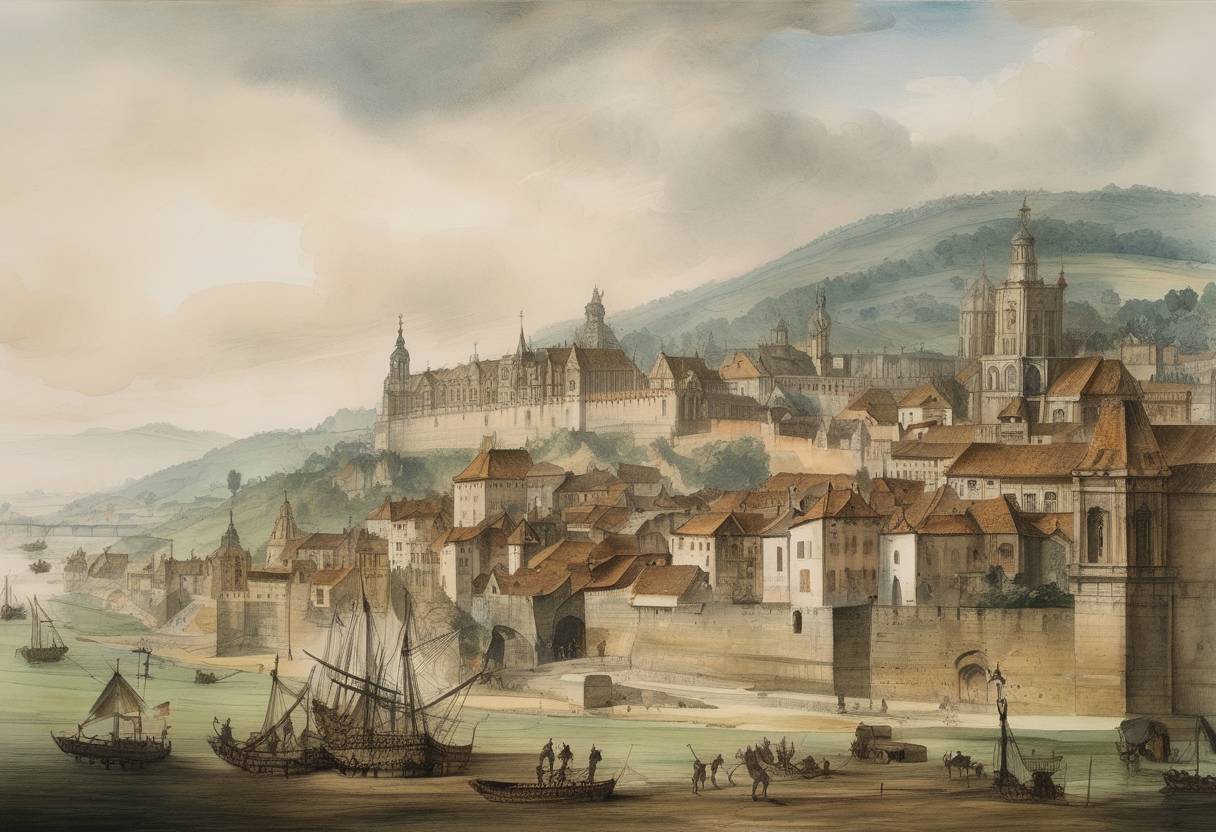
On August 30, 1590, during the Eighty Years’ War, Spanish forces under the command of Alexander Farnese, Duke of Parma, successfully captured the city of Huy. This event was a significant tactical victory for Spain in its efforts to maintain control over the Spanish Netherlands amidst the ongoing conflict with the rebellious provinces.
The Eighty Years’ War (1568–1648) was a protracted and complex conflict that primarily saw the revolt of the Seventeen Provinces in the Low Countries against the rule of the Habsburg Spanish Empire. This struggle was rooted in a mix of religious, political, and economic grievances against Spanish rule, particularly among the largely Protestant Northern Provinces.
Huy, located in present-day Belgium, was strategically important because of its position along the Meuse River, which served as a crucial transit and communication route. Control over Huy meant greater influence over the surrounding regions, and securing it was part of Spain’s broader strategy to suppress the Dutch Revolt by bolstering its grip on the rebellious provinces in the southern Netherlands.
Under the leadership of Alexander Farnese, the Spanish forces approached the city with determination. Farnese, known for his military acumen, orchestrated a well-planned siege that leveraged both well-disciplined infantry and supporting artillery. As they pressed their assault, the Spanish forces managed to breach the city defenses after targeted bombardments and strategic maneuvering.
The capture of Huy fortified Spanish control in the Southern Netherlands and demonstrated Farnese’s capability as one of Philip II’s most effective commanders. It temporarily stemmed the tide of the Dutch Revolt in that region, allowing Spain to regroup and reconsolidate its power.
However, the capture was only a short-term success in the broader context of the Eighty Years’ War, as the conflict continued sporadically for many decades. The war eventually culminated in the recognition of the independence of the Dutch Republic in 1648 through the Treaty of Westphalia.
The event underscores the level of military and logistical commitment that characterized the Eighty Years’ War, highlighting the intense contest between the Spanish Empire’s desire to retain its territories and the burgeoning sense of identity and self-governance among the Dutch. The historical narrative of the capture of Huy reflects the ebb and flow of fortune that defined this critical era in European history.
Source: www.britannica.com