The Battle of Mons: August 23, 1914
1914 · Mons, Belgium
The Battle of Mons was fought, marking the first major action of the British Expeditionary Force in World War I.
December 11, 1917
British General Edmund Allenby enters Jerusalem on foot, becoming the first Christian to control the city in centuries after leading the British Empire's forces to victory against the Ottoman Empire.
Jerusalem, Palestine (Under British Mandate post-World War I) | British Army
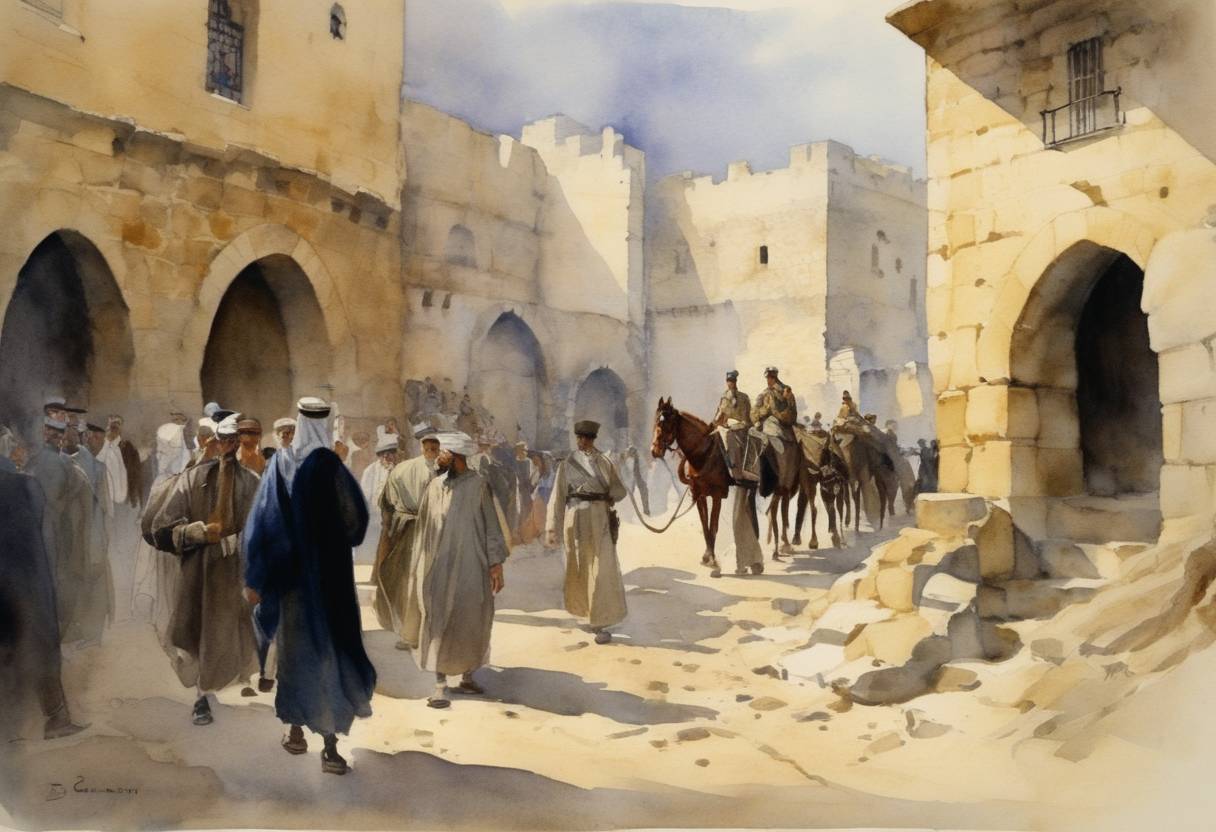
On December 11, 1917, British General Edmund Allenby entered Jerusalem on foot, symbolically marking the city’s capture by the British Empire forces during World War I. This event held significant historical weight as it represented the first time in centuries that a Christian power had taken control of the city, following an extended period under Muslim rule since the medieval Crusades.
Prior to Allenby’s entrance, the strategic city of Jerusalem had been part of the Ottoman Empire, which had allied with the Central Powers during World War I. The British-led Egyptian Expeditionary Force, which Allenby commanded, had been engaged in a broader campaign across the Sinai and Palestine regions aiming to dismantle the Ottoman hold and secure the eastern Mediterranean.
The capture of Jerusalem was part of the successful Jerusalem Operations, which began in November 1917. The city’s strategic and symbolic importance motivated Allenby and his forces to approach cautiously to minimize damage and ensure a smooth transition of power. The Ottoman garrison in Jerusalem surrendered to the British on December 9, 1917, following a skillful military campaign marked by strategic maneuvers and intense battles.
General Allenby’s entry on December 11 was notably deliberate; he dismounted from his horse to walk through the Jaffa Gate on foot, a gesture designed to show humility and respect for the city’s religious sanctity. This act was also intended to contrast with previous conquerors who had often entered the city triumphantly on horseback.
Allenby’s entrance into Jerusalem was a pivotal moment in the Middle Eastern theater of World War I. It was welcomed by many in the Allied nations and seen as a significant propaganda victory. The event had broad repercussions, affecting not just military strategies but also political dynamics in the post-war reorganization of territories once part of the Ottoman Empire.
The entry of Allenby heralded a new era of British administration in Palestine, setting the stage for future geopolitical developments, including the controversial Balfour Declaration of 1917, which promised the establishment of a national home for the Jewish people in Palestine. The capture of Jerusalem thus played a crucial role in the shaping of Middle Eastern history throughout the 20th century.
Source: en.wikipedia.org