The Completion of the Salt March: April 5, 1930
1930 · Dandi, India
Mahatma Gandhi completed the Salt March, a 240-mile protest against the British salt tax in India, which became a significant event in the Indian independence movement.
October 2, 1869
Mahatma Gandhi, leader of the Indian independence movement against British rule, was born in Porbandar, India.
Porbandar, British India | Indian National Congress
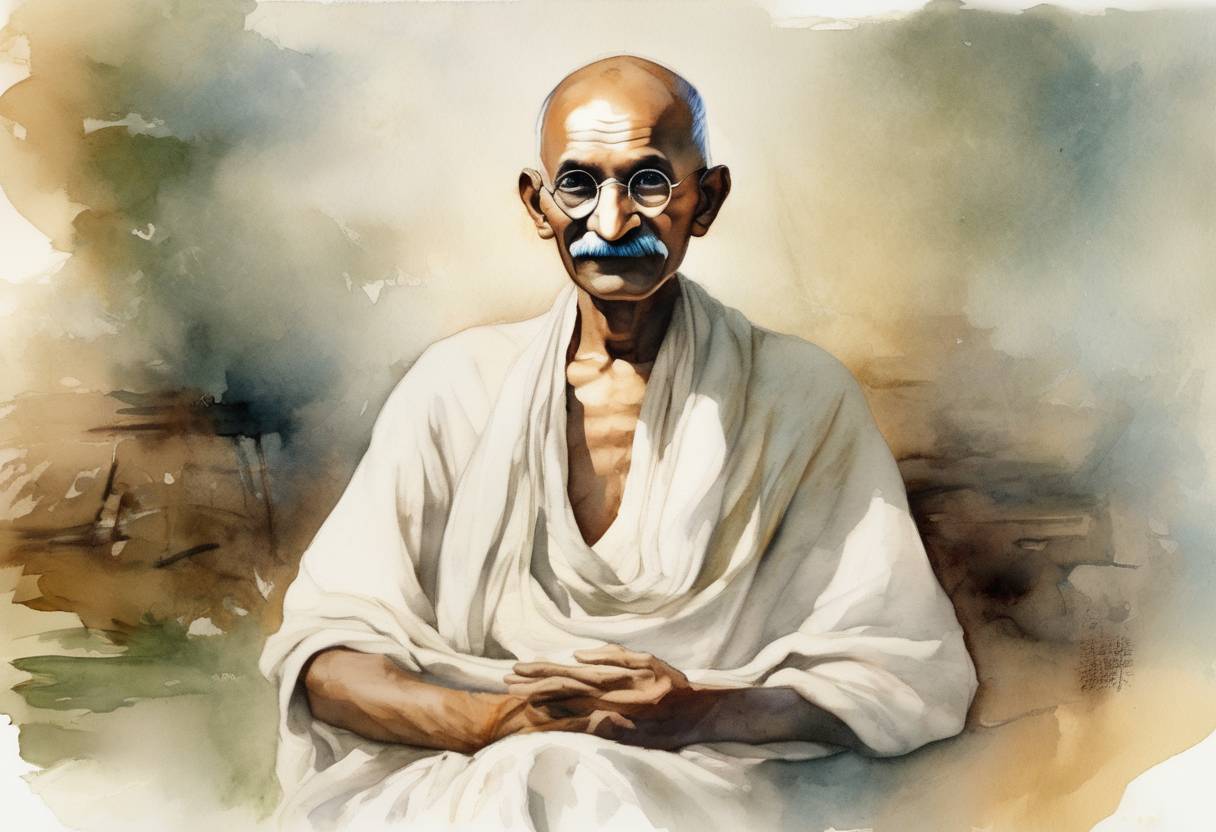
Date of Birth: October 2, 1869
Place of Birth: Porbandar, India
Mohandas Karamchand Gandhi, later known as Mahatma Gandhi, was born in the coastal town of Porbandar, located in present-day Gujarat, India. He was born into a Hindu family, with his father, Karamchand Gandhi, serving as the diwan (chief minister) of Porbandar. His mother, Putlibai, was deeply religious, which influenced Gandhi’s early life and instilled in him values of non-violence and tolerance.
Gandhi’s early education took place in Porbandar and later in Rajkot, where his family moved. At the age of 19, he traveled to London to study law at the Inner Temple, one of the four Inns of Court. He was called to the bar in 1891 and returned to India to practice law.
Gandhi’s journey as a leader of the Indian independence movement began with his experiences in South Africa, where he faced racial discrimination. His time there, from 1893 to 1914, was pivotal in shaping his philosophy of non-violent resistance, or “Satyagraha.” He organized the Indian community to protest against unjust laws, which laid the groundwork for his later efforts in India.
Upon returning to India in 1915, Gandhi became involved in various local struggles against British rule. His leadership in the Champaran and Kheda agitations in 1917-1918, where he championed the cause of farmers oppressed by colonial policies, marked his rise as a national leader.
Gandhi’s philosophy of non-violent resistance became a cornerstone of the Indian independence movement. His leadership in campaigns such as the Non-Cooperation Movement (1920-1922), the Salt March (1930), and the Quit India Movement (1942) galvanized millions of Indians to demand independence from British rule.
Gandhi’s impact extended beyond India, influencing civil rights movements worldwide. His principles inspired leaders like Martin Luther King Jr. and Nelson Mandela in their struggles for equality and justice.
Mahatma Gandhi’s birth on October 2, 1869, marked the beginning of a life dedicated to the pursuit of justice through non-violence. His legacy continues to resonate globally, symbolizing the power of peaceful protest and the enduring fight for human rights.
Source: en.wikipedia.org