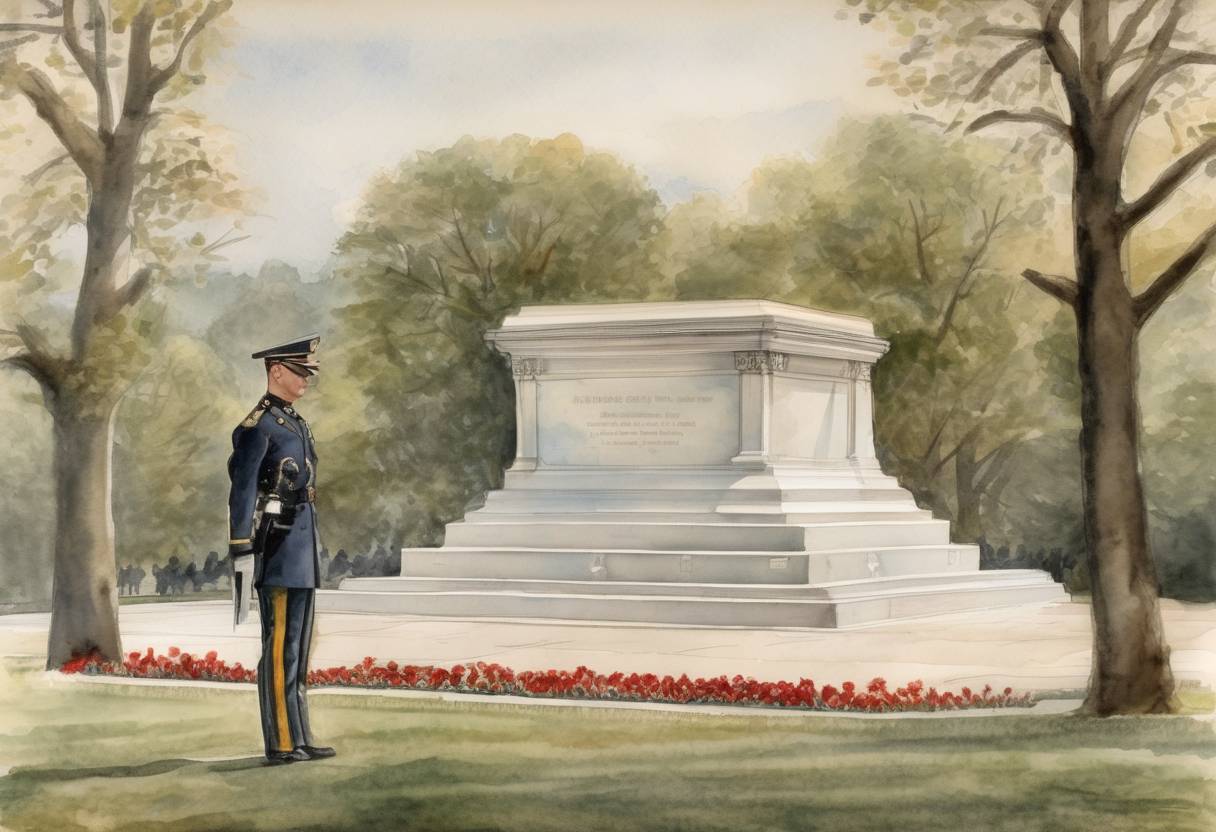
Dedication of the Tomb of the Unknown Soldier
On November 11, 1921, a significant event took place at Arlington National Cemetery in Virginia, USA—the dedication of the Tomb of the Unknown Soldier. This solemn ceremony was held to honor unidentified soldiers who had perished during World War I, serving as a poignant reminder of the sacrifices made by countless individuals whose identities remained unknown.
Context and Background
World War I (1914-1918): The war resulted in unprecedented casualties, with millions of soldiers losing their lives. Many of these soldiers were never identified due to the nature of the warfare, which included trench battles and the use of chemical weapons.
Concept of the Tomb: The idea of creating a memorial for unknown soldiers originated in Europe, with countries like France and the United Kingdom establishing similar monuments. The United States followed suit to pay tribute to its own unidentified war dead.
The Dedication Ceremony
Date and Significance: The dedication took place on Armistice Day, November 11, 1921, marking the third anniversary of the end of World War I. This date was chosen to emphasize the connection to the war and the peace that followed.
Ceremony Details: The event was attended by numerous dignitaries, including President Warren G. Harding, who delivered a speech honoring the unknown soldiers. The ceremony included a procession, military honors, and the laying of a wreath.
The Unknown Soldier: The remains of an unidentified American soldier were selected from a cemetery in France and transported to the United States. This soldier was interred in the newly constructed tomb, symbolizing all unidentified American soldiers who died in the war.
Broader Historical Significance
Symbol of Sacrifice: The Tomb of the Unknown Soldier became a powerful symbol of the sacrifices made by American service members. It represents the collective loss and grief experienced by the nation during and after the war.
Continuing Tradition: Over the years, the tomb has come to honor unknown soldiers from subsequent conflicts, including World War II, the Korean War, and the Vietnam War. It serves as a place of reflection and remembrance for all who have served.
Cultural Impact: The tomb is a focal point for national ceremonies, particularly on Memorial Day and Veterans Day, drawing visitors who wish to pay their respects to those who have served and sacrificed.
The dedication of the Tomb of the Unknown Soldier remains a poignant reminder of the cost of war and the enduring gratitude owed to those who have served, especially those whose names and stories remain unknown.