The Opening of the First McDonald's in the Soviet Union
1990 · Moscow, Soviet Union
The first McDonald's in the Soviet Union opens in Moscow, symbolizing the thawing of Cold War tensions.
May 28, 1987
Mathias Rust, a West German aviator, illegally lands a private plane near Red Square in Moscow, raising questions about Soviet air defense capabilities.
Moscow, Soviet Union | Soviet Air Defense
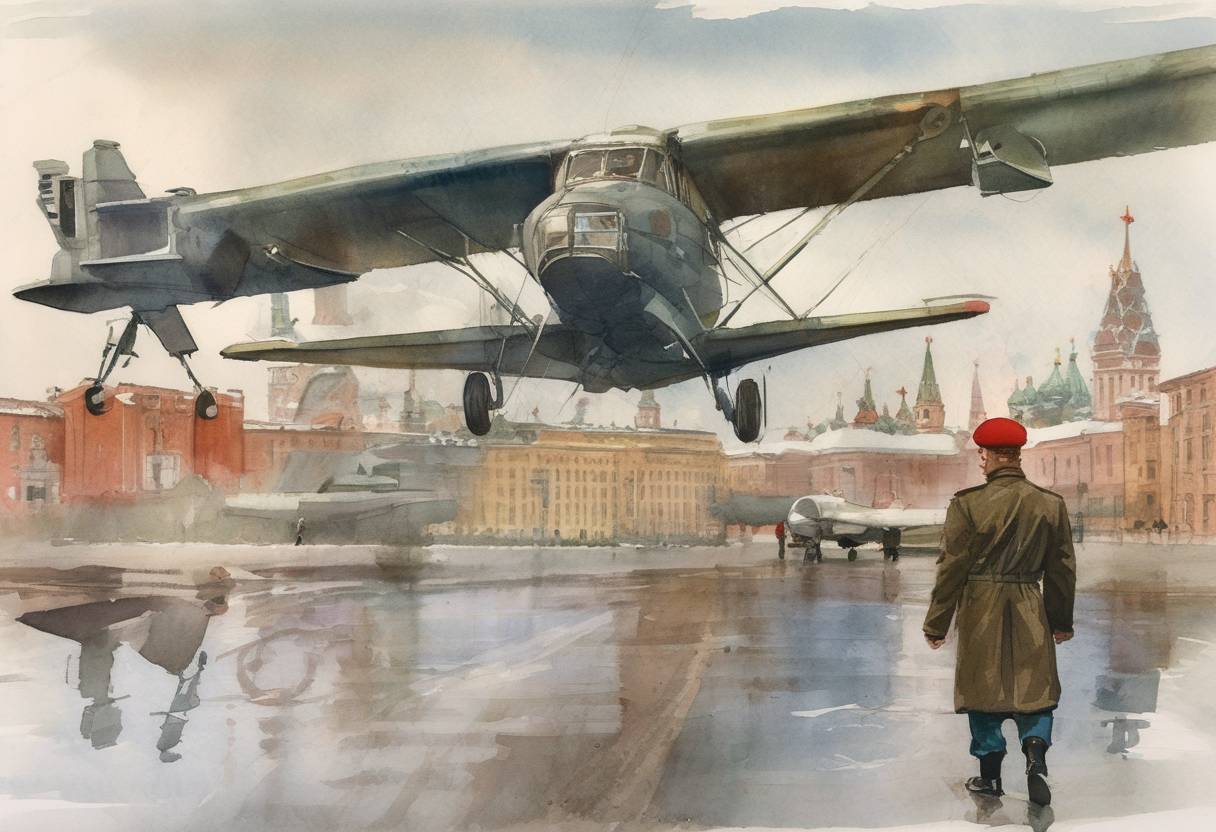
On May 28, 1987, Mathias Rust, a 19-year-old amateur pilot from West Germany, executed a daring and unauthorized flight that culminated in a landing near Red Square in Moscow. This audacious act not only embarrassed the Soviet Union but also exposed significant vulnerabilities in its air defense systems.
Mathias Rust was an aviation enthusiast who had obtained his pilot’s license in 1986. Motivated by a desire to create a symbolic “bridge” between East and West during the Cold War, Rust embarked on a solo flight from Helsinki, Finland, to Moscow. His journey was intended to promote peace and challenge the tense geopolitical climate of the time.
Rust’s landing in the heart of Moscow was a profound embarrassment for the Soviet military, highlighting severe deficiencies in its air defense capabilities. The incident led to significant repercussions:
Rust’s flight had a lasting impact on Cold War dynamics and Soviet internal policies:
Mathias Rust’s unauthorized flight to Moscow on May 28, 1987, remains a remarkable episode in Cold War history. It not only exposed critical weaknesses in Soviet air defenses but also served as a catalyst for military and political reforms within the Soviet Union. Rust’s actions, while controversial, underscored the complex interplay of individual initiative and geopolitical tensions during this pivotal era.
Source: www.britannica.com