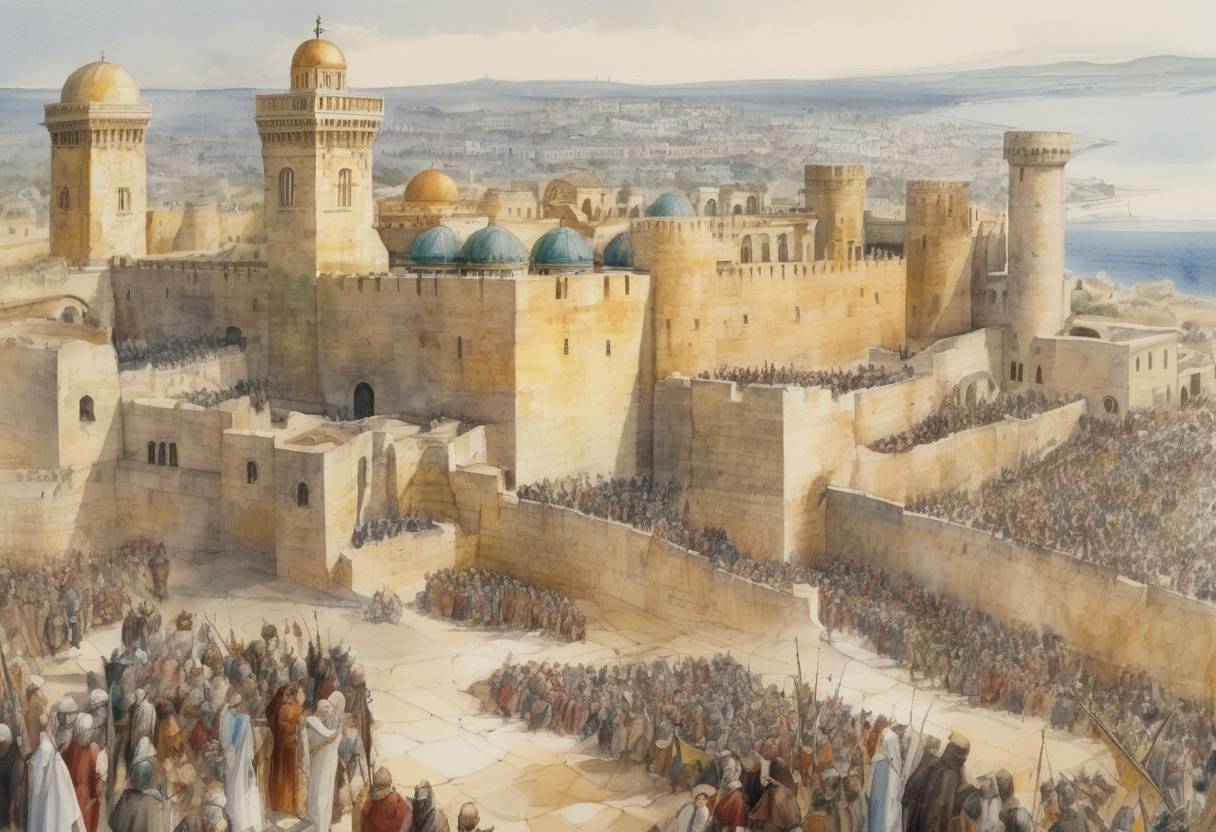
The Treaty of Jaffa (September 13, 1229)
The Treaty of Jaffa, signed on September 13, 1229, marked a significant moment in the history of the Crusades, specifically the Sixth Crusade. This treaty was a diplomatic agreement between Frederick II, Holy Roman Emperor, and Sultan Al-Kamil of Egypt. It resulted in a peaceful resolution that allowed Christians to regain control over key religious sites, including Jerusalem, Nazareth, and Bethlehem, without further bloodshed.
Context Leading to the Treaty
The Sixth Crusade (1228-1229): Unlike previous crusades, the Sixth Crusade was characterized by diplomacy rather than military confrontation. Frederick II embarked on the crusade with a unique approach, leveraging negotiation over warfare.
Frederick II’s Strategy: Frederick II, known for his intellectual prowess and diplomatic skills, sought to reclaim the Holy Land through negotiation. His approach was partly influenced by his excommunication by Pope Gregory IX, which limited his ability to rally widespread military support.
Sultan Al-Kamil’s Position: Al-Kamil, the Ayyubid Sultan of Egypt, was facing internal challenges and threats from rival factions. He was open to negotiation to stabilize his rule and focus on other pressing matters.
Key Provisions of the Treaty
Christian Control of Holy Sites: The treaty granted Christians control over Jerusalem, Nazareth, and Bethlehem, allowing for the peaceful pilgrimage and worship at these sacred sites.
Muslim Sovereignty: Despite the transfer of control, the treaty maintained Muslim sovereignty over the region, ensuring that Islamic religious practices and administration continued.
Demilitarization: The agreement included provisions for the demilitarization of Jerusalem, ensuring that the city remained open and accessible to both Christians and Muslims.
Aftermath and Significance
Temporary Peace: The Treaty of Jaffa brought a temporary peace to the region, allowing Christians access to holy sites without the need for military conquest.
Frederick II’s Legacy: Frederick’s successful negotiation without papal support showcased his diplomatic acumen and established a precedent for resolving conflicts through dialogue.
Impact on the Crusades: The treaty highlighted the potential for peaceful resolution in the Crusades, although it did not end the broader conflict between Christians and Muslims in the Holy Land.
Long-term Consequences: The peace was short-lived, as tensions eventually resurfaced, leading to further crusades and conflicts in the region.
The Treaty of Jaffa stands as a notable example of diplomacy during the Crusades, illustrating the complexities of medieval geopolitics and the interplay between religious and political interests.