The United States Formally Recognizes the Soviet Union - November 17, 1933
1933 · Washington, D.C., United States
The United States formally recognizes the Soviet Union.
November 16, 1933
The United States and the Soviet Union establish formal diplomatic relations.
Washington, D.C., United States | U.S. Government
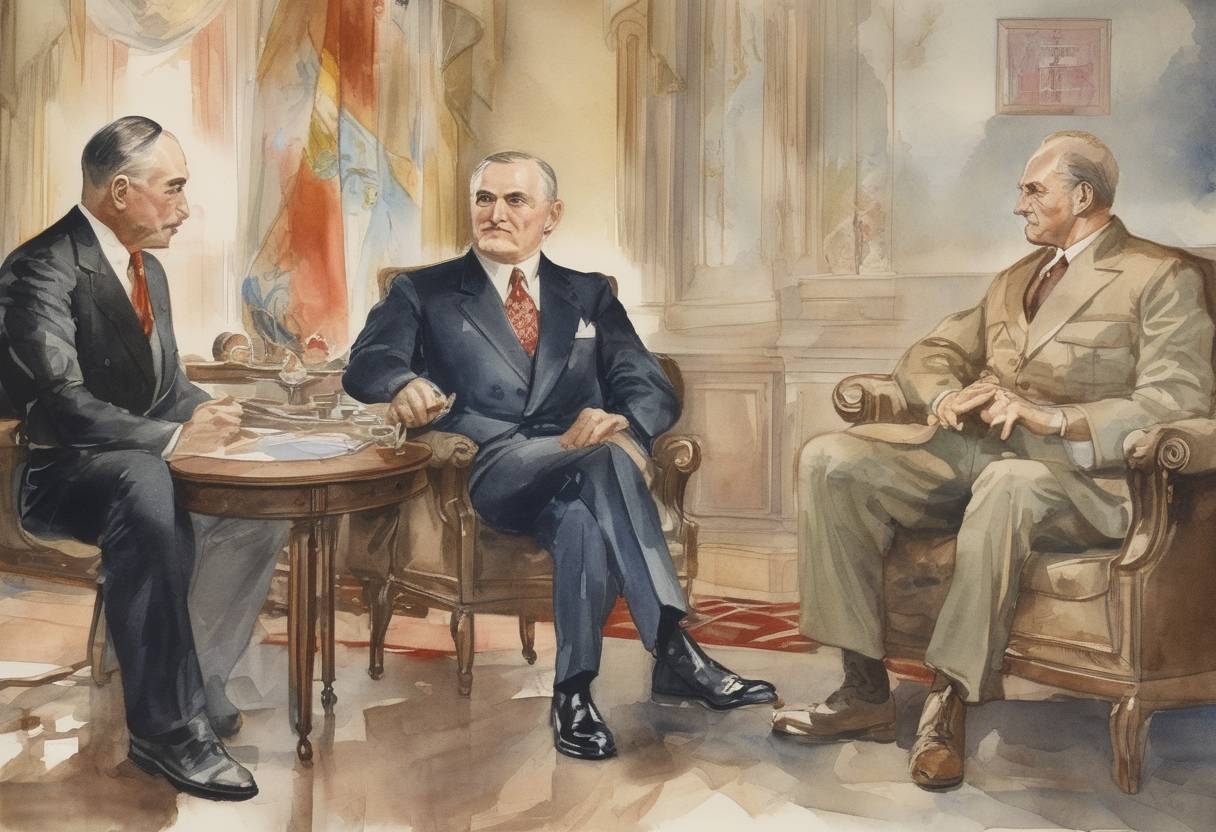
On November 16, 1933, the United States and the Soviet Union formally established diplomatic relations, marking a significant shift in international relations during the interwar period. This event was the culmination of years of complex interactions and changing geopolitical landscapes.
Russian Revolution and Initial Non-Recognition: Following the Bolshevik Revolution in 1917, the United States, along with many other Western nations, refused to recognize the new Soviet government. The U.S. government was wary of communism and concerned about the Soviet Union’s repudiation of debts and its promotion of communist ideology worldwide.
Geopolitical Context: By the early 1930s, the global political climate was changing. The Great Depression had profound economic impacts worldwide, and the rise of militaristic regimes in Germany and Japan posed new threats. These factors contributed to a reevaluation of U.S. foreign policy priorities.
Economic Considerations: The United States was interested in opening new markets for American goods, and the Soviet Union, undergoing industrialization, presented significant economic opportunities.
Diplomatic Engagements: In the early 1930s, informal contacts increased between American and Soviet representatives. The Soviet Union was eager to gain formal recognition to enhance its international legitimacy and secure economic and technological assistance.
Roosevelt’s Administration: President Franklin D. Roosevelt, who took office in March 1933, was more open to establishing relations with the Soviet Union than his predecessors. He saw potential benefits in terms of trade and countering the growing threats from other powers.
Negotiations: The negotiations were primarily conducted by William C. Bullitt, who would become the first U.S. ambassador to the Soviet Union, and Soviet Foreign Minister Maxim Litvinov. The discussions focused on issues such as the treatment of American citizens in the Soviet Union, religious freedom, and the Soviet Union’s propaganda activities in the U.S.
Formal Recognition: On November 16, 1933, President Roosevelt and Soviet Foreign Minister Litvinov exchanged letters that formalized the establishment of diplomatic relations. This agreement included assurances regarding the non-interference in each other’s internal affairs.
Diplomatic Impact: The establishment of diplomatic relations allowed for the exchange of ambassadors and opened the door for increased economic and cultural exchanges between the two nations.
Long-term Relations: Despite the formal recognition, U.S.-Soviet relations remained complex and often strained due to ideological differences and geopolitical rivalries. This diplomatic relationship would later be tested during World War II and the ensuing Cold War.
Historical Significance: The 1933 recognition marked a pragmatic shift in U.S. foreign policy, reflecting a willingness to engage with ideologically different regimes when it served broader strategic interests.
In summary, the establishment of formal diplomatic relations between the United States and the Soviet Union on November 16, 1933, was a pivotal moment in 20th-century international relations, setting the stage for future interactions between the two superpowers.
Source: en.wikipedia.org