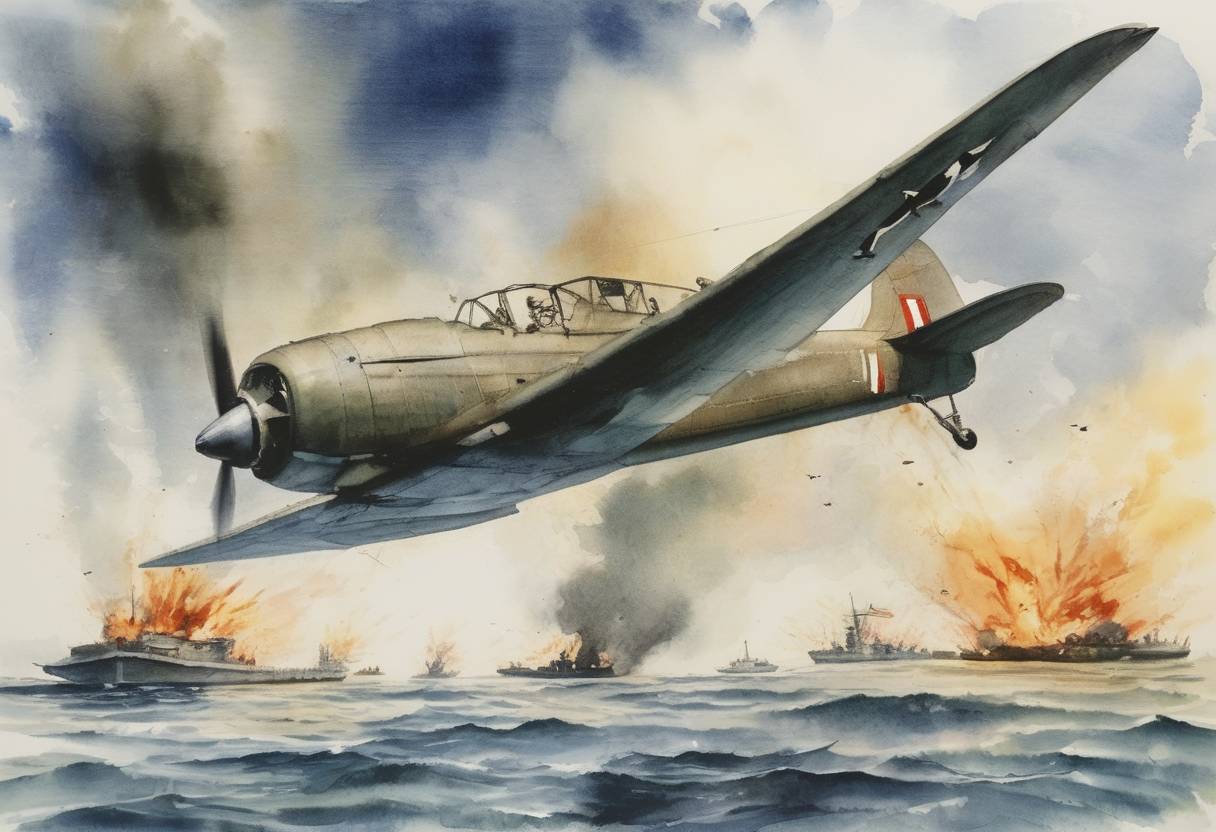
First Kamikaze Attack: October 21, 1944
On October 21, 1944, during the Battle of Leyte in the Pacific Theater of World War II, the first recorded kamikaze attack occurred. This marked a significant and grim evolution in aerial warfare tactics employed by the Japanese military.
Context and Background
- Battle of Leyte Gulf: This battle was part of the larger campaign to liberate the Philippines from Japanese occupation. It was one of the largest naval battles in history, involving forces from the United States, Australia, and Japan.
- Japanese Strategy: Facing dwindling resources and increasing pressure from Allied forces, Japan resorted to desperate measures. The kamikaze tactic, which involved pilots deliberately crashing their aircraft into enemy ships, was conceived as a means to inflict maximum damage with limited resources.
The Attack on HMAS Australia
- Target: HMAS Australia, a Royal Australian Navy heavy cruiser, was part of the Allied fleet supporting the Leyte landings.
- The Attack: On October 21, a Japanese aircraft, carrying a 200-kilogram bomb, deliberately crashed into HMAS Australia. This attack was one of the earliest instances of kamikaze tactics being employed.
- Impact: The attack resulted in significant damage to the ship and the loss of lives, including the ship’s captain, Captain Emile Dechaineux, and 29 crew members. Many others were injured.
Aftermath and Significance
- Psychological Impact: The kamikaze attacks introduced a new level of psychological warfare, as they demonstrated the willingness of Japanese pilots to sacrifice their lives for their country.
- Military Response: The Allies had to adapt their naval strategies to counter this new threat, leading to increased anti-aircraft defenses and changes in fleet formations.
- Legacy: The kamikaze tactic became a symbol of Japan’s desperation in the final stages of the war. It highlighted the intense nationalism and the dire situation faced by Japan as Allied forces closed in.
Broader Historical Significance
The introduction of kamikaze attacks during World War II underscored the lengths to which Japan was willing to go in its defense efforts. It also illustrated the shifting dynamics of warfare, where technological advancements and human sacrifice were intertwined in unprecedented ways. The kamikaze attacks left a lasting impact on military tactics and the collective memory of World War II, serving as a poignant reminder of the war’s human cost.