Hijacking of Air France Flight 8969
1994 · Algiers, Algeria
Air France Flight 8969 is hijacked by the Armed Islamic Group in Algiers, Algeria.
October 7, 1985
The Achille Lauro hijacking occurred when the Italian cruise ship was seized by members of the Palestine Liberation Front off the coast of Egypt, leading to a tense international incident.
Mediterranean Sea, Italy | Palestine Liberation Front
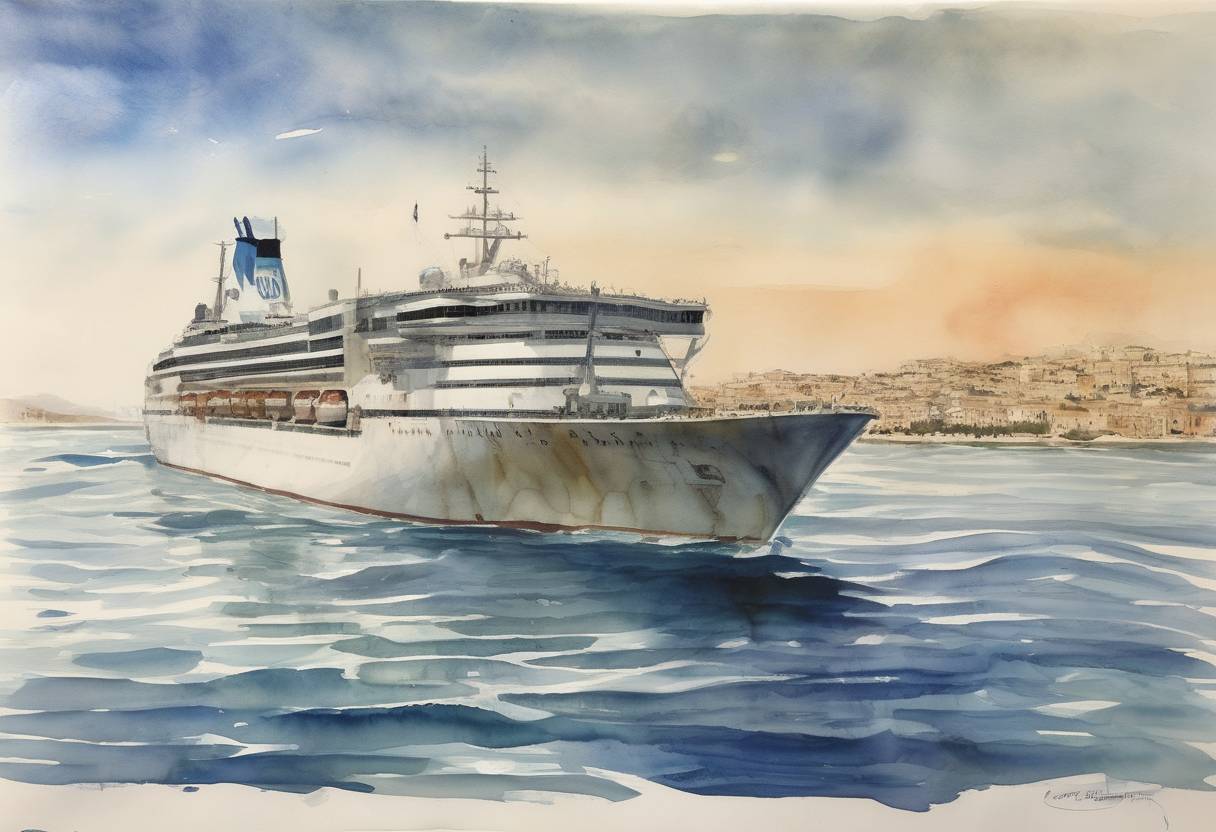
On October 7, 1985, the Italian cruise ship Achille Lauro was hijacked by four members of the Palestine Liberation Front (PLF) off the coast of Egypt. This dramatic event unfolded over several days, capturing global attention and leading to a complex international crisis.
The Achille Lauro was a luxury cruise ship that embarked on Mediterranean voyages. The hijackers, part of a faction within the Palestine Liberation Organization (PLO), sought to draw attention to the Palestinian cause and secure the release of 50 Palestinians imprisoned in Israel.
Initial Seizure: The hijackers took control of the ship on October 7, 1985, while it was sailing from Alexandria, Egypt, to Port Said. They initially posed as tourists before revealing their intentions.
Demands: The hijackers demanded the release of Palestinian prisoners held in Israel. They threatened to kill passengers if their demands were not met.
Murder of Leon Klinghoffer: Tragically, during the hijacking, the terrorists killed Leon Klinghoffer, a 69-year-old American Jewish passenger, and threw his body overboard. This act of violence drew widespread condemnation and intensified the urgency of the situation.
Diplomatic Efforts: The hijacking prompted immediate international diplomatic efforts. The United States, Italy, and Egypt were heavily involved in negotiations to secure the release of the hostages.
Resolution: After two days of tense negotiations, the hijackers agreed to surrender in exchange for safe passage. They were flown to Tunisia, where the PLO was headquartered at the time.
Capture and Prosecution: The U.S. intercepted the Egyptian plane carrying the hijackers, forcing it to land in Italy. The hijackers were arrested and later tried in Italy. The leader, Abu Abbas, was not on the plane and evaded capture until 2003.
Impact on International Relations: The incident strained U.S.-Egyptian relations and highlighted the complexities of Middle Eastern politics. It also underscored the challenges of dealing with terrorism and the need for international cooperation.
Legacy: The murder of Leon Klinghoffer became a symbol of the brutality of terrorism, leading to increased awareness and security measures in international travel.
The Achille Lauro hijacking remains a significant event in the history of international terrorism, illustrating the far-reaching implications of geopolitical conflicts and the human cost of such acts.
Source: en.wikipedia.org