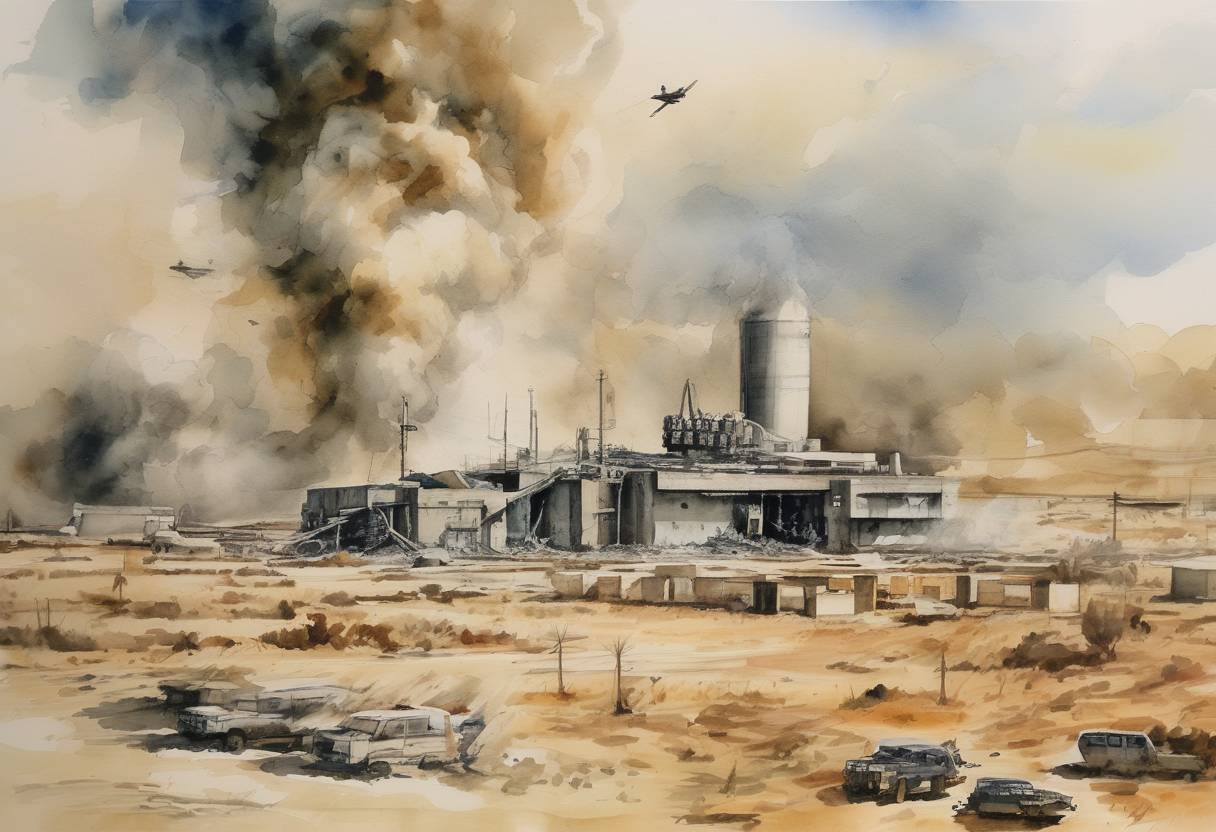
Operation Opera: The Destruction of Iraq’s Osirak Nuclear Reactor
On June 7, 1981, the Israeli Air Force executed a surprise airstrike known as Operation Opera, targeting and destroying the Osirak nuclear reactor in Iraq. This operation was a pivotal moment in Middle Eastern geopolitics and had significant implications for international relations and nuclear proliferation.
Background
Osirak Reactor: The Osirak reactor, located near Baghdad, was a French-built nuclear reactor. Iraq, under the leadership of Saddam Hussein, claimed it was intended for peaceful scientific research. However, Israel and other nations suspected it could be used to produce nuclear weapons.
Israeli Concerns: Israel, led by Prime Minister Menachem Begin, perceived the potential for Iraq to develop nuclear weapons as an existential threat. The reactor’s completion was imminent, prompting Israel to act preemptively.
The Operation
Planning: The operation was meticulously planned over several years. Israeli intelligence gathered detailed information about the reactor’s location and defenses. The mission aimed to prevent Iraq from acquiring nuclear capabilities.
Execution: On the afternoon of June 7, 1981, a squadron of eight F-16 fighter jets, escorted by six F-15s, took off from Israel. They flew a low-altitude route to avoid detection by radar systems across Jordan and Saudi Arabia.
The Strike: The jets reached the Osirak reactor and dropped their bombs with precision, destroying the facility. The entire operation lasted approximately 90 seconds, and all Israeli aircraft returned safely.
Aftermath and Consequences
International Reaction: The airstrike drew widespread international condemnation. The United Nations Security Council passed Resolution 487, which condemned the attack and called on Israel to refrain from such actions in the future.
Regional Impact: The operation heightened tensions in the Middle East. Iraq, although unable to retaliate militarily, increased its efforts to rebuild its nuclear program, albeit with limited success.
Long-term Implications: Operation Opera set a precedent for preemptive strikes against potential nuclear threats. It underscored the challenges of balancing national security concerns with international law and diplomacy.
Historical Significance
Operation Opera remains a significant event in the history of nuclear non-proliferation and Middle Eastern geopolitics. It demonstrated Israel’s willingness to take unilateral military action to prevent perceived existential threats and highlighted the complexities of nuclear diplomacy in a volatile region.