Opening of the Lincoln Tunnel – December 22, 1937
1937 · New York City, United States
The Lincoln Tunnel in New York City was opened to traffic, providing a crucial connection between Manhattan and New Jersey under the Hudson River.
November 21, 1964
The Verrazano-Narrows Bridge, connecting Staten Island and Brooklyn in New York City, opened to traffic.
New York City, United States | Triborough Bridge and Tunnel Authority
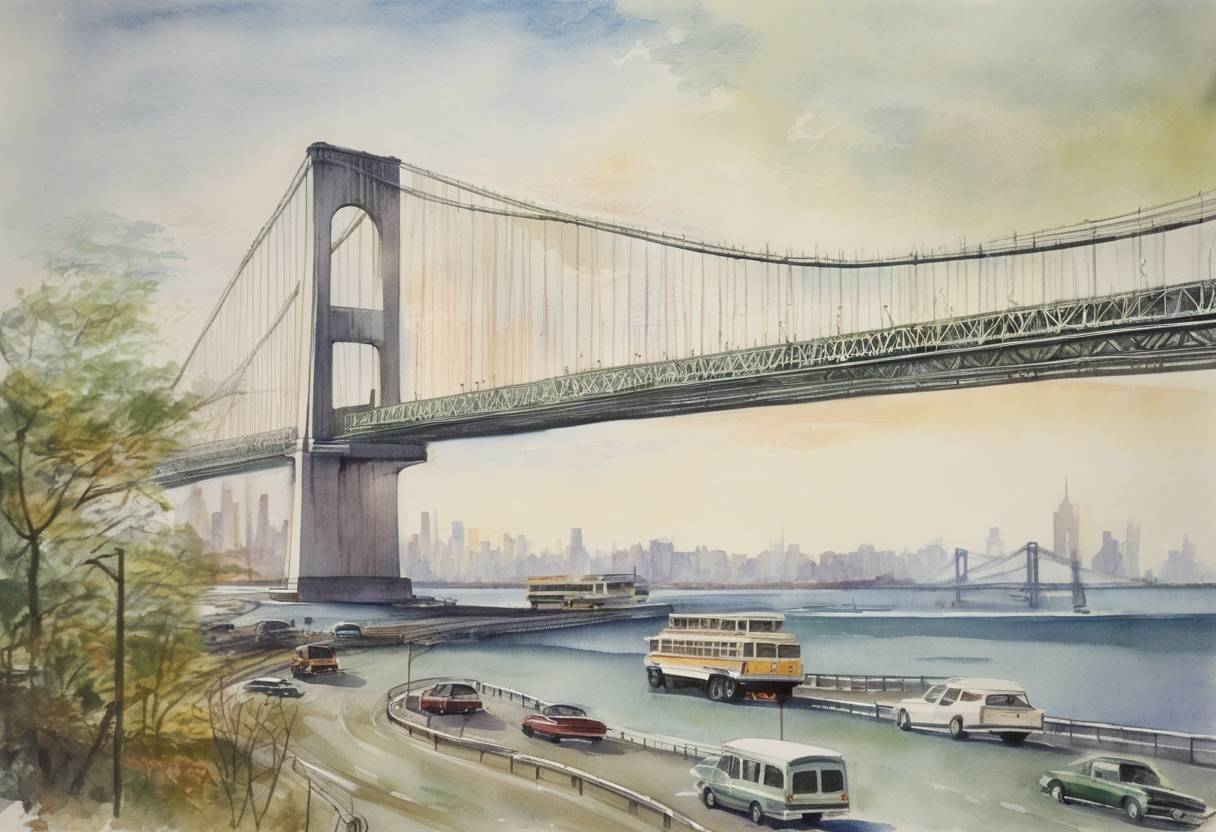
On November 21, 1964, the Verrazano-Narrows Bridge officially opened to traffic, marking a significant milestone in New York City’s infrastructure development. The bridge connects Staten Island and Brooklyn, spanning the Narrows, the tidal strait separating the two boroughs. At the time of its completion, it was the longest suspension bridge in the world, a title it held until 1981.
The idea for a bridge across the Narrows dates back to the 1920s, but it wasn’t until the mid-20th century that plans began to materialize. The increasing population and the need for improved transportation infrastructure in New York City spurred the project. The bridge was named after the Italian explorer Giovanni da Verrazzano, the first European to enter New York Harbor in 1524.
The opening ceremony on November 21, 1964, was a grand event attended by numerous dignitaries, including New York City Mayor Robert F. Wagner Jr. and Governor Nelson Rockefeller. The event celebrated not only the engineering marvel but also the anticipated economic and social benefits the bridge would bring to the region.
While no longer the longest suspension bridge in the world, the Verrazano-Narrows Bridge remains an iconic symbol of New York City. It continues to serve as a vital transportation link and stands as a testament to mid-20th-century engineering prowess. The bridge’s construction and opening were pivotal in shaping the modern landscape of New York City, influencing urban planning and development for decades to come.
Source: en.wikipedia.org