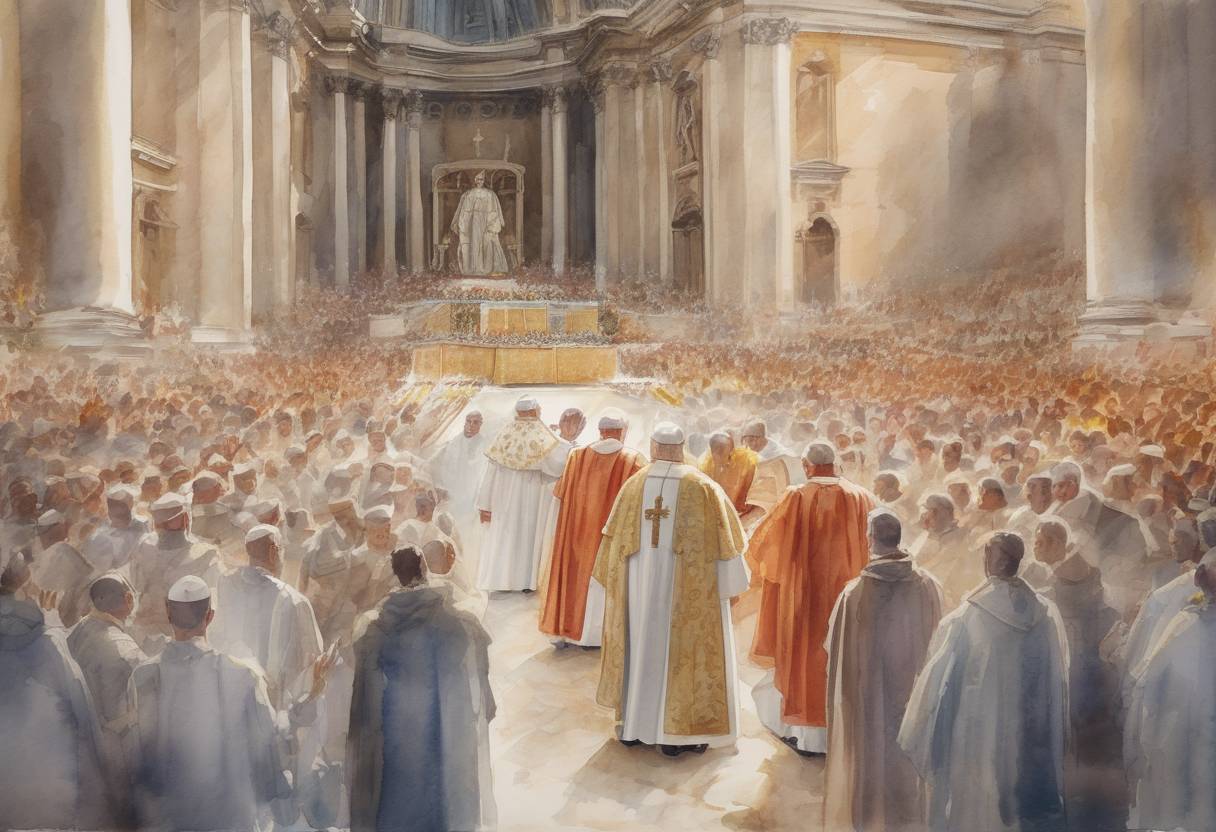
Pope John IV Consecrated as the 72nd Pope
On December 24, 640, Pope John IV was consecrated as the 72nd pope of the Catholic Church, succeeding Pope Severinus. His papacy, though relatively brief, was marked by significant religious and political challenges.
Context and Background
- Predecessor: Pope Severinus, who served a short papacy from 638 to 640, faced delays in his consecration due to conflicts with the Byzantine Emperor Heraclius over the Monothelite controversy, which concerned the nature of Christ’s will.
- Monothelitism: This theological doctrine proposed that Christ had a single divine will, which was opposed by the orthodox position of dyothelitism, asserting both divine and human wills in Christ. This controversy was a significant issue during John IV’s time.
Key Events During Pope John IV’s Papacy
- Monothelite Controversy: Pope John IV continued to oppose Monothelitism, maintaining the stance of his predecessors. He worked to uphold the dyothelite doctrine, which was crucial for maintaining the theological integrity of the Church.
- Relations with the Byzantine Empire: John IV’s papacy was marked by efforts to maintain a delicate balance in relations with the Byzantine Empire, which was a dominant political force and influential in ecclesiastical matters.
- Defense of the Slavs: John IV is noted for his efforts to protect and support the Slavic peoples, who were facing invasions and hardships. He sent missionaries to the region and worked to alleviate their suffering.
Aftermath and Significance
- Legacy: Pope John IV’s papacy, though lasting only until 642, was significant for its firm stance against Monothelitism, which would continue to be a major theological issue for the Church.
- Succession: After his death, Pope Theodore I succeeded him, continuing the opposition to Monothelitism and furthering the policies initiated by John IV.
- Historical Impact: The efforts of John IV and his successors eventually contributed to the resolution of the Monothelite controversy at the Third Council of Constantinople in 680-681, which affirmed the doctrine of dyothelitism.
Pope John IV’s leadership during a turbulent period for the Church highlights the ongoing struggle to define and defend orthodox Christian doctrine in the face of political and theological challenges. His papacy is remembered for its commitment to doctrinal purity and its compassionate outreach to suffering communities.