The Battle of Mohi: April 11, 1241
1241 · Mohi, Hungary
The Battle of Mohi took place, where the Mongol Empire, led by Batu Khan and Subutai, defeated the Kingdom of Hungary. This battle was part of the Mongol invasion of Europe.
December 6, 1240
The Mongol Empire, under the leadership of Batu Khan, captured and sacked the city of Kiev, marking a significant event in the Mongol invasion of Kievan Rus'.
Kiev, Kievan Rus' | Mongol Empire
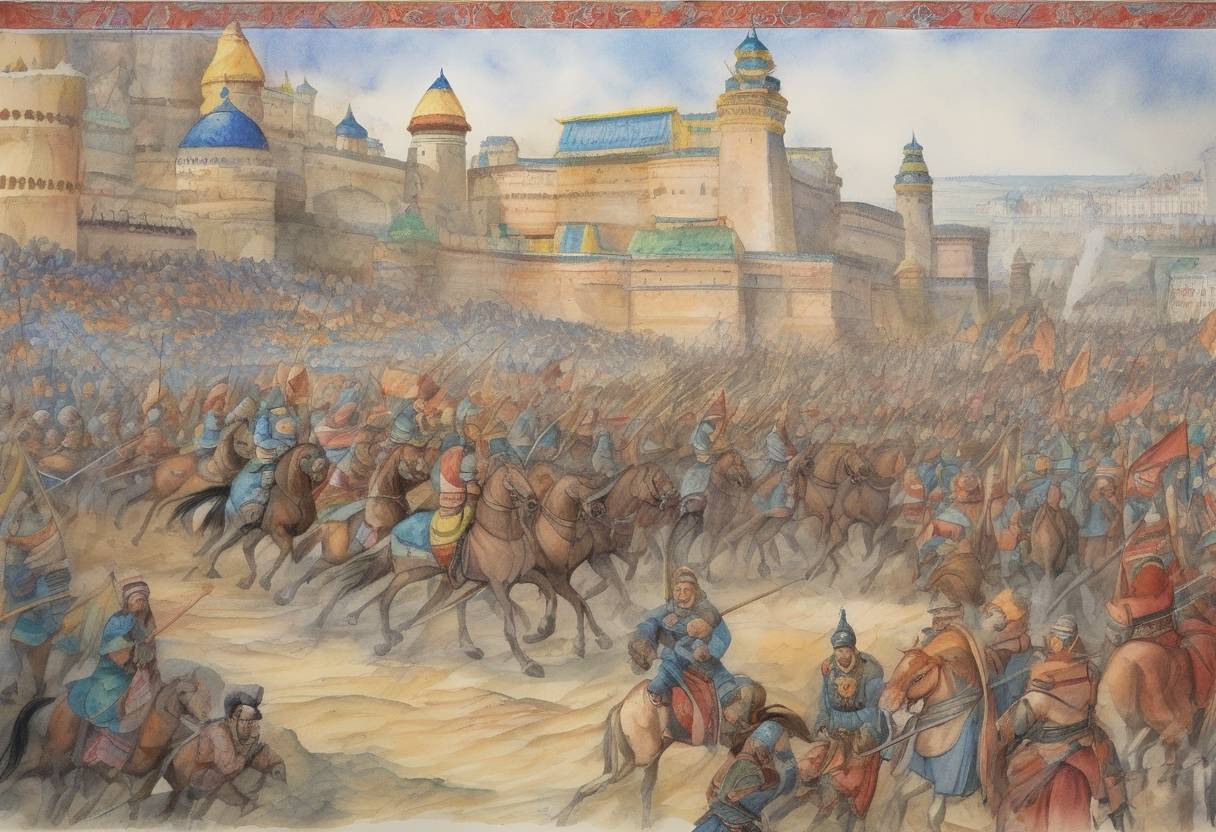
On December 6, 1240, the Mongol Empire, under the leadership of Batu Khan, captured and sacked the city of Kiev, a pivotal event in the Mongol invasion of Kievan Rus’. This event marked a significant moment in the expansion of the Mongol Empire and had lasting impacts on the region’s history.
The Mongol Empire, founded by Genghis Khan in the early 13th century, rapidly expanded across Asia and into Europe. After Genghis Khan’s death, his successors continued to pursue his vision of a vast empire. Batu Khan, a grandson of Genghis Khan, led the western expansion known as the Mongol invasion of Europe.
Kievan Rus’, a federation of Slavic tribes under the rule of the Rurik dynasty, was a prominent political and cultural center in Eastern Europe. By the early 13th century, however, it was fragmented into various principalities, weakening its ability to resist external threats.
In 1237, Batu Khan began his campaign against the Rus’ principalities. The Mongols employed a combination of military prowess, psychological warfare, and strategic alliances to subdue the region. By 1240, they had already captured several key cities, including Ryazan, Vladimir, and Suzdal.
Kiev, the heart of Kievan Rus’, was a significant target due to its historical and strategic importance. The city was defended by a relatively small force led by Prince Danylo of Halych and his brother, Vasilko. Despite their efforts, the Mongols’ superior numbers and tactics overwhelmed the defenders.
The siege of Kiev lasted for several days. The Mongols used their renowned siege techniques, including catapults and battering rams, to breach the city’s defenses. On December 6, 1240, the Mongols entered Kiev, leading to widespread destruction and loss of life. The city was looted, and many of its inhabitants were killed or taken as slaves.
The fall of Kiev had profound consequences for the region:
The Mongol invasion of Kievan Rus’ and the sack of Kiev were part of the larger Mongol expansion into Europe, which had lasting impacts on the political and cultural landscape of the continent. The Mongol presence in Eastern Europe influenced trade, warfare, and governance, leaving a legacy that would shape the region for centuries.
The events of December 6, 1240, underscore the Mongols’ formidable military capabilities and their role in reshaping the medieval world. The fall of Kiev remains a significant chapter in the history of Eastern Europe, illustrating the complex interplay of power, culture, and resilience in the face of conquest.
Source: en.wikipedia.org