Approval of the Dominican Order by Pope Honorius III
1216 · Rome, Italy
Pope Honorius III officially approved the Dominican Order, a Roman Catholic religious order founded by Saint Dominic.
August 24, 1215
Pope Innocent III declares the Magna Carta invalid, leading to the First Barons' War in England.
Rome, Italy | Catholic Church
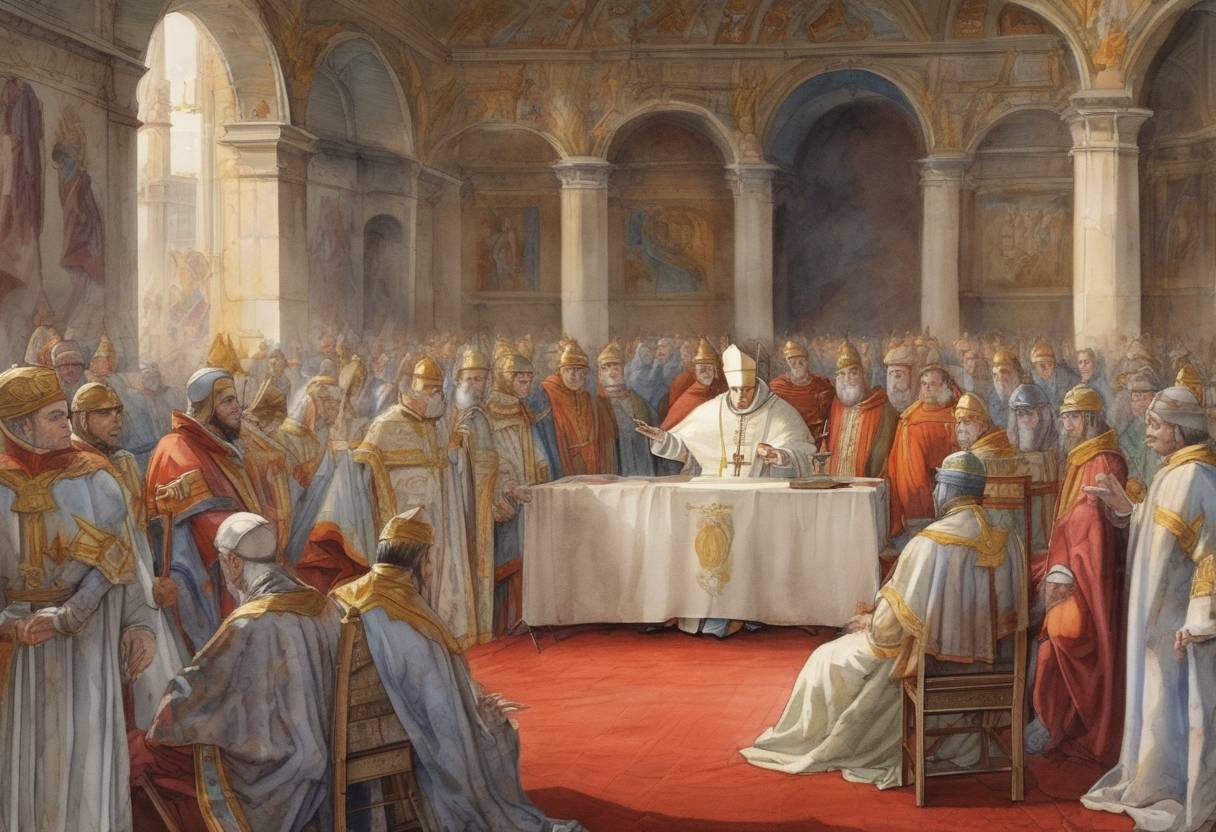
On August 24, 1215, Pope Innocent III issued a papal bull declaring the Magna Carta invalid. This significant event played a crucial role in the political landscape of medieval England and contributed to the outbreak of the First Barons’ War.
King John of England: The reign of King John (1199-1216) was marked by military failures, heavy taxation, and disputes with the nobility and the Church. His loss of territories in France and his excommunication by Pope Innocent III exacerbated tensions.
The Magna Carta: On June 15, 1215, under pressure from rebellious barons, King John agreed to the Magna Carta at Runnymede. This charter aimed to limit royal authority and protect baronial rights, establishing principles such as the rule of law and due process.
Papal Authority: Pope Innocent III, a powerful and influential pope, had previously supported King John during his disputes with the English barons. The pope viewed the Magna Carta as a challenge to his authority and the divine right of kings.
Declaration of Invalidity: On August 24, 1215, Pope Innocent III issued a papal bull annulling the Magna Carta. He declared it “illegal, unjust, harmful to royal rights and shameful to the English people,” asserting that it was signed under duress.
First Barons’ War (1215-1217): The annulment of the Magna Carta by Pope Innocent III led to the First Barons’ War. The barons, feeling betrayed by King John’s repudiation of the charter, rose in rebellion. They invited Prince Louis of France to take the English throne, leading to a protracted conflict.
Legacy of the Magna Carta: Despite its initial annulment, the Magna Carta’s principles endured. It was reissued with modifications in subsequent years and became a foundational document for constitutional law, influencing legal systems worldwide.
Limitation of Monarchical Power: The events surrounding the Magna Carta and its annulment highlighted the growing demand for limitations on monarchical power and the establishment of legal rights.
Church and State Relations: The involvement of Pope Innocent III underscored the complex relationship between the Church and secular rulers during the medieval period.
In summary, Pope Innocent III’s declaration against the Magna Carta was a pivotal moment in English history, leading to conflict and setting the stage for future constitutional developments. The Magna Carta’s legacy as a symbol of liberty and justice continues to resonate in modern legal and political thought.
Source: en.wikipedia.org