German Forces Occupy Brussels during World War I - August 20, 1914
1914 · Brussels, Belgium
German forces occupy Brussels during World War I.
October 12, 1915
British nurse Edith Cavell was executed by a German firing squad for helping Allied soldiers escape from German-occupied Belgium during World War I.
Brussels, Belgium | German Empire
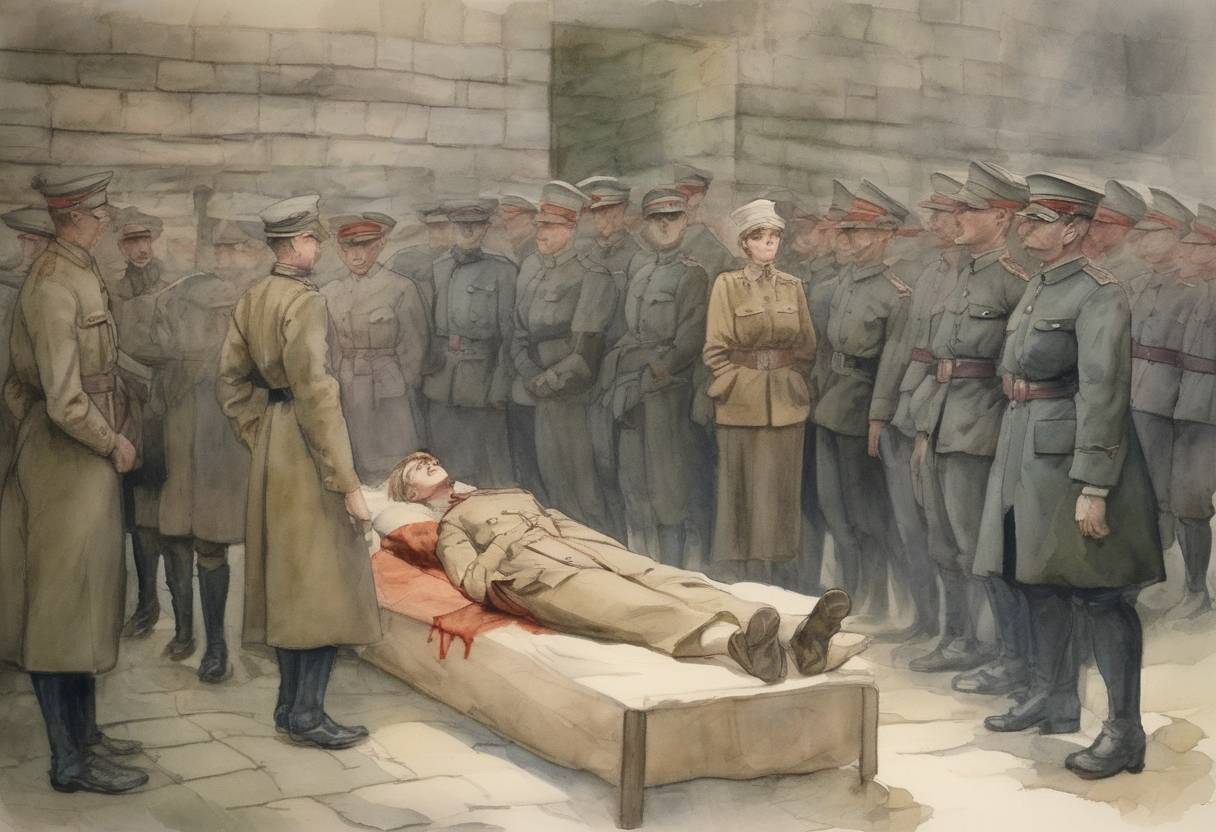
On October 12, 1915, British nurse Edith Cavell was executed by a German firing squad in Brussels, Belgium, during World War I. Her death became a significant moment in the war, highlighting issues of wartime morality and galvanizing public opinion against Germany.
Edith Cavell was born on December 4, 1865, in Swardeston, Norfolk, England. She trained as a nurse and became a pioneering figure in modern nursing. In 1907, she was appointed matron of the Berkendael Medical Institute in Brussels, where she played a crucial role in developing Belgium’s nursing education.
When World War I broke out in 1914, Belgium was quickly occupied by German forces. Cavell’s hospital was converted into a Red Cross facility, treating soldiers from both sides of the conflict. However, Cavell became involved in an underground network that helped Allied soldiers escape from occupied Belgium to neutral Holland.
Her activities included sheltering soldiers and providing them with the necessary resources to evade capture. It is estimated that she assisted around 200 Allied soldiers in their escape efforts.
In August 1915, Cavell was arrested by the German authorities. She was charged with treason for aiding enemy soldiers, a serious offense under the German military code. During her trial, Cavell openly admitted to her actions, stating that she felt it was her duty to help those in need, regardless of their nationality.
Despite international pleas for clemency, including from neutral countries and prominent figures, the German military authorities decided to proceed with the execution. On October 12, 1915, Edith Cavell was executed by a firing squad at the Tir National, a military firing range in Schaerbeek, Brussels.
Cavell’s execution sparked international outrage and was used as a powerful propaganda tool by the Allies. Her death was portrayed as a symbol of German brutality and helped to galvanize public opinion against the Central Powers.
In Britain and other Allied countries, Cavell was hailed as a martyr and a heroine. Her story was widely publicized, and she became a symbol of self-sacrifice and humanitarianism. Monuments were erected in her honor, and her legacy continues to be remembered as an example of courage and compassion in the face of adversity.
Edith Cavell’s execution remains a poignant reminder of the complexities and moral dilemmas faced during wartime, and her story continues to inspire discussions on the ethics of war and the role of individuals in conflict.
Source: en.wikipedia.org